壮身隐带丽鱼
概要
| 字段 | 值 |
|---|---|
| 类别 | 鱼 |
| 学名 | Apistogramma panduro |
| 别名 | 壯身隱帶麗魚 |
| 分类 | 慈鲷目 Cichliformes › 慈鲷科 Cichlidae › Apistogramma |
| 水体 | 淡水 |
| 原产地 | 秘鲁 |
| 成体体长 | 7.5 cm |
| 饲养难度 | 中等 |
| 最小水体 | 54 L |
| 最小缸长 | 60 cm |
| 水流偏好 | 低 |
| 外部数据 | seriouslyfish apistogramma-panduro;fishbase 57507 |
| 食性 | 肉食 |
| 繁殖方式 | 附着产卵 |
水质参数
| 参数 | 耐受范围 | 最适范围 | 单位 |
|---|---|---|---|
| 水温 | 22–29 | — | °C |
| pH | 4–6.5 | — | — |
| 总硬度 | 0–5 | — | dGH |
概述
壮身隐带丽鱼(Apistogramma panduro)对同种可能很强势,但配对成功后常维持单配偶关系。饲养重点是建立有足够分隔的领地空间,不宜按“一雄多雌”惯例随意组合。
分布与栖息地
来自秘鲁北部洛雷托地区的乌卡亚利河与塔瓦约河流域。邻近塔姆希亚库河的地域型是否同种仍不确定。常在落叶聚集的缓流支流、回水区和小溪活动。
饲养环境
一对至少考虑 60 × 30 厘米底面,群养需大得多。细沙、沉木、枝条及多个洞穴构成分隔,陶罐、管段也能作为藏身处。落叶增加遮蔽与幼鱼微型食物来源;弱光、浮水植物和耐阴水草有帮助。保持轻缓水流,在低密度条件下每周小量换水约 10%~15%,避免骤然大换水。
食性与喂食
主要肉食,常喂丰年虾、水蚤、红虫等小型活饵或冷冻饵料。许多隐带丽鱼能逐渐接受干颗粒,通常比薄片更容易接受。
习性与混养
人工鱼更适合混养考虑;野生鱼宜单种或只配少量温和小鱼,避免其他隐带丽鱼。同种之间可有明显攻击,不能把尚未配对的两尾直接当稳定伴侣;已形成的配对通常不需另外加入雌鱼。
雌雄区分
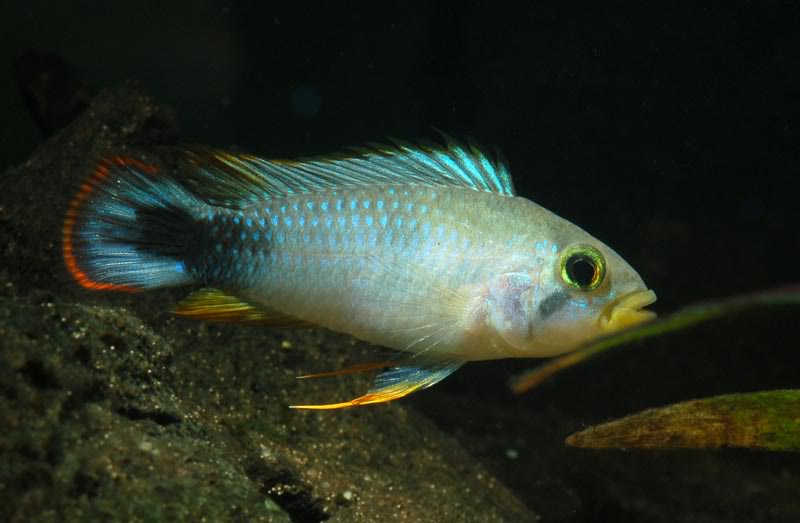
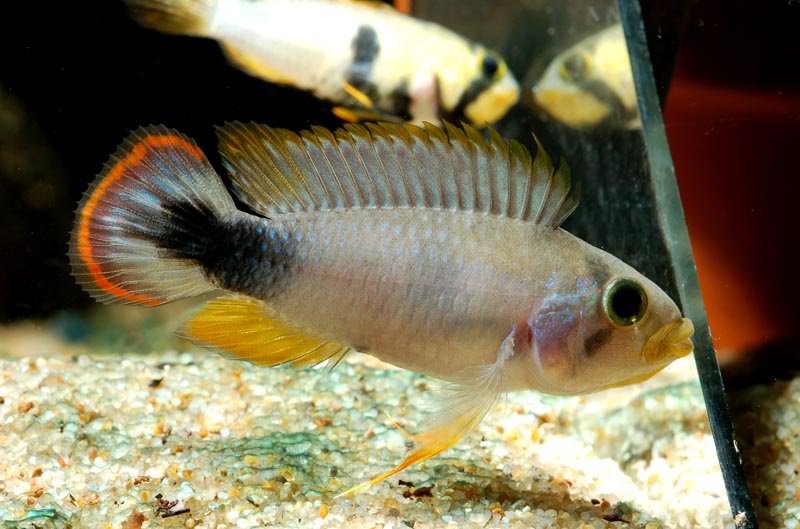
雄鱼更大、更艳丽,鳍更延长。
繁殖
通常在洞穴或缝隙基面产卵。雌鱼照顾卵和幼鱼,护幼时可能猛烈驱赶雄鱼,小缸应准备分离。
补充说明
下颌明显伸出上颌是区分相似种的线索。本种编号 A183,可能同种的塔姆希亚库型为 A184;贸易中的临时名称不代表种界已经确认。
图片
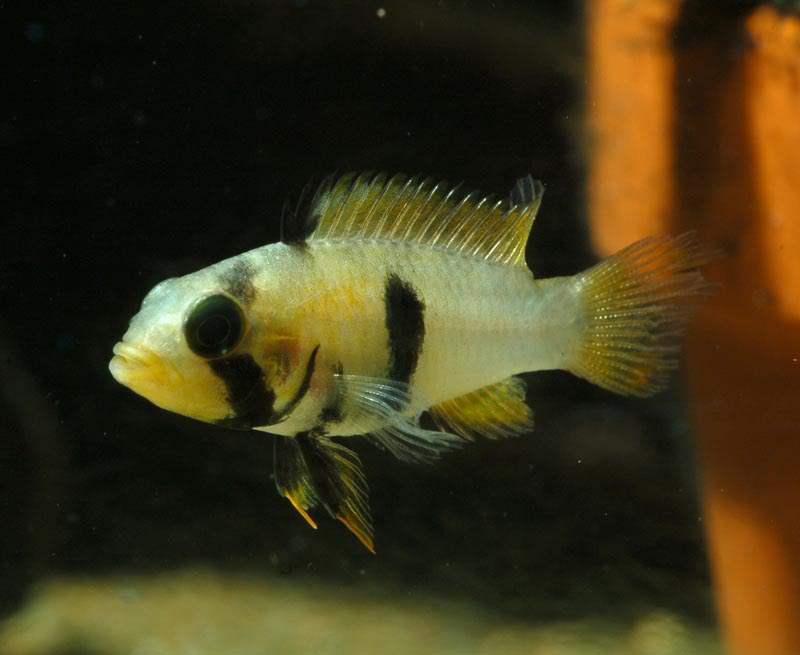
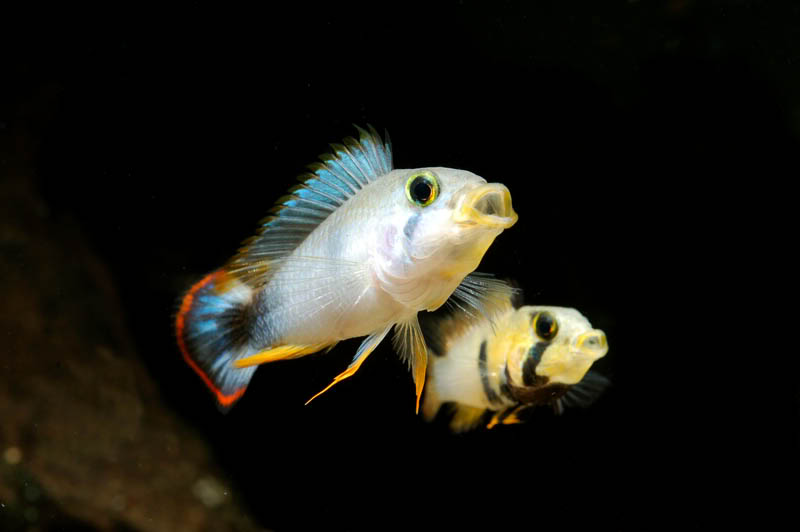
图片来自 SeriouslyFish,版权归各摄影者所有。
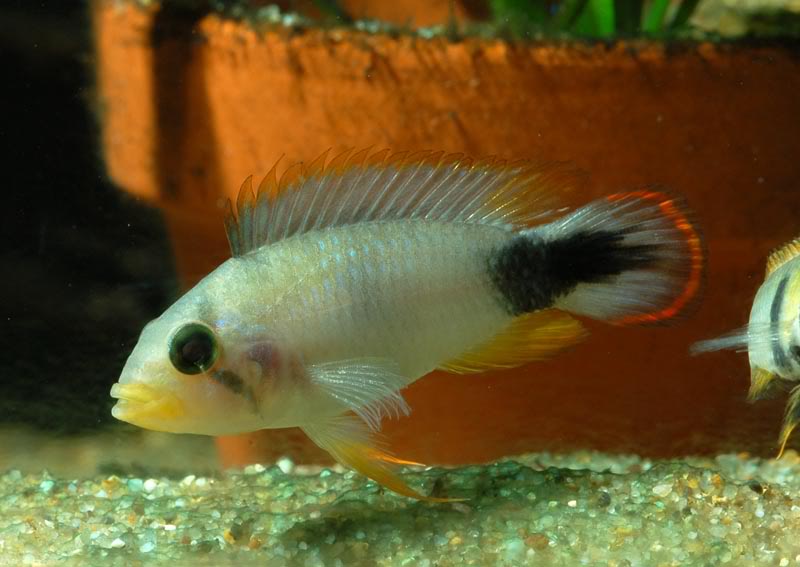
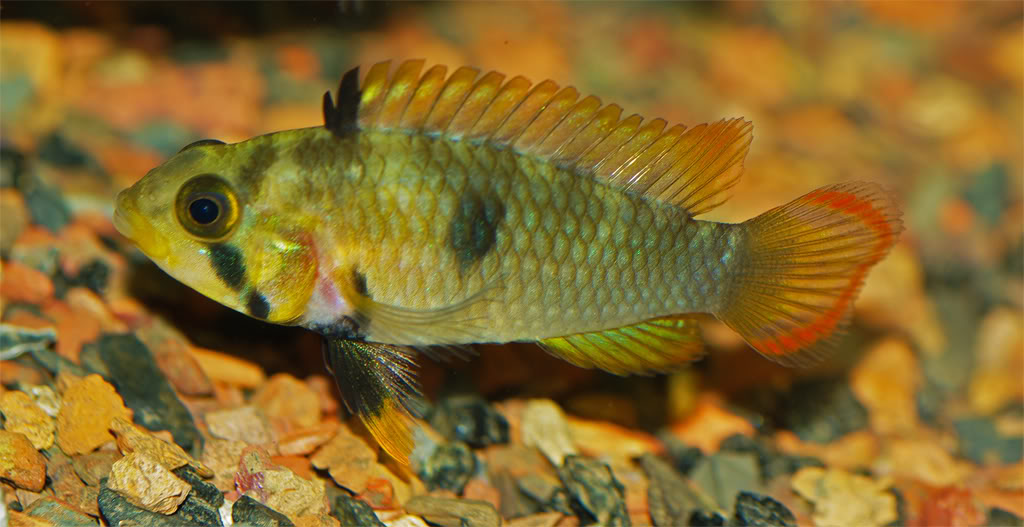
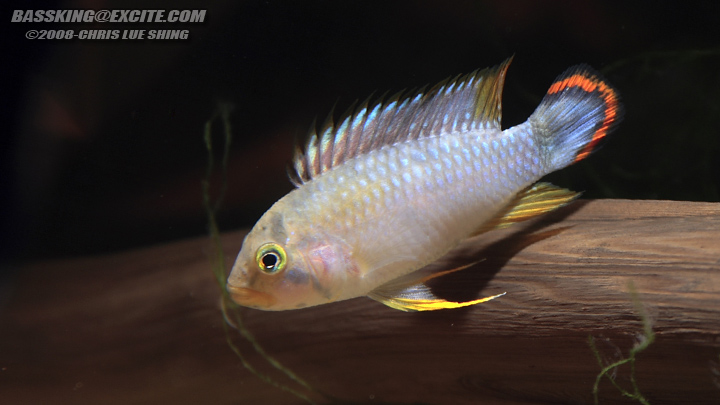
English
Overview
Conspecific aggression is an important consideration with Apistogramma panduro. Established pairs often remain monogamous, so adding extra females is not inherently useful. Plan substantial cover and space for adults to avoid one another.
Distribution & habitat
Known waters include the Ucayali drainage and Tahuayo in northern Peru. A nearby Tamshiyacu form may represent the same species, but this is unresolved. Slow tributaries and backwaters with accumulated leaf litter are typical habitats.
Aquarium setup
A pair needs at least a 60 by 30 cm footprint, whereas groups require much larger quarters. Arrange several caves among wood and soft sand, or use simple artificial shelters. Leaves provide cover and microbial growth useful to fry. Subdued lighting and gentle filtration are appropriate. With light stocking, small weekly water changes of around ten to fifteen percent are suggested.
Diet & feeding
Provide a predominantly animal-based diet with regular small live or frozen invertebrates. Dry pellets may be accepted after conditioning and are generally preferred to flakes within the genus.
Behaviour & compatibility
Captive-raised stock is the better community option. Wild fish are best kept in a dedicated setup or with small reassuring companions. Avoid other apistogrammas. Two fish are not automatically a compatible pair, and established pairs generally do not need additional females.
Sexual dimorphism
Males are larger, more colorful and longer-finned.
Breeding
Eggs are deposited in a sheltered cavity. The female performs brood care and may become intensely defensive toward the male, making separation necessary in restricted space.
Notes
The projecting lower jaw is a useful identification feature. A183 denotes this species, while A184 refers to the potentially conspecific Tamshiyacu form. Provisional trade names should not be treated as settled taxonomy.
来源
- https://www.seriouslyfish.com/species/apistogramma-panduro(抓取于 2026-10-10)
apistogramma-panduro · 文件: data/species/apistogramma-panduro.md · 状态: 草稿