门氏隐带丽鱼 · A220
概要
| 字段 | 值 |
|---|---|
| 类别 | 鱼 |
| 学名 | Apistogramma mendezi |
| 别名 | 門氏隱帶麗魚、A221、A222 |
| 分类 | 慈鲷目 Cichliformes › 慈鲷科 Cichlidae › Apistogramma |
| 水体 | 淡水 |
| 原产地 | 巴西 |
| 饲养难度 | 中等 |
| 最小水体 | 41 L |
| 最小缸长 | 45 cm |
| 群居方式 | 成对 |
| 外部数据 | seriouslyfish apistogramma-mendezi;fishbase 57505 |
| 食性 | 肉食 |
| 繁殖方式 | 附着产卵 |
水质参数
| 参数 | 耐受范围 | 最适范围 | 单位 |
|---|---|---|---|
| 水温 | 23–29 | — | °C |
| pH | 4–6 | — | — |
| 总硬度 | 1–3 | — | dGH |
概述
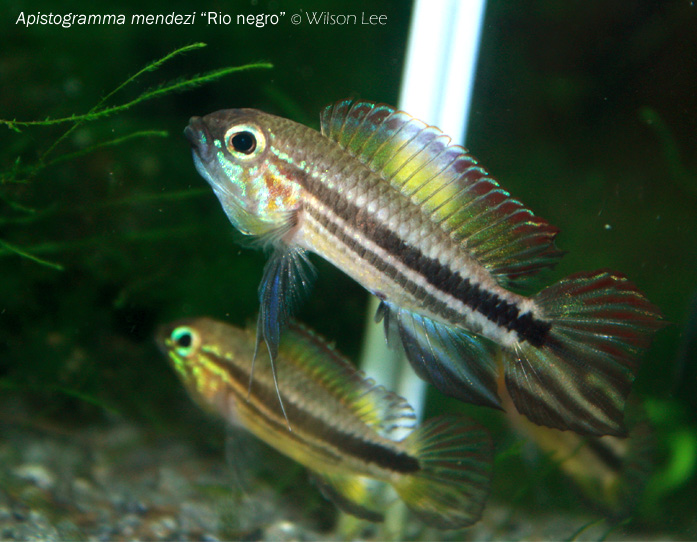
门氏隐带丽鱼(Apistogramma mendezi)是需要极软酸性水的小型慈鲷。尾鳍纹路和腹部色彩存在地域差异,购买时保留产地标签比仅按颜色配对更稳妥;繁殖期间还要为受追逐的一方准备隔离空间。
分布与栖息地
原产巴西西北部尼格罗河下游流域,贸易采集也常标为更上游的地点。生活于洁净黑水支流和淹没林,沙泥底覆盖落叶与木质碎屑,水茶色、矿物质极低且偏酸。
饲养环境
一对可从 45 × 30 厘米底面考虑,多条需扩大空间。细沙、沉木、洞穴和落叶提供遮荫及产卵处,陶罐或管段也可用;落叶微生物能补充幼鱼食物。照明偏弱,水草选择耐阴类型,轻缓海绵过滤即可。必须使用成熟稳定的系统,维持极低碳酸盐硬度和很低总硬度;必要时用反渗透水等软水来源,切忌积污和快速变化。
食性与喂食
以动物性食物为主,野外主要摄食底部小型无脊椎动物。经常提供丰年虾、水蚤、红虫等活饵或冷冻饵料;部分个体可逐渐接受干粮,颗粒通常比薄片更合适。
习性与混养
宜单种饲养,或只搭配小型、可增加安全感的温和鱼,避免与其他隐带丽鱼混养。洞穴和遮挡要充足,不能把“一对”理解为任何时候都能近距离相处。
雌雄区分
雄鱼体型更大、颜色更浓,鳍条延长更明显。
繁殖
在硬质基面产卵,通常选择缝隙或洞穴。雌鱼主要照顾卵和幼鱼,护幼时可能很强势,小缸中可能需要移走雄鱼。
补充说明
编号 A220、A221、A222 对应外观相近、可能同种的种群,尾纹可横向、纵向或介于两者之间。保留采集地信息有助避免把尚未厘清的地域型混在一起繁殖。
图片
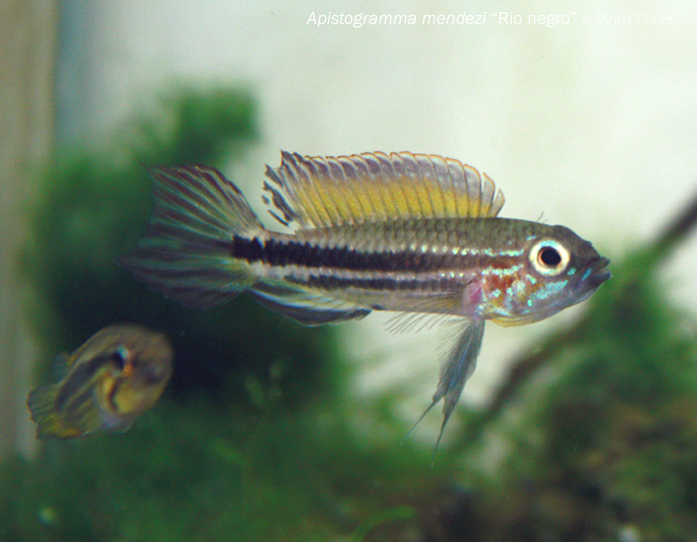
图片来自 SeriouslyFish,版权归各摄影者所有。
English
Overview
Apistogramma mendezi is a dwarf cichlid for very soft acidic water. Geographic variation affects tail markings and belly color, making locality labels useful when choosing breeding stock. Plan shelter and a way to separate adults if brood defense becomes intense.
Distribution & habitat
The native range lies in the lower Negro basin of northwestern Brazil, while many trade collections are labeled from farther upstream. Pristine blackwater tributaries and flooded forest contain sand or mud beneath leaves and woody debris, in low-mineral acidic water.
Aquarium setup
For a pair, begin with at least a 45 by 30 cm footprint; groups need more room. Caves, branches and leaves over soft sand provide shelter, with simple pots or pipes also useful. Leaf-associated microorganisms can supplement fry food. Use subdued light and gentle filtration. An established system with negligible carbonate hardness and very low general hardness is essential; a reliable soft-water supply may be needed.
Diet & feeding
Small benthic invertebrates form the main natural food of this group. Offer live or frozen invertebrates regularly. Acceptance of dry alternatives can develop, with pellets generally preferred to flakes.
Behaviour & compatibility
A dedicated setup or a few small reassuring companion fishes is preferable. Avoid mixing different apistogrammas and provide ample separation through shelter, particularly around breeding.
Sexual dimorphism
Males grow larger and develop stronger colors and more extended fins.
Breeding
Eggs are placed on a substrate, generally inside a cavity or crevice. The female carries out most brood care and can become intensely defensive, sometimes requiring removal of the male in a small tank.
Notes
A220, A221 and A222 denote similar populations that may be conspecific. Their tail markings differ in orientation. Retaining locality information helps avoid indiscriminate mixing of forms whose boundaries remain unresolved.
来源
- https://www.seriouslyfish.com/species/apistogramma-mendezi(抓取于 2026-10-10)
apistogramma-mendezi · 文件: data/species/apistogramma-mendezi.md · 状态: 草稿