隆头隐带丽鱼 · Blackline Apisto
概要
| 字段 | 值 |
|---|---|
| 类别 | 鱼 |
| 学名 | Apistogramma gibbiceps |
| 别名 | 罗雷隐带丽鱼、隆頭隱帶麗魚、羅雷隱帶麗魚、Blackstriped Dwarf Cichlid、Apistogramma roraimae |
| 分类 | 慈鲷目 Cichliformes › 慈鲷科 Cichlidae › Apistogramma |
| 水体 | 淡水 |
| 原产地 | 巴西布朗库河及内格罗河中游流域 |
| 成体体长 | 4.5 cm |
| 饲养难度 | 中等 |
| 最小水体 | 41 L |
| 最小缸长 | 45 cm |
| 群居方式 | 成对 |
| 领地性 | 是 |
| 水流偏好 | 低 |
| 外部数据 | seriouslyfish apistogramma-gibbiceps;fishbase 46624 |
| 食性 | 肉食 |
| 繁殖方式 | 附着产卵 |
水质参数
| 参数 | 耐受范围 | 最适范围 | 单位 |
|---|---|---|---|
| 水温 | 27–29 | — | °C |
| pH | 5–6.5 | — | — |
概述
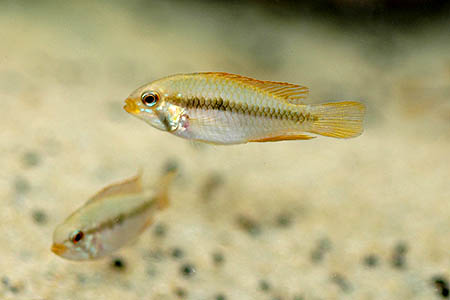
隆头隐带丽鱼(Apistogramma gibbiceps)是来自巴西的小型短鲷,稳定后体侧主带下方一列短暗纹较有辨识度。它对其他合适小鱼可较平和,但繁殖时会占领地,雄鱼也可能骚扰未准备产卵的雌鱼。
分布与栖息地
分布记录来自巴西罗赖马州和亚马孙州的布朗库河及内格罗河中游。Boa Vista 附近一些个体采自林间小溪和临时小池,曾以 Apistogramma roraimae 描述。内格罗河中游为软酸黑水环境,但不能将整条河的性质当作每个采集点都有完整测量记录。
饲养环境
一对至少使用 45 × 30 厘米底面积;一雄多雌需更大底面,每条雌鱼都应有分散的洞穴。沙底、根枝、洞穴和落叶提供遮蔽,一部分入口要小到雄鱼无法进入。照明暗、水流缓,可用浮水植物遮光。
只放入成熟缸,注意有机废物累积。落叶分解会增加有机负荷,应随状态更换并配合换水,不能只靠落叶维持水质。软酸性水较合适,饲养参考温度 27~29 °C、pH 5~6.5。
食性与喂食
野外主要吃小型无脊椎动物。用丰年虾、水蚤、摇蚊幼虫等小型活饵或冻饵,搭配优质细颗粒饵,保持食物大小适口及种类多样。
习性与混养
可与小型温和、主要在上层活动的鱼相伴,帮助其减轻紧张。避免其他隐带丽鱼属鱼或底栖慈鲷。专缸一雄配三条或更多雌鱼可分散雄鱼注意,但必须增加面积并分隔各雌鱼洞穴领地。
雌雄区分
雄鱼较大、更鲜艳,背鳍和臀鳍较长,尾鳍上下叶中部附近各有丝状延长;雌鱼较小、朴素。
繁殖
卵产在洞穴顶部,由雌鱼守卵护幼,并可能驱赶雄鱼。约三天孵化,再过四五天自由游动,开口可用刚孵化丰年虾。有时双亲把幼鱼分为两群,在不同位置分别照顾。仔鱼对水质变化敏感,采用规律的小幅换水。已有资料提到状态好的配对可约每六周产约 250 枚卵,但不应当作每对必达的频率和数量。
补充说明
本种编号 A209。最初模式系列混有其他种,后经重新检查厘清;Apistogramma roraimae 现作为异名。名称中的“隆头”也可能受保存标本组织肿胀的影响,因此不宜以明显额隆作为活鱼的唯一辨识依据。
图片
图片来自 SeriouslyFish,版权归各摄影者所有。
English
Overview
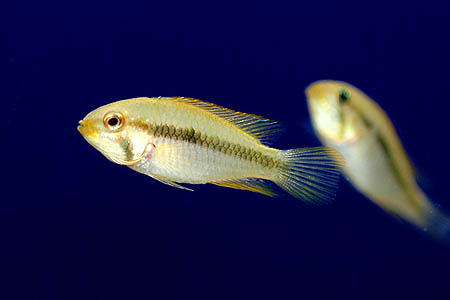
Apistogramma gibbiceps is a Brazilian dwarf cichlid recognizable by a row of short dark marks below the main flank band, particularly once settled. It can be tolerant of suitable small companions, but breeding brings territorial defense and males may harass unready females.
Distribution & habitat
Records come from the Branco and middle Negro basins in Roraima and Amazonas, Brazil. Some fish near Boa Vista were collected in forest streams and a temporary pool and described as Apistogramma roraimae. The middle Negro is a soft, acidic blackwater river, though that regional description is not a full set of measurements for every collection site.
Aquarium setup
Provide at least 45 × 30 cm of floor space for a pair. One male with several females requires more area and a separated cave for each female. Sand, roots, caves and leaves supply cover, including entrances the male cannot use. Keep lighting dim and circulation gentle; floating plants provide shade.
Use only a mature aquarium and prevent organic waste from accumulating. Replace leaves as they break down and maintain water changes, since decomposition adds to the waste load. Soft acidic water is appropriate, with 27–29 °C and pH 5–6.5 as care references.
Diet & feeding
Small invertebrates dominate natural feeding. Combine suitably sized live or frozen brine shrimp, water fleas and bloodworm with quality small pellets or granules.
Behaviour & compatibility
Small peaceful upper-water fishes can help it settle. Avoid other Apistogramma and bottom-dwelling cichlids. A dedicated group of one male with three or more females can spread his attention, provided the aquarium is larger and each female has a distinct cave territory.
Sexual dimorphism
Males are larger, more colorful and longer-finned, with a streamer near the middle of each tail lobe. Females are smaller and plainer.
Breeding
Eggs are attached to the cave roof. The female guards them and the fry, potentially excluding the male. Hatching takes about three days and free swimming another four or five; newly hatched brine shrimp is suitable first food. Some pairs divide the brood and guard separate groups. Fry need small, regular water changes because chemistry shifts are poorly tolerated. A reported figure of roughly 250 eggs every six weeks from a good pair is an observation, not a guaranteed output.
Notes
The identification code is A209. The original type series contained other species and was later reexamined; Apistogramma roraimae is now treated as a synonym. The apparent head hump behind the name may partly reflect swelling in preserved material, so a prominent hump is not a reliable sole identifier of live fish.
来源
- https://www.seriouslyfish.com/species/apistogramma-gibbiceps(抓取于 2026-10-10)
apistogramma-gibbiceps · 文件: data/species/apistogramma-gibbiceps.md · 状态: 草稿