伊丽沙白隐带丽鱼 · A208
概要
| 字段 | 值 |
|---|---|
| 类别 | 鱼 |
| 学名 | Apistogramma elizabethae |
| 别名 | 伊麗沙白隱帶麗魚 |
| 分类 | 慈鲷目 Cichliformes › 慈鲷科 Cichlidae › Apistogramma |
| 水体 | 淡水 |
| 原产地 | 巴西西北部内格罗河上游支流 |
| 成体体长 | 5 cm |
| 饲养难度 | 中等 |
| 最小水体 | 41 L |
| 最小缸长 | 45 cm |
| 群居方式 | 成对 |
| 外部数据 | seriouslyfish apistogramma-elizabethae;fishbase 46608 |
| 繁殖方式 | 附着产卵 |
水质参数
| 参数 | 耐受范围 | 最适范围 | 单位 |
|---|---|---|---|
| 水温 | 23–29 | — | °C |
| pH | 4–6 | — | — |
| 总硬度 | 1–3 | — | dGH |
概述
伊丽沙白隐带丽鱼(Apistogramma elizabethae)是对软酸性水和稳定环境要求较高的短鲷。成鱼在条件合适时产卵并不一定困难,但仔鱼最初几周对水质变化特别敏感,成功养大比单纯见卵更考验维护。
分布与栖息地
已知分布看来仅限巴西西北部 Uaupés 河及相邻 Içana 河,两者都是内格罗河上游支流。它偏好落叶积聚的缓流支流、回水与溪流,野外可与数种近缘短鲷同域出现,但这不等于小缸混养也合适。
饲养环境
单对至少可参考 45 × 30 厘米底面积,群体应增加空间。用软沙、根枝、洞穴、花盆等形成充分阴影和藏身点;落叶还能增加产卵面并培养仔鱼可利用的微生物。桤木果亦可提供有机物,毋须依赖泥炭。
维持弱光和轻柔过滤,浮水植物及耐阴水草可使用。生物过滤必须成熟,避免有机废物波动。它需要酸性水、接近可忽略的碳酸盐硬度及很低总硬度,可能要用反渗透水或其他可靠软水来源;不能仅靠把普通硬水染成茶色代替这种条件。
食性与喂食
可按同属鱼偏动物性的食谱安排,经常提供丰年虾、水蚤、裸腹溞和摇蚊幼虫等活饵、冻饵,并尝试适口颗粒。接受干粮的程度应看个体,不宜只按属级经验假定已经开口。
习性与混养
优先专缸,或只搭配小型安静的陪伴鱼。尽量不与其他隐带丽鱼属鱼混养;不同产地和色型也应分别保留,避免杂交或来源混淆。
雌雄区分
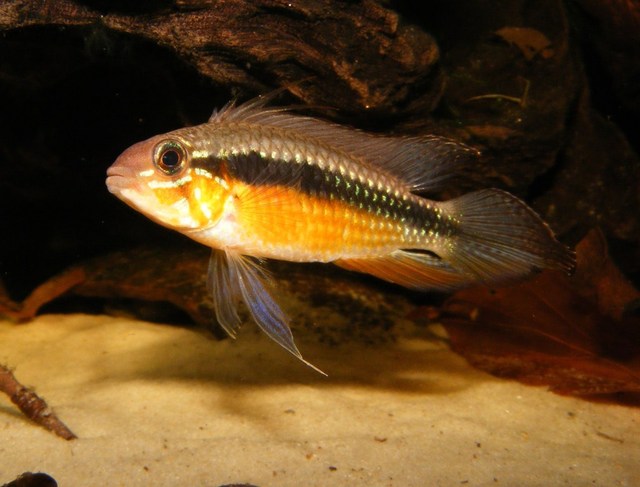
雄鱼较大、色彩更丰富、鳍更延长。雄鱼尾鳍随年龄变化明显:幼鱼较圆,亚成鱼呈琴尾状,成年后趋向矛形,因此不能把不同年龄尾形直接当作不同种。
繁殖
通常在洞穴或缝隙内的基质上产卵,主要由雌鱼照顾卵和仔鱼。护幼雌鱼可能严重攻击雄鱼,小缸必要时应移走雄鱼。仔鱼早期宜每日少量多餐,规律做小幅换水,避免一次大量换水引发化学条件骤变。
补充说明
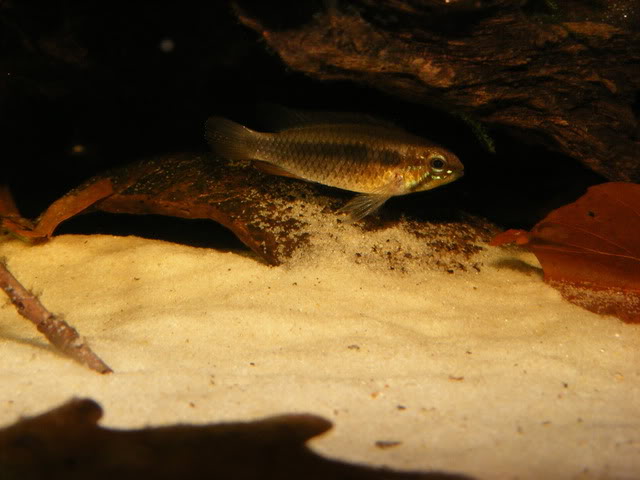
本种编号 A208。Içana 个体头部往往蓝纹更多,Uaupés 某些偏红种群以“super red”出售,另有黄、绿倾向的色型。体侧两枚醒目暗斑、较宽侧带及鳍形组合可辅助识别,但商品颜色名不能替代采集记录。
图片
图片来自 SeriouslyFish,版权归各摄影者所有。
English
Overview
Apistogramma elizabethae demands soft, acidic and stable water. Spawning may be straightforward once the right conditions are established, but raising the young through their first weeks is more difficult because they respond poorly to chemical changes.
Distribution & habitat
Its known range appears confined to the Uaupés and neighboring Içana in northwestern Brazil, both tributaries of the upper Negro. It favors slow tributaries, backwaters and creeks containing accumulated leaves. Several related dwarf cichlids occur alongside it in nature, which does not establish suitability for mixing them in a small aquarium.
Aquarium setup
A footprint of at least about 45 × 30 cm is a reference for a pair, with more room needed for a group. Soft sand, branches, roots, pots and caves should create abundant shade and retreats. Leaf litter adds potential spawning surfaces and supports microbes useful as supplementary fry food. Alder cones can also supply organic compounds; peat is unnecessary.
Keep lighting low and filtration gentle, with suitable plants and floating cover if wanted. The aquarium must be mature and protected from fluctuations in organic waste. Acidic water with virtually negligible carbonate hardness and very low general hardness is required, potentially using reverse-osmosis water or another dependable soft-water supply. Brown coloration alone does not reproduce those conditions.
Diet & feeding
A menu can follow the animal-oriented feeding pattern described for the genus: frequent live or frozen brine shrimp, water fleas, Moina and bloodworm, with suitable pellets tried as an additional food. Verify individual acceptance rather than assuming that genus-level experience means a fish is eating dry food.
Behaviour & compatibility
A dedicated aquarium or small, quiet dither companions are preferable. Avoid other Apistogramma, and keep locality or color forms separate to prevent unwanted mixing and crossing.
Sexual dimorphism
Males are larger, more colorful and longer-finned. Their tail shape changes with age: rounded in juveniles, lyre-shaped in subadults and lance-shaped in adults. Age-related shapes should not be mistaken automatically for species differences.
Breeding
Eggs are placed on a surface within a cave or crevice, with the female doing most subsequent care. She may attack the male strongly enough to require his removal from a small aquarium. For early fry, provide several small daily meals and regular small water changes, avoiding large changes that alter chemistry abruptly.
Notes
The species is coded A208. Içana fish often show more blue on the head, while certain reddish Uaupés fish are traded as “super red”; yellowish and greenish forms also occur. Two conspicuous side spots, a broad lateral stripe and fin structure help identification, but color trade names cannot replace collection data.
来源
- https://www.seriouslyfish.com/species/apistogramma-elizabethae(抓取于 2026-10-10)
apistogramma-elizabethae · 文件: data/species/apistogramma-elizabethae.md · 状态: 草稿