花颊隐带丽鱼 · A93
概要
| 字段 | 值 |
|---|---|
| 类别 | 鱼 |
| 学名 | Apistogramma commbrae |
| 别名 | 花頰隱帶麗魚、A94、Corumbá Dwarf Cichlid、Corumba Zwergbuntbarsch、Heterogramma commbrae,、Hetrogramma corumbae, |
| 分类 | 慈鲷目 Cichliformes › 慈鲷科 Cichlidae › Apistogramma |
| 水体 | 淡水 |
| 原产地 | 阿根廷、玻利维亚、巴西及巴拉圭 |
| 成体体长 | 5 cm |
| 饲养难度 | 入门 |
| 最小水体 | 54 L |
| 最小缸长 | 60 cm |
| 群居方式 | 成对 |
| 性情 | 温和 |
| 外部数据 | seriouslyfish apistogramma-commbrae;fishbase 12283 |
| 繁殖方式 | 附着产卵 |
| 领地性 | 是 |
水质参数
| 参数 | 耐受范围 | 最适范围 | 单位 |
|---|---|---|---|
| 水温 | 15–27 | — | °C |
| pH | 6–7.4 | — | — |
| 总硬度 | 1–6 | — | dGH |
概述
花颊隐带丽鱼(Apistogramma commbrae)是体型很小、通常较温和的短鲷。与很多偏热带的近缘种相比,它更应保留冬季较凉的季节节律;全年高温并非理想的默认安排。
分布与栖息地
广布于阿根廷、玻利维亚、巴西和巴拉圭的巴拉圭河流域,也有巴西 Guaporé 河上游种群。可见于大河、小溪和洪泛地,但主要利用浅水区,通常有密集水草、岸边植被及浮水植物。水多略酸,也常见中性或微碱性环境;凉季野外水温可降至约 16 °C。
饲养环境
约 60 × 30 × 30 厘米的缸可作配对或小群参考,遮蔽物须充足。用沙底、根枝、洞穴和落叶形成浅水隐蔽环境,花盆或管道也可利用。落叶和桤木果释放有机物,分解叶面的微生物可为幼鱼补充食物;无需依赖泥炭。
照明柔和,浮水植物和耐阴水草较合适,气动海绵过滤等轻柔循环即可。只放入生物过滤成熟的缸,避免有机废物波动。冬季适当降低温度有助维持活力;虽比不少近缘种耐受偏碱水,仍不应让电导率及硬度不断升高,也不必强求黑水。
食性与喂食
可参考同属鱼偏动物性的食谱,经常供给丰年虾、水蚤、裸腹溞和摇蚊幼虫等活饵或冻饵,逐渐尝试适口颗粒;干粮不应完全取代多样食物。
习性与混养
适合安静的混养环境,但同伴必须能适应较凉的季节安排。繁殖时雌鱼护幼、雄鱼巡守边界,因此平时的温和不能代替对繁殖领地的观察。
雌雄区分
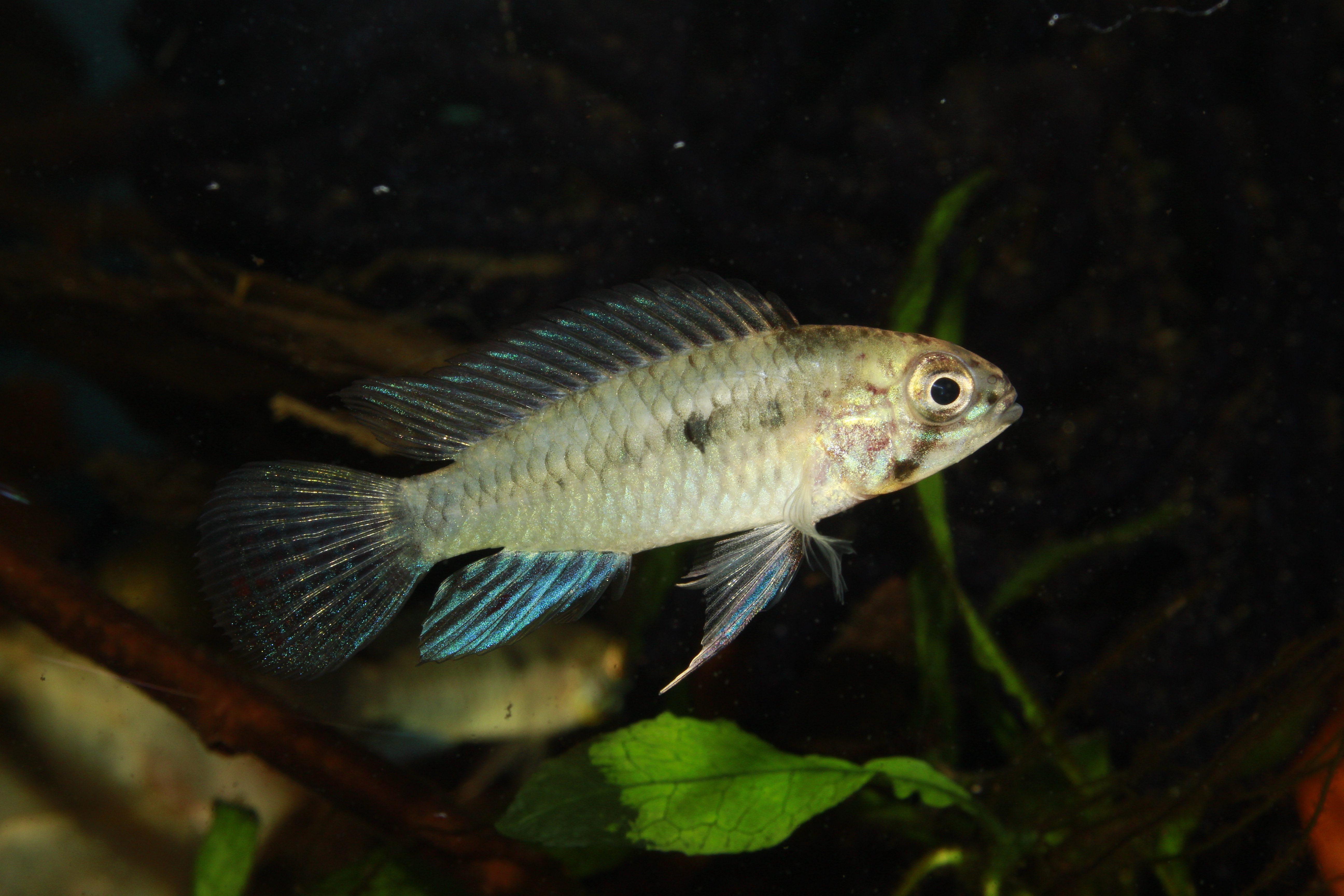
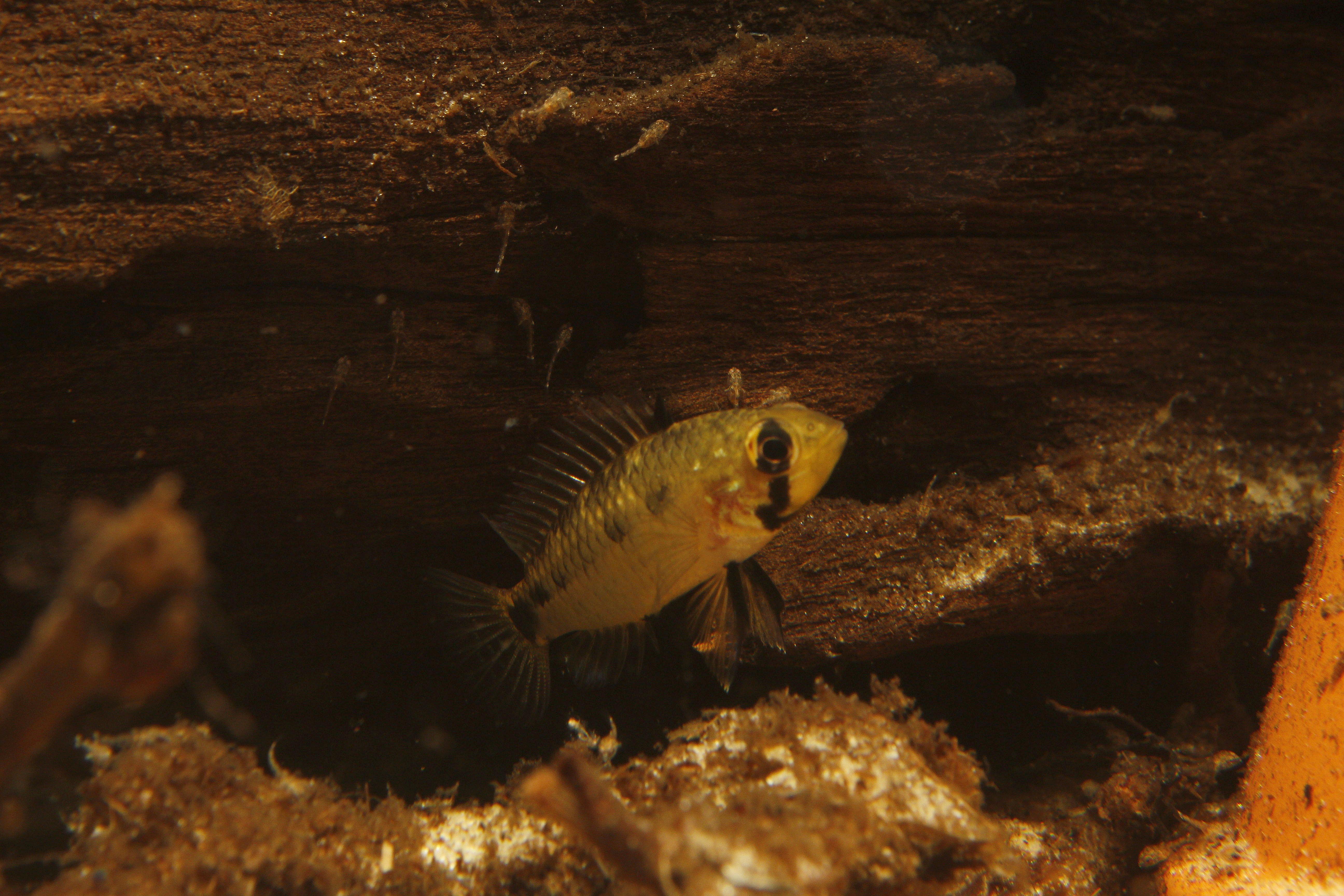
雄鱼较大、更鲜艳,鳍较延长。雌鱼在产卵及护幼时转为鲜黄色,身体、脸部及腹鳍前缘有黑纹。
繁殖
属于基质产卵鱼,通常利用缝隙或洞穴,看起来多维持一雄一雌配对。雌鱼负责主要护卵护幼,雄鱼巡守领地。随温度不同,卵约 36~72 小时孵化,再过几天自由游动。
略酸水有利繁殖,pH 约 6.5 可作参考,不宜过度降酸,以免损失幼鱼。高于 25 °C 时,刚孵出的仔鱼可能小到吃不了丰年虾无节幼体,降低繁殖温度可改善这一问题。
补充说明
明显的双尾柄斑是本种及其所属种复合群的重要特征,并非仅本种独有。有些雄鱼脸颊带红蓝斑、喉部偏黄,体现种内外观变化。
图片
图片来自 SeriouslyFish,版权归各摄影者所有。
English
Overview
Apistogramma commbrae is one of the smaller dwarf cichlids and is usually peaceful. A cooler winter period is part of its appropriate seasonal care; constant high temperatures should not be the default simply because it belongs to this genus.
Distribution & habitat
It is widespread in the Paraguay watershed of Argentina, Bolivia, Brazil and Paraguay, with another population in Brazil's upper Guaporé. Rivers, small streams and floodplains are occupied, particularly shallow zones rich in aquatic, floating and bankside vegetation. Slightly acidic water is typical, but neutral to mildly alkaline sites are also common. Seasonal cooling can bring natural water temperatures down to about 16 °C.
Aquarium setup
An aquarium around 60 × 30 × 30 cm is a reference for a pair or small group, provided shelter is plentiful. Sand, roots, caves and leaf litter work well, with pots or pipes as alternatives. Leaves and alder cones release organic compounds, while microbes on decomposing material provide supplementary fry food; peat is unnecessary.
Use subdued lighting, suitable plants and gentle circulation such as a sponge filter. The system must be biologically mature and protected from swings in organic waste. A cooler winter period supports vitality. Although the species handles more alkaline water than many relatives, do not allow conductivity or hardness to climb excessively. Blackwater conditions are not obligatory.
Diet & feeding
A feeding plan can follow the animal-oriented diet described for the genus. Regularly offer live or frozen brine shrimp, water fleas, Moina and bloodworm, while trying suitable pellets. Maintain variety rather than relying entirely on dry foods.
Behaviour & compatibility
A calm community is suitable when companions share its cooler seasonal requirements. Breeding females guard young and males patrol boundaries, so ordinary peaceful behavior does not remove the need to watch territorial interactions.
Sexual dimorphism
Males are larger, more colorful and have longer fins. Breeding and guarding females turn bright yellow with black markings on the face, body and front edges of the pelvic fins.
Breeding
This substrate spawner generally uses cavities or crevices and appears predominantly monogamous. The female handles most brood care while the male defends the perimeter. Eggs hatch in approximately 36–72 hours depending on temperature, with free swimming a few days later.
Slight acidity is useful, with about pH 6.5 a reference; excessive acidity can harm juveniles. Above 25 °C, newly hatched fry may be too small to take brine-shrimp nauplii. Breeding at a lower temperature can address that problem.
Notes
The conspicuous double tail-peduncle spot characterizes this species and its wider species complex rather than this fish alone. Some males show red and blue cheek marks and a yellow throat, illustrating variation within the group.
来源
- https://www.seriouslyfish.com/species/apistogramma-commbrae(抓取于 2026-10-10)
apistogramma-commbrae · 文件: data/species/apistogramma-commbrae.md · 状态: 草稿