Apistogramma cinilabra · Ash Lipped Apisto (A80)
概要
| 字段 | 值 |
|---|---|
| 类别 | 鱼 |
| 学名 | Apistogramma cinilabra |
| 别名 | Apiastogramma sp. "Schwarzbrust" Apistogramma sp. "Roterpunkt" Apistogramma sp. "Rote" Apistogramma sp. "Rotter" |
| 分类 | 慈鲷目 Cichliformes › 慈鲷科 Cichlidae › Apistogramma |
| 水体 | 淡水 |
| 原产地 | 秘鲁洛雷托地区伊基托斯至瑙塔之间的回水区 |
| 成体体长 | 7 cm |
| 饲养难度 | 入门 |
| 最小水体 | 54 L |
| 最小缸长 | 60 cm |
| 群居方式 | 成对 |
| 性情 | 温和 |
| 外部数据 | seriouslyfish apistogramma-cinilabra;fishbase 66028 |
| 领地性 | 是 |
| 繁殖方式 | 附着产卵 |
水质参数
| 参数 | 耐受范围 | 最适范围 | 单位 |
|---|---|---|---|
| 水温 | 21–27 | — | °C |
| pH | 4.5–7 | — | — |
| 总硬度 | 0–4 | — | dGH |
概述
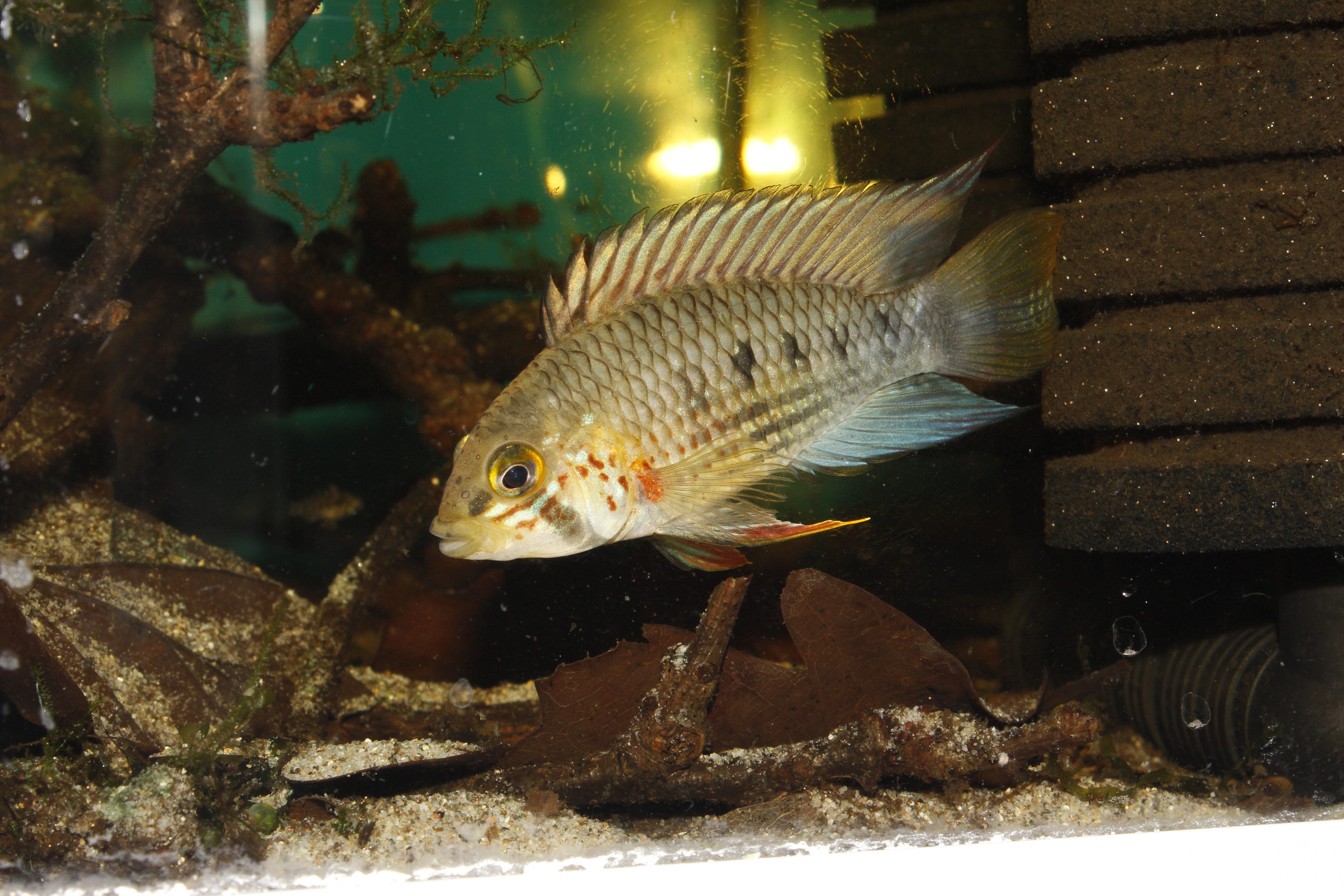
Apistogramma cinilabra 雄鱼的灰白唇、红色胸鳍基部与胸部红点很有辨识度,身体相对高。它通常温和,但空间不足时同种会互相压制;繁殖配对也有选择性,不能随意凑成一对就期待稳定。
分布与栖息地
来自秘鲁洛雷托地区伊基托斯与瑙塔之间的回水环境。采集地为森林中的浅黑水池,白色细砂上覆盖大量落叶,并有倒枝、沉木,旱季水尤其浅。
饲养环境
软砂、根枝与洞穴构成遮阴结构,花盆洞或管段也可使用。干落叶能增加掩护、产卵位置和微生物,帮助补充鱼苗食物。柔和照明配合莫丝、耐阴水草和浮水植物较合适。
轻柔的成熟海绵过滤即可,避免未成熟系统和有机废物突然波动。虽然能适应人工环境,也不应为追求野外极端水质而突然改变原有稳定条件。
食性与喂食
属内通常以底部无脊椎动物为主要天然食物,细砂也便于进行属内常见的筛砂行为。可规律提供丰年虾、水蚤、裸腹蚤和红虫等活饵或冷冻饵,并试喂合口小颗粒;干饲料接受情况需逐尾观察。
习性与混养
安静混养缸可搭配小型温和鱼,但同种在狭窄空间会互相欺压。野生个体更适合单种或小型陪游鱼,避免其他隐带丽鱼属混入。群养时要观察每尾鱼是否能吃到食物和获得藏处。
雌雄区分
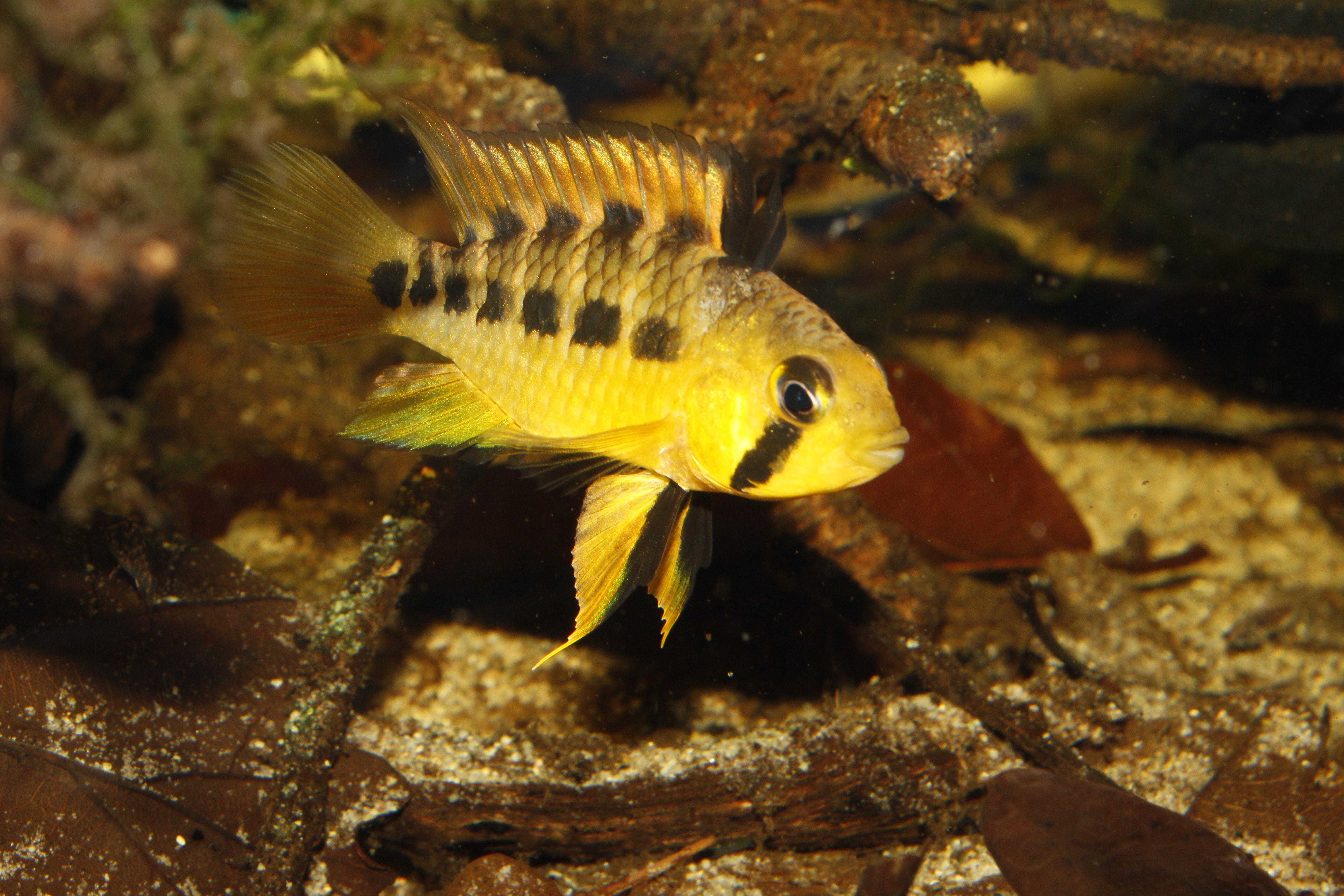
雄鱼更大、颜色鲜明、鳍较长,灰色唇只见于雄鱼。雌鱼繁殖和护幼时转为明黄色,面部、身体及腹鳍前缘的黑色图案加强。
繁殖
在缝隙或洞穴表面产卵。可让幼鱼群自然选择配偶;空间足够时一雄可对应数雌,但仍须防止弱势雌鱼受欺压。雄鱼建立领地并驱赶邻近雄鱼。
产后通常由雄鱼守较大范围、继续求偶,雌鱼照料卵和幼鱼;只养一对时,雄鱼有时也会在鱼苗起游后参与守护。卵依温度约 36–72 小时孵化,再过几天起游。
图片
图片来自 SeriouslyFish,版权归各摄影者所有。
English
Overview
Ash-gray lips, reddish pectoral bases, and chest spots distinguish male Apistogramma cinilabra, which also has a comparatively deep body. Usually peaceful, it can bully conspecifics in cramped conditions and can be selective about mates.
Distribution & habitat
It comes from backwaters between Iquitos and Nauta in Peru’s Loreto region. Forest pools contain shallow blackwater over fine white sand, abundant leaf litter, and fallen wood, with particularly low water levels in the dry season.
Aquarium setup
Soft sand, wood, roots, and caves create useful shaded structure; pots or pipe shelters also work. Leaf litter adds cover, potential spawning spaces, and microorganisms for fry. Use subdued light, moss, suitable shade-tolerant plants, and floating cover.
Gentle established sponge filtration is adequate. Avoid immature systems and organic-waste fluctuations. Adaptability in captivity does not justify abrupt attempts to reproduce extreme collection-site conditions.
Diet & feeding
The genus generally feeds on benthic invertebrates and uses fine sand for sifting. Offer suitable live or frozen Artemia, Daphnia, Moina, and bloodworms, adding small pellets if accepted. Prepared-food acceptance varies between individuals.
Behaviour & compatibility
A calm community of small peaceful fishes can work, but conspecific bullying increases in restricted quarters. Wild fish are better kept alone or with small dither companions, without other members of the genus. Check that all individuals can feed and find cover.
Sexual dimorphism
Males grow larger, develop longer fins, and may show the characteristic gray lips. Breeding and brood-tending females become bright yellow with strong dark markings on the face, body, and front pelvic-fin edges.
Breeding
Eggs are placed on surfaces within cavities. Allowing a group to choose partners can help with mate selectivity. A sufficiently large setup may hold one male with several females, but subordinate females need close observation. Males defend territories against rivals.
Females usually care for eggs and fry while males patrol the larger territory and court elsewhere. In a single-pair setup the male may assist once young swim freely. Incubation lasts about 36–72 hours, with free swimming several days later.
来源
- https://www.seriouslyfish.com/species/apistogramma-cinilabra(抓取于 2026-10-10)
apistogramma-cinilabra · 文件: data/species/apistogramma-cinilabra.md · 状态: 草稿