凤凰隐带丽鱼 · Borelli's Dwarf Cichlid
概要
| 字段 | 值 |
|---|---|
| 类别 | 鱼 |
| 学名 | Apistogramma borellii |
| 别名 | 博氏隐带丽鱼、鳳凰隱帶麗魚、博氏隱帶麗魚、Umbrella Dwarf Cichlid、Yellow Dwarf Cichlid、Borellis Zwergbuntbarsch、Gelber Zwergbuntbarsch、Heterogramma borellii、Heterogramma ritense、Heterogramma rondoni、Apistogramma aequipinnis、Apistogramma reitzigi |
| 分类 | 慈鲷目 Cichliformes › 慈鲷科 Cichlidae › Apistogramma |
| 水体 | 淡水 |
| 原产地 | 阿根廷、巴西、巴拉圭及乌拉圭 |
| 成体体长 | 6.5 cm |
| 饲养难度 | 入门 |
| 最小水体 | 41 L |
| 最小缸长 | 45 cm |
| 群居方式 | 成对 |
| 性情 | 温和 |
| 水流偏好 | 低 |
| 外部数据 | seriouslyfish apistogramma-borellii;fishbase 11138 |
| 食性 | 肉食 |
| 繁殖方式 | 附着产卵 |
水质参数
| 参数 | 耐受范围 | 最适范围 | 单位 |
|---|---|---|---|
| 水温 | 20–26 | — | °C |
| pH | 5–8 | — | — |
| 总硬度 | 1–15 | — | dGH |
概述
凤凰隐带丽鱼(Apistogramma borellii)是一种较小的南美短鲷,人工繁殖个体常用于温和混养。野生种群来自不同水系,适宜水质存在产地差异,不能把整体记录范围理解为每条鱼都能随意跨越的条件。
分布与栖息地
分布于巴西南部、巴拉圭、阿根廷及乌拉圭,涉及巴拉圭河、巴拉那河下游和乌拉圭河水系的溪流、支流。不同地点记录到的水质差异较大。
饲养环境
单对可从底面积约 45 × 30 厘米的缸起步,群养应明显增大。以沙底、根枝和洞穴制造遮蔽,花盆或合适管道同样可用。落叶既能增加自然感,也能在分解时形成微生物群落,给仔鱼提供补充食物。
适宜暗光与轻柔水流,可加入浮水植物及耐阴水草。低密度条件下,每周约 10%~15% 换水可作参考,避免突然大幅改变环境。人工繁殖鱼对水质较宽容;野生种群虽然总体采集记录覆盖 pH 5~8,其具体硬度和酸碱需求仍应按产地判断。
食性与喂食
以动物性食物为主,野外似乎主要吃底部无脊椎动物。经常轮换水蚤、丰年虾和摇蚊幼虫等活饵或冻饵。多数个体可以逐渐接受干粮,颗粒通常优于薄片。
习性与混养
一般混养优先选人工繁殖鱼。野生鱼较适合专缸,或只配小型、安静的陪伴鱼;尽量避免与其他隐带丽鱼属种类混合。即使平时温和,护幼雌鱼的攻击性也可能显著提高。
雌雄区分
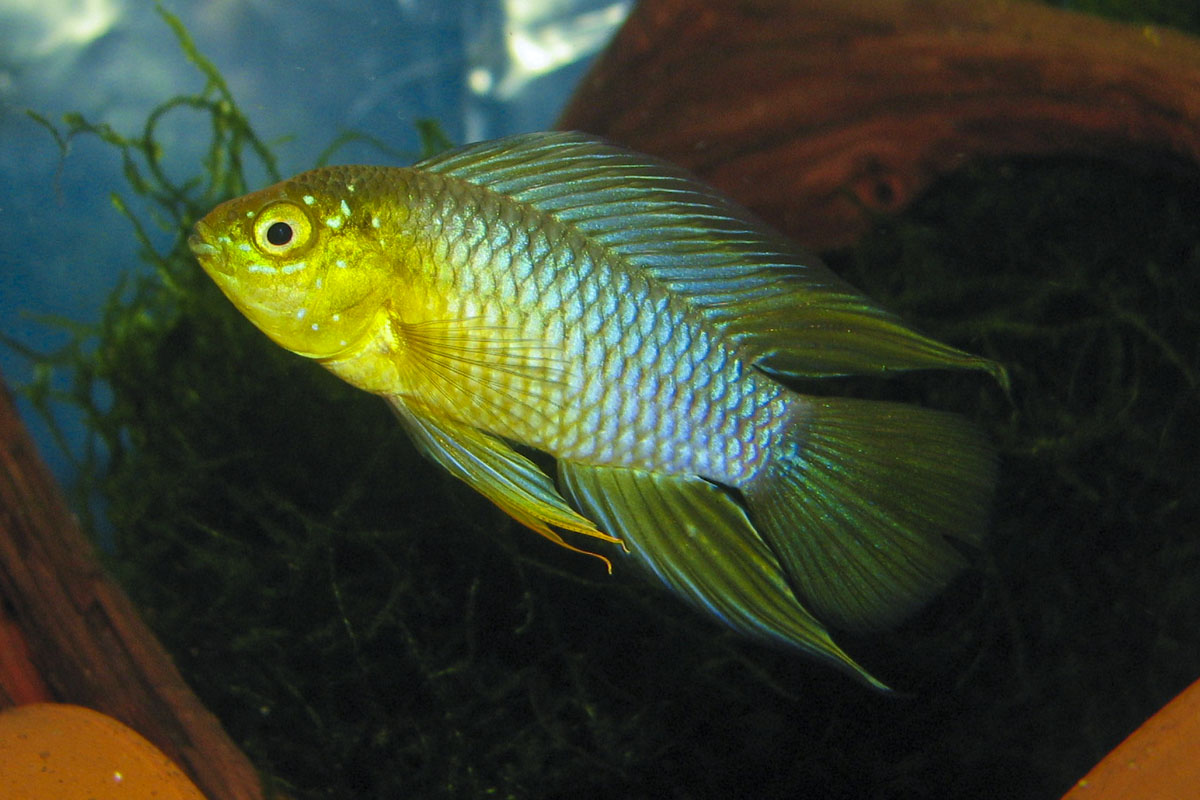
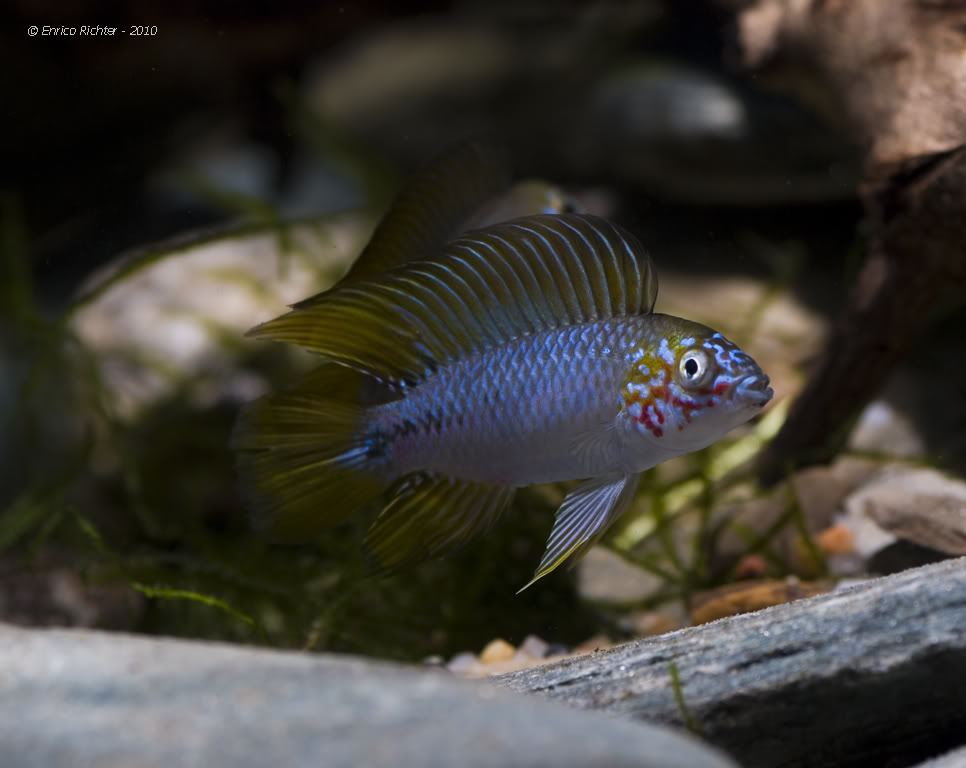
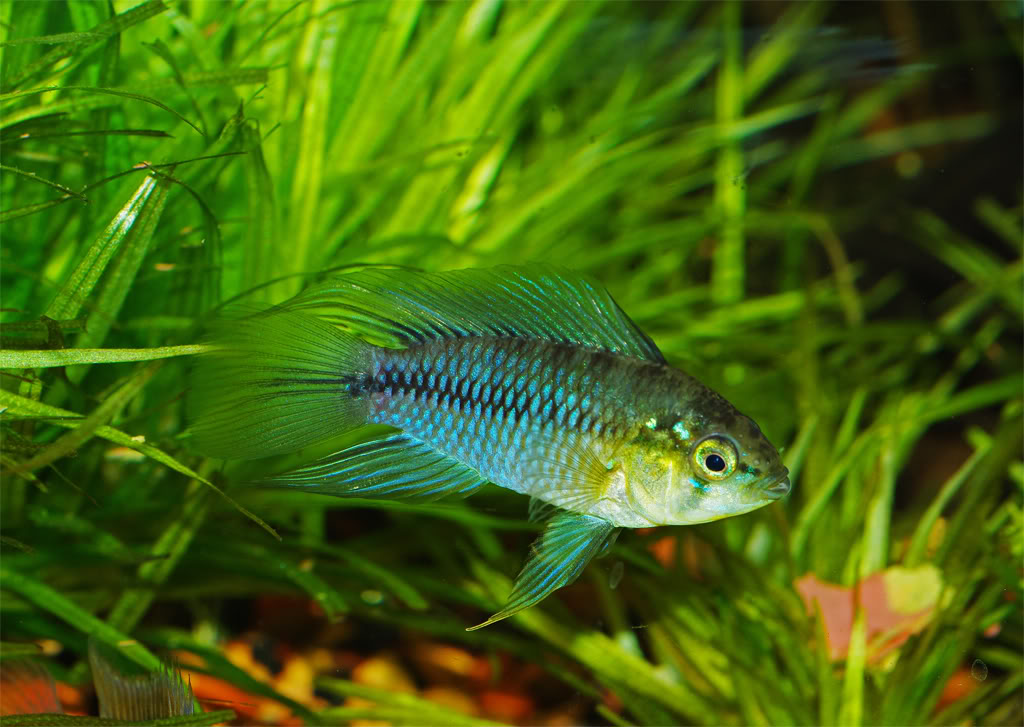
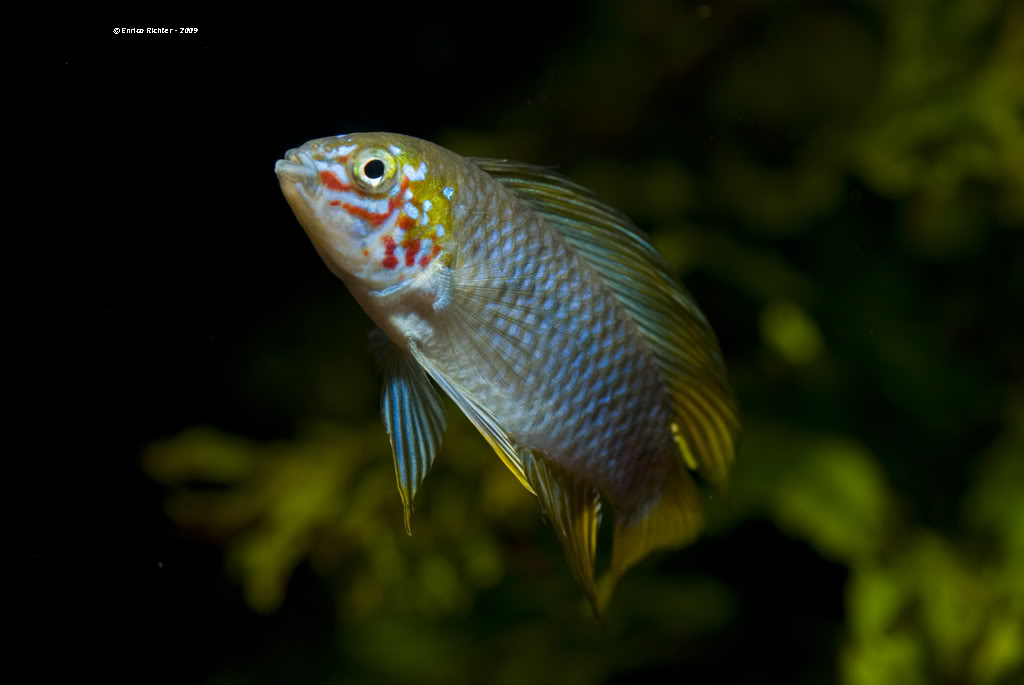
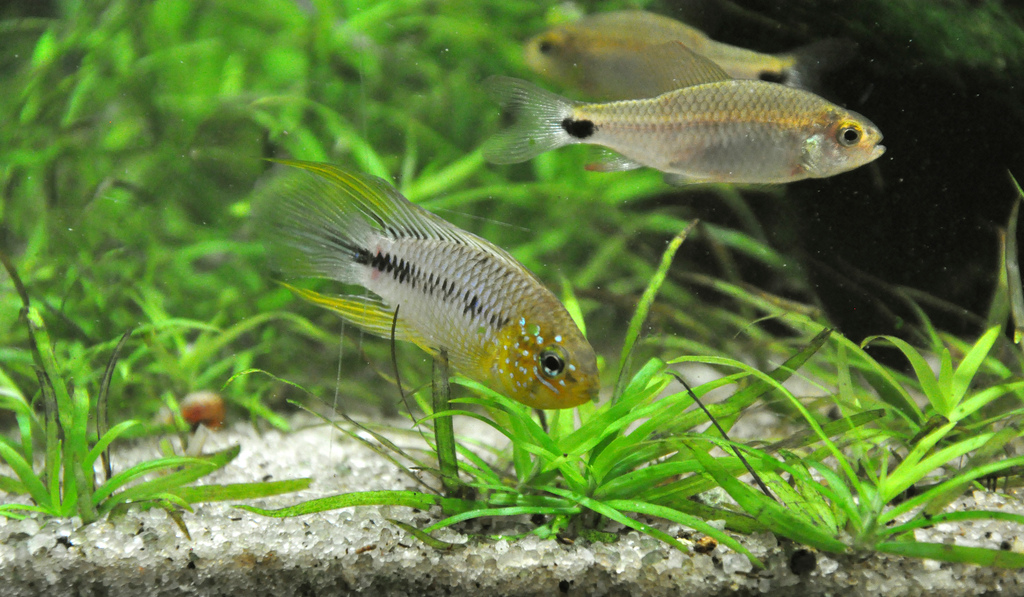
雄鱼比雌鱼更大、色彩更鲜艳,鳍的延长部分也更明显。
繁殖
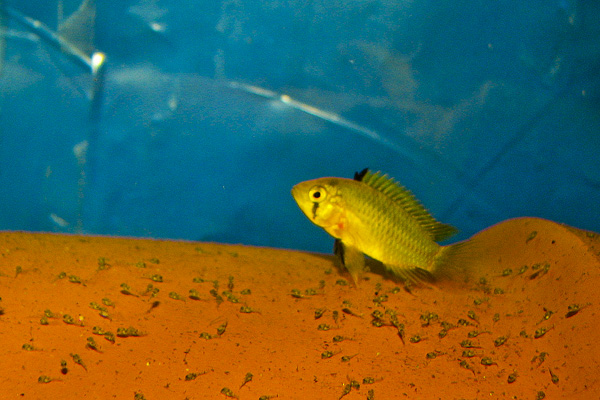
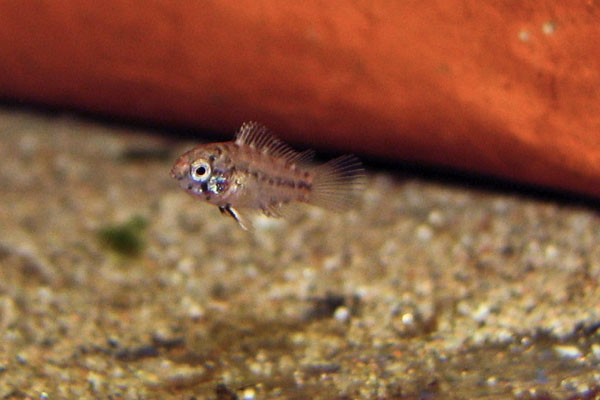
通常在洞穴或缝隙内的基质上产卵,由雌鱼照料卵和仔鱼。小缸内若雌鱼持续驱赶雄鱼,可能需要将雄鱼移出,为护幼雌鱼保留空间。
补充说明
本种存在不同人工观赏品系和地理色型。应保留可靠的品系或采集地信息,避免把不同来源直接混繁;名称相同不代表所有来源具有完全相同的水质适应性。
图片
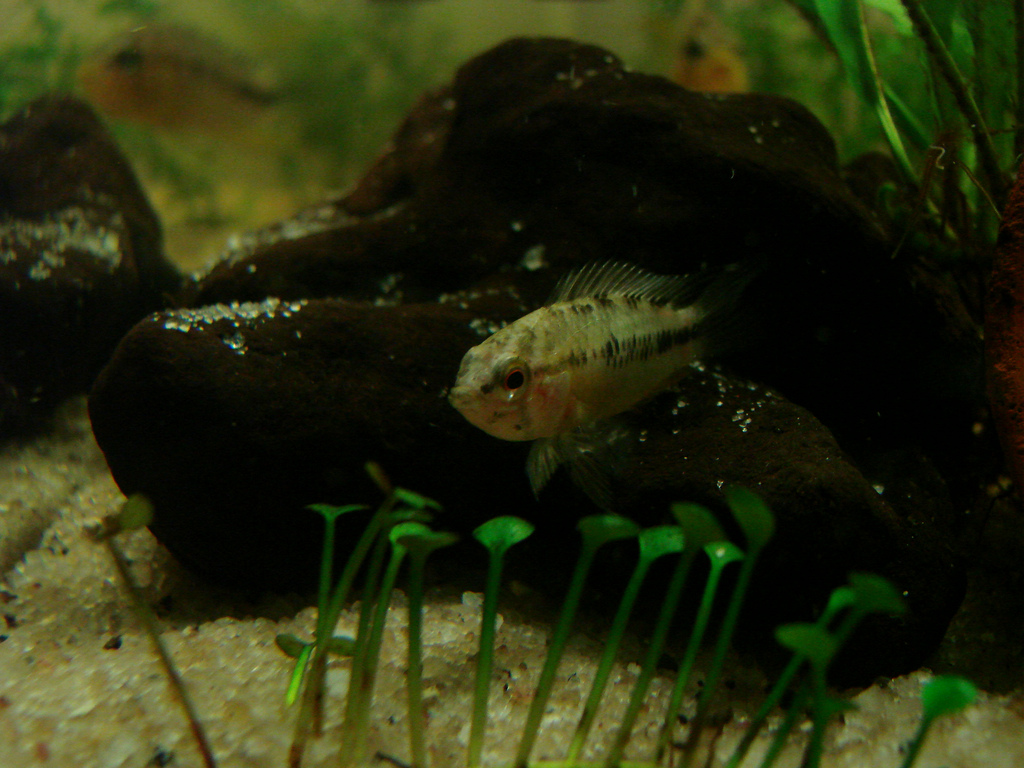
图片来自 SeriouslyFish,版权归各摄影者所有。
English
Overview
Apistogramma borellii is a small South American dwarf cichlid whose captive-bred forms are often suitable for peaceful communities. Wild populations come from different waterways, so a broad species-level chemistry range should not be read as permission to move any individual freely across it.
Distribution & habitat
It occurs in southern Brazil, Paraguay, Argentina and Uruguay, including creeks and tributaries of the Paraguay, lower Paraná and Uruguay systems. Water conditions differ substantially between collection sites.
Aquarium setup
A single pair can use a footprint of about 45 × 30 cm, while a group needs considerably more room. Sand, roots, branches and caves supply cover; pots and appropriate pipes are also practical. Leaf litter adds shelter and supports microbial growth during decomposition, providing supplementary food for fry.
Use subdued lighting and gentle circulation, with floating cover and shade-tolerant plants if desired. In a lightly stocked aquarium, weekly changes of approximately 10–15% provide a reference, avoiding abrupt major shifts. Captive-bred fish are relatively flexible. Although recorded wild habitats span pH 5–8 overall, individual populations may have narrower acidity and hardness requirements.
Diet & feeding
The fish is primarily carnivorous and apparently feeds mainly on bottom-dwelling invertebrates. Regularly rotate live or frozen water fleas, brine shrimp and bloodworm. Most individuals can learn to accept dry foods, generally preferring pellets to flakes.
Behaviour & compatibility
Choose captive-raised fish for a general community. Wild examples are better maintained in a dedicated aquarium or with small, quiet dither fishes, preferably without other Apistogramma. A normally gentle female can become much more aggressive while guarding offspring.
Sexual dimorphism
Males are larger and more colorful, with more strongly extended fins.
Breeding
Eggs are placed on a surface within a cave or crevice, and the female tends the clutch and fry. In a small tank, persistent attacks on the male may make his removal necessary.
Notes
Ornamental lines and geographic forms exist. Preserve dependable breeding-line or collection data and avoid casually mixing origins. Sharing a species name does not establish identical water requirements for all populations.
来源
- https://www.seriouslyfish.com/species/apistogramma-borellii(抓取于 2026-10-10)
apistogramma-borellii · 文件: data/species/apistogramma-borellii.md · 状态: 草稿