双带隐带丽鱼 · Two-Striped Dwarf Cichlid
概要
| 字段 | 值 |
|---|---|
| 类别 | 鱼 |
| 学名 | Apistogramma bitaeniata |
| 别名 | 雙帶隱帶麗魚、Zweistreifen Zwergbuntbarsch、Apistogramma pertense var. bitaeniata、Apistogramma sweglesi、Apistogramma klausewitzi、Apistogramma kleei |
| 分类 | 慈鲷目 Cichliformes › 慈鲷科 Cichlidae › Apistogramma |
| 水体 | 淡水 |
| 原产地 | 巴西、哥伦比亚及秘鲁 |
| 成体体长 | 7.5 cm |
| 饲养难度 | 入门 |
| 最小水体 | 54 L |
| 最小缸长 | 60 cm |
| 水流偏好 | 低 |
| 外部数据 | seriouslyfish apistogramma-bitaeniata;fishbase 13116 |
| 食性 | 肉食 |
| 繁殖方式 | 附着产卵 |
水质参数
| 参数 | 耐受范围 | 最适范围 | 单位 |
|---|---|---|---|
| 水温 | 22–29 | — | °C |
| pH | 4.5–7 | — | — |
| 总硬度 | 0–5 | — | dGH |
概述
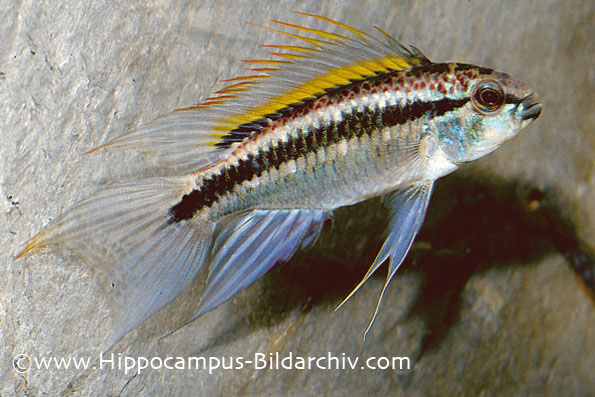
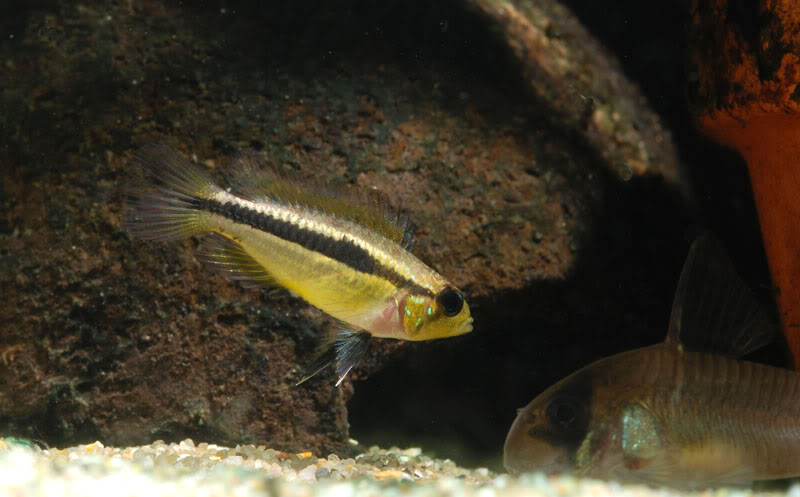
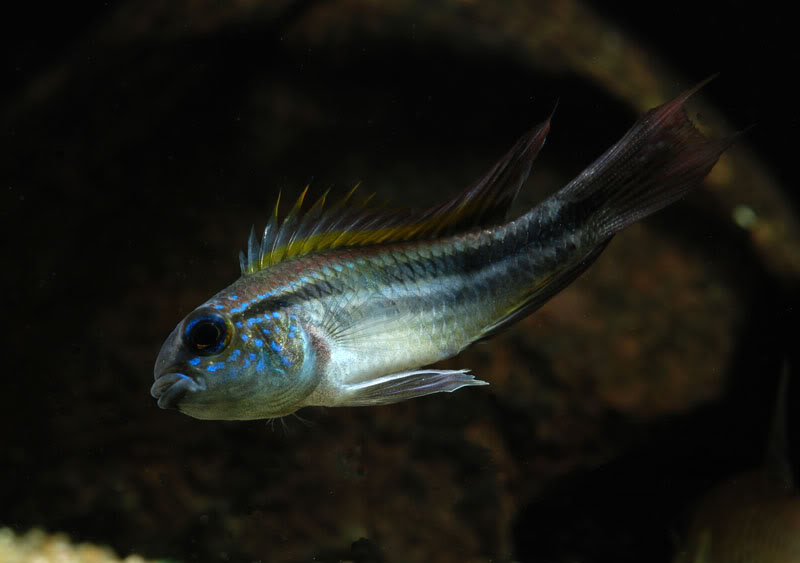
双带隐带丽鱼(Apistogramma bitaeniata)具有两道深色体侧纵带,产地色型常被笼统称作红、蓝、橙或黄型。真正的来源比商品颜色名更有意义,错误套用产地名可能混淆不同种群。
分布与栖息地
分布涉及秘鲁、哥伦比亚和巴西亚马孙地区,从 Marañón 河中段、乌卡亚利河下游,经三国交界和索利蒙斯河支流,延伸到巴西塔帕若斯河口一带。常利用落叶积聚的缓流支流、回水及小溪。马代拉河流域的记录还涉及模式产地历史解释上的疑问,不能仅凭旧标签判断身份。
饲养环境
一对可用约 60 × 30 厘米的底面积,群养要显著增加空间。重点是遮蔽充足:软沙、根枝和洞穴可作自然布局,花盆、管道也能提供有效藏身处。干落叶带来的微生物有助补充仔鱼食物,也让水中有机物更接近自然环境。
维持柔和照明,可配浮水植物和耐阴水草,避免强流。低密度缸可参考每周换水 10%~15%,防止突变。它适合很软的水,野生鱼可能在适宜 pH 范围较低端更舒适。
食性与喂食
天然主要捕食底部无脊椎动物。定期供给丰年虾、水蚤、摇蚊幼虫等活饵或冻饵。多数个体可学习吃干粮,合口颗粒通常比薄片更受欢迎。
习性与混养
人工繁殖鱼较适合一般混养;野生鱼优先专缸,或搭配小型、安静的陪伴鱼减轻紧张,尽量不与其他隐带丽鱼属种类混养。配对和护幼期应特别观察同伴是否受压。
雌雄区分
雄鱼较大,体色鲜明,鳍的延长部分更发达。
繁殖
在洞穴、缝隙内的基质上产卵,由雌鱼照顾卵和仔鱼。护幼雌鱼可变得异常凶悍,小缸中可能需要把雄鱼移走。
补充说明
巴西部分雄鱼头部黄纹较多、体形较长、下侧带较清晰,秘鲁个体常偏蓝,但也存在中间型和较暗的种群,不能把这些趋势当作绝对鉴定标准。保留真实采集地及编号,比重复未经核实的商品产地名更有用。
图片
图片来自 SeriouslyFish,版权归各摄影者所有。
English
Overview
Apistogramma bitaeniata has two dark longitudinal body stripes and several locality-dependent color forms. Broad trade categories such as red, blue, orange and yellow are less informative than reliable origin data, especially because locality labels are sometimes applied incorrectly.
Distribution & habitat
The accepted range spans Peruvian, Colombian and Brazilian Amazonia, from the middle Marañón and lower Ucayali through the three-country border region and Solimões tributaries to the vicinity of the Tapajós mouth. Leaf-filled slow tributaries, backwaters and creeks are characteristic habitats. Madeira-basin records have also reopened questions about the historical interpretation of the type locality, so old labels require care.
Aquarium setup
A pair can occupy a footprint of about 60 × 30 cm, but groups require significantly more space. Prioritize shelter through soft sand, roots, branches and caves; pots or suitable pipes are also useful. Dry leaf litter supports microbial growth that provides extra food for fry and contributes organic compounds to the water.
Keep light subdued, use floating cover and shade-tolerant plants as desired, and avoid strong current. Weekly changes of roughly 10–15% are a reference for lightly stocked aquariums, with sudden shifts avoided. Very soft water is appropriate, and wild fish may be most comfortable toward the acidic end of the suitable pH range.
Diet & feeding
This primarily carnivorous species eats mainly bottom-dwelling invertebrates in nature. Provide regular live or frozen brine shrimp, water fleas and bloodworm. Most individuals can learn to accept dry foods, often favoring appropriately sized pellets over flakes.
Behaviour & compatibility
Captive-bred fish are more suitable for general communities. Wild individuals are preferably kept alone as a species or with small, quiet dither fishes, avoiding other Apistogramma. Watch interactions particularly closely during pairing and brood care.
Sexual dimorphism
Males grow larger and show stronger colors and more extensive fin development.
Breeding
Eggs are laid on a surface inside a crevice or cave. The female looks after eggs and fry and may become extremely aggressive while doing so. Removing the male can be necessary in smaller aquariums.
Notes
Some Brazilian males show more yellow on the head, a longer-looking body and a clearer lower stripe, while Peruvian fish often have more blue. Intermediate and unusually dark populations also exist, so these are tendencies rather than absolute identification rules. Preserve actual collection details and codes instead of relying on an unverified locality trade name.
来源
- https://www.seriouslyfish.com/species/apistogramma-bitaeniata(抓取于 2026-10-10)
apistogramma-bitaeniata · 文件: data/species/apistogramma-bitaeniata.md · 状态: 草稿