Apistogramma baenschi · A188
概要
| 字段 | 值 |
|---|---|
| 类别 | 鱼 |
| 学名 | Apistogramma baenschi |
| 别名 | Inca Dwarf Cichlid、Inka Zwergbuntbarsch |
| 分类 | 慈鲷目 Cichliformes › 慈鲷科 Cichlidae › Apistogramma |
| 水体 | 淡水 |
| 原产地 | 秘鲁北部亚马孙地区瓦亚加河下游沙努西与帕拉纳普拉水系 |
| 成体体长 | 5.5 cm |
| 饲养难度 | 中等 |
| 最小水体 | 72 L |
| 最小缸长 | 80 cm |
| 群居方式 | 成对 |
| 外部数据 | seriouslyfish apistogramma-baenschi;fishbase 62348 |
| 领地性 | 是 |
| 繁殖方式 | 附着产卵 |
水质参数
| 参数 | 耐受范围 | 最适范围 | 单位 |
|---|---|---|---|
| 水温 | 20–26 | — | °C |
| pH | 4–6.5 | — | — |
| 总硬度 | 1–5 | — | dGH |
概述
Apistogramma baenschi 常以 A188 或 Inca/Inka 相关名称流通,已有商业繁殖。人工繁殖鱼相对适应水族箱,但同种竞争仍明显,尤其雌鱼之间可能发生激烈对抗;繁殖用水也比单纯维持成鱼更讲究。
分布与栖息地
记录来自秘鲁北部瓦亚加河下游的沙努西、帕拉纳普拉支流,属亚马孙水系。它住在浅小森林支流的落叶和沉水木结构间,水通常很软、导电度低,并呈淡茶色。
饲养环境
用软砂、沉木枝根、洞穴和遮阴形成多个藏处,也可用花盆或管段。干落叶提供遮蔽与微生物,后者可补充鱼苗食物。柔和光线、莫丝、耐阴植物及浮水植物都适用,过滤保持轻柔。
不要放入未成熟的缸,避免有机废物波动。维持软而偏酸的条件,必要时使用反渗透水或其他可靠软水来源。人工繁殖鱼通常更适应,但短期能承受较硬水不代表适合长期或繁殖使用。
食性与喂食
隐带丽鱼属通常以底部小型无脊椎动物为主要天然食物。可规律投喂丰年虾、水蚤、裸腹蚤、红虫等活饵或冷冻饵,并观察是否接受小颗粒干饲料;属级菜单不能保证每尾鱼立刻接受所有替代饵。
习性与混养
混养优先选择人工繁殖鱼;野生鱼更适合单种或少量小型陪游鱼,不宜与其他同属鱼混放。可以成对养,大缸也可多雄配较多雌鱼,但会形成等级,两性都可能争斗,雌鱼有时甚至咬嘴对抗。
雌雄区分
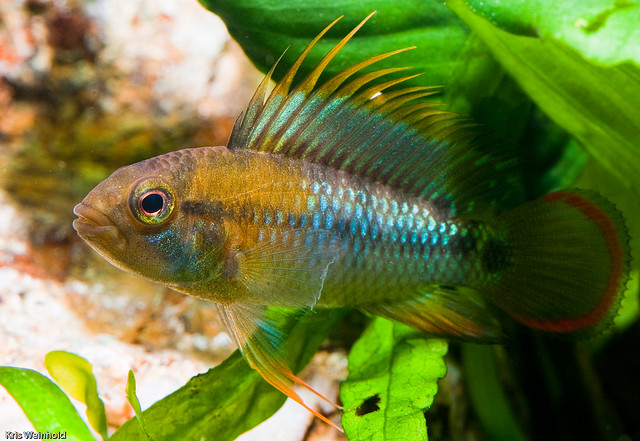
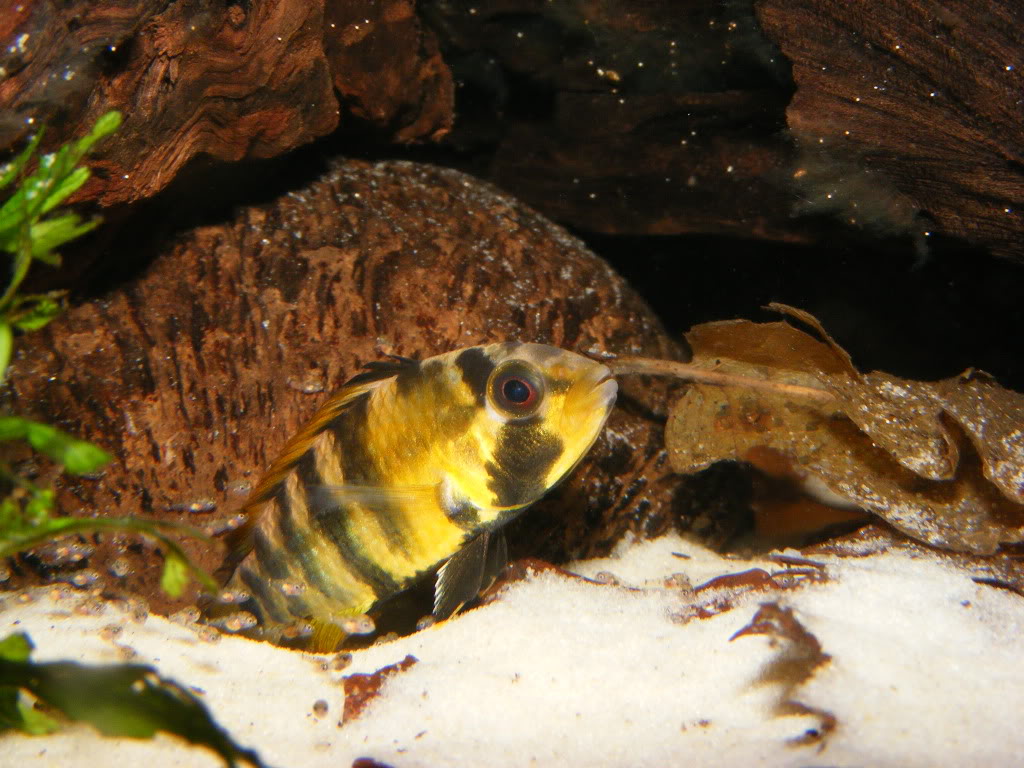
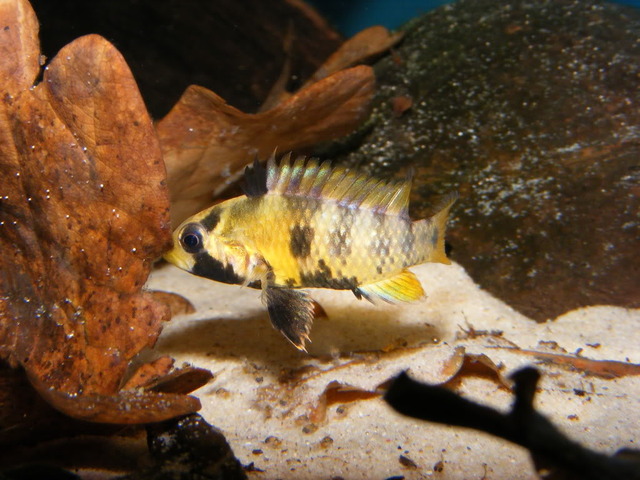
雄鱼较大,蓝紫色身体后部竖纹较淡,尾鳍外缘红带夹在暗边之间,背鳍前部会逐渐拉高。雌鱼偏黄灰至黄色,后部竖纹较宽而清楚,尾鳍较素,背鳍也短。
繁殖
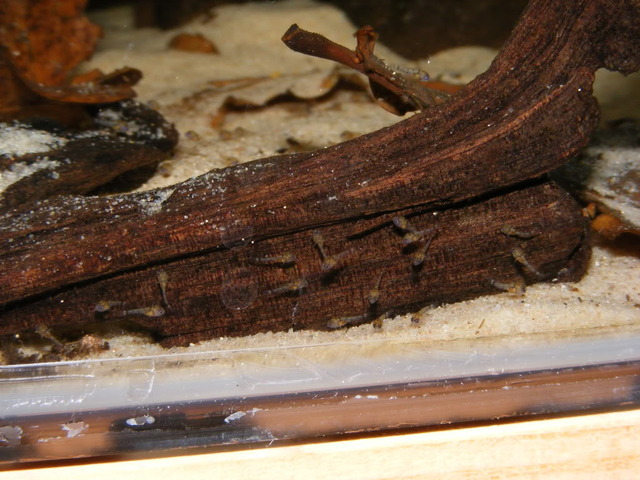
在缝隙或洞穴内附着产卵。成熟雄鱼建立较大领地,通常可容纳数雌,偶尔也与单雌维持稳定配对。卵正常发育需要很软的酸性水。产后雄鱼主要守外围,雌鱼照顾卵和鱼苗。
依温度不同,约 36–72 小时孵化,再五六天起游,届时通常已能吃丰年虾无节幼体。喂养和维护合适时,约五六个月达到性成熟。
图片
图片来自 SeriouslyFish,版权归各摄影者所有。
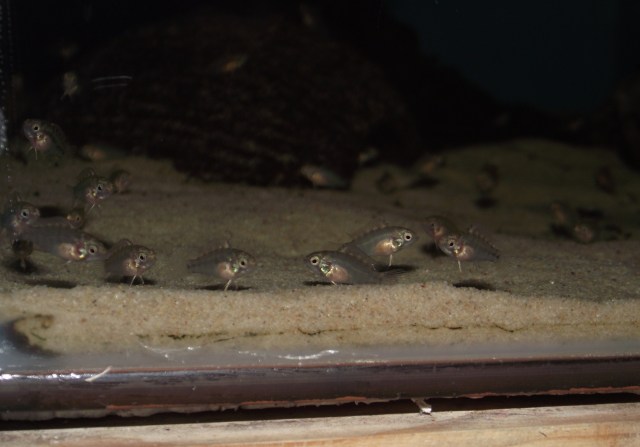
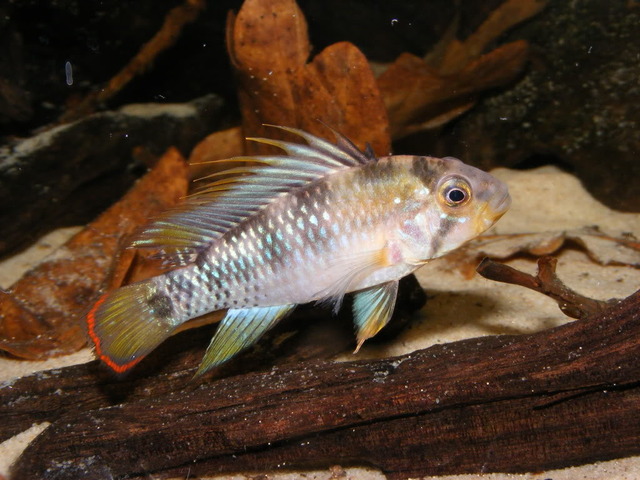
English
Overview
Traded under A188 and Inca or Inka labels, Apistogramma baenschi is commercially bred and comparatively adaptable within its genus. Social competition remains important, particularly between females, and successful egg development demands suitable soft, acidic water.
Distribution & habitat
It occurs in the Shanushi and Paranapura tributaries of the lower Huallaga in northern Peru’s Amazon drainage. Shallow forest streams provide leaf litter and submerged wood. Water is typically very soft, low in conductivity, and lightly tea-stained.
Aquarium setup
Provide soft sand, wood, shaded cavities, and multiple retreats, including pots or pipe shelters if useful. Leaf litter supplies cover and microorganisms that can supplement fry feeding. Dim lighting, moss, shade-tolerant plants, floating cover, and gentle filtration suit the setup.
Avoid immature tanks and fluctuating organic waste. Maintain soft acidic water, using reverse-osmosis water or another dependable soft-water source if needed. Captive-bred adaptability does not make temporary tolerance of harder water a breeding recommendation.
Diet & feeding
Members of the genus generally eat small benthic invertebrates. Offer regular live or frozen Artemia, Daphnia, Moina, and bloodworms, introducing small pellets if accepted. Individual responses to prepared alternatives still need observation.
Behaviour & compatibility
Captive-raised fish are preferable for communities. Wild fish suit a species tank or small dither companions, with other members of the genus avoided. Pairs or appropriately spaced groups can be maintained, but both sexes establish hierarchies; females may fight vigorously, including lip-locking.
Sexual dimorphism
Males are larger, bluish violet, and have relatively faint rear-body bars. A red band bordered by dark margins marks the outer tail, while anterior dorsal rays become extended. Females are yellowish with stronger rear bars, a plainer tail, and shorter dorsal rays.
Breeding
Eggs are attached in sheltered cavities. Mature males usually hold broad territories encompassing several females, though stable pairs sometimes form. Very soft acidic water is needed for proper egg development. The male generally patrols the wider territory while the female tends the brood.
Hatching takes roughly 36–72 hours, with free swimming another five or six days later. Fry can then usually take Artemia nauplii. With good care, maturity is reached in about five or six months.
来源
- https://www.seriouslyfish.com/species/apistogramma-baenschi(抓取于 2026-10-10)
apistogramma-baenschi · 文件: data/species/apistogramma-baenschi.md · 状态: 草稿