阿氏隐带丽鱼 · Agassiz's Dwarf Cichlid
概要
| 字段 | 值 |
|---|---|
| 类别 | 鱼 |
| 学名 | Apistogramma agassizii |
| 别名 | 小隐带丽鱼、阿氏隱帶麗魚、小隱帶麗魚、Agassiz Zwergbuntbarsch、Apistogramma parva、Geophagus agassizii |
| 分类 | 慈鲷目 Cichliformes › 慈鲷科 Cichlidae › Apistogramma |
| 水体 | 淡水 |
| 原产地 | 巴西及秘鲁 |
| 成体体长 | 7.5 cm |
| 饲养难度 | 中等 |
| 最小水体 | 54 L |
| 最小缸长 | 60 cm |
| 水流偏好 | 低 |
| 外部数据 | seriouslyfish apistogramma-agassizii;fishbase 26703 |
| 食性 | 肉食 |
| 繁殖方式 | 附着产卵 |
水质参数
| 参数 | 耐受范围 | 最适范围 | 单位 |
|---|---|---|---|
| 水温 | 22–29 | — | °C |
| pH | 3–4 | — | — |
| 总硬度 | 0–10 | — | dGH |
概述
阿氏隐带丽鱼(Apistogramma agassizii)是具有多种产地色型和人工选育品系的短鲷。人工繁殖鱼与野生鱼在适应性上有明显差别,尤其不能把某些野生种群繁殖所需的极酸水,直接作为所有个体的日常饲养目标。
分布与栖息地
分布横跨亚马孙/索利蒙斯河流域大片地区,从秘鲁乌卡亚利河一带延伸到巴西东部 Capim 河。它偏好有落叶积聚的缓流支流、回水区和小溪,水可因地点或季节呈黑水、清水或白水。产地不同,体色和花纹也可能明显变化。
饲养环境
一对可用底面积 60 × 30 厘米或更大的缸,群养需要更多空间。软沙、根枝、洞穴、花盆或合适管道均可提供遮蔽。干落叶分解时形成微生物群落,可给仔鱼补充少量食物,同时释放有机物。弱光、浮水植物和耐阴水草较适合,水流要轻柔。
低密度饲养时,每周约 10%~15% 的换水可作为参考,避免突然而巨大的环境变化。商业繁殖鱼对 pH 通常较宽容;pH 3~4 指某些野生种群可能需要的繁殖条件,并非普遍要求。野生鱼的硬度需求也可能比人工鱼更低,应结合来源判断。
食性与喂食
食性以动物性为主,野外似乎多摄取底部无脊椎动物。经常提供丰年虾、水蚤、摇蚊幼虫等活饵或冻饵。多数个体可以逐渐接受干粮,颗粒通常比薄片更容易被接受。
习性与混养
一般社区缸优先选择人工繁殖鱼。野生鱼更适合专缸,或只搭配小型、安静的上层陪伴鱼帮助减轻紧张;最好避免与其他隐带丽鱼属种类混养。
雌雄区分
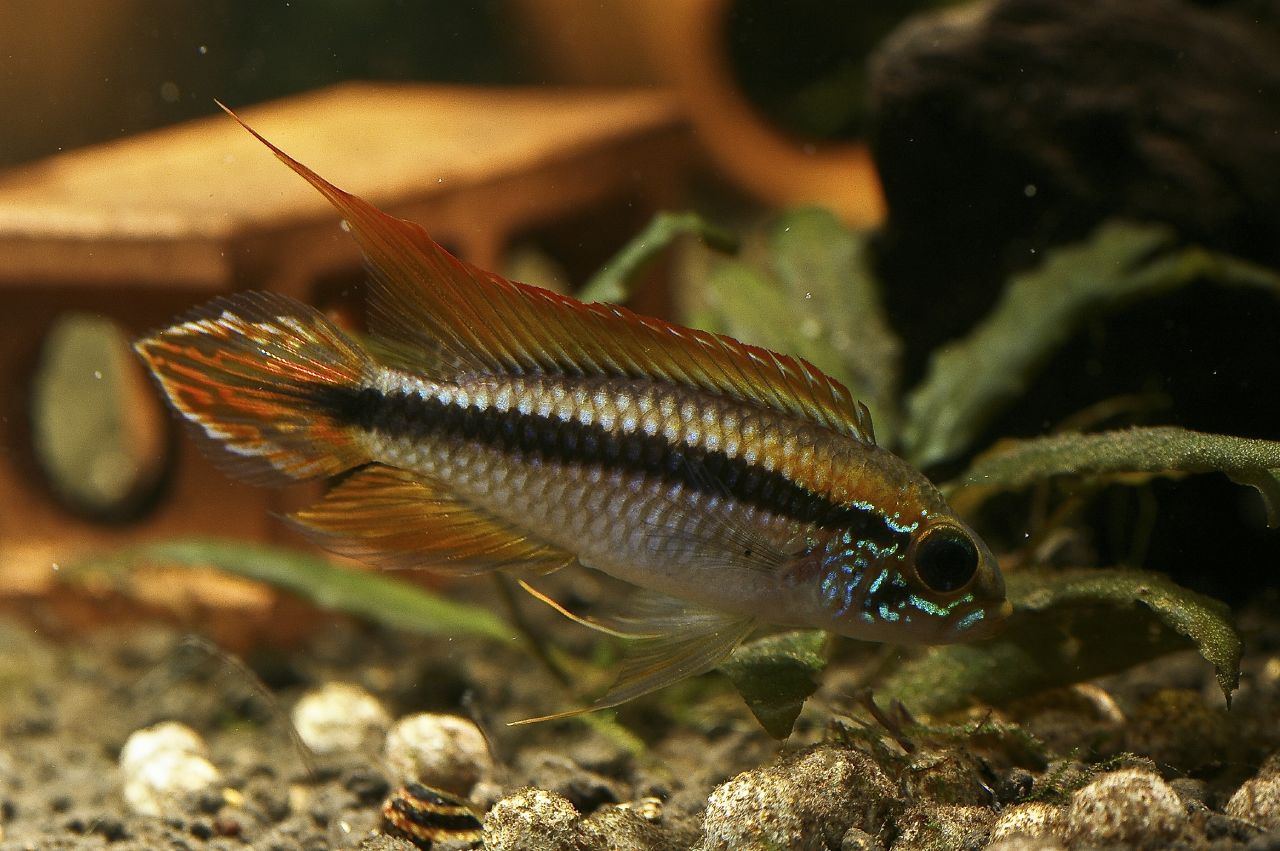
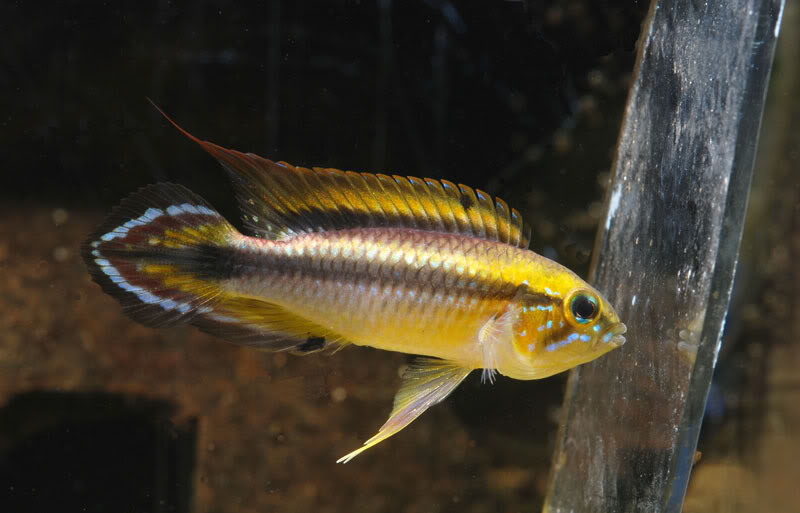
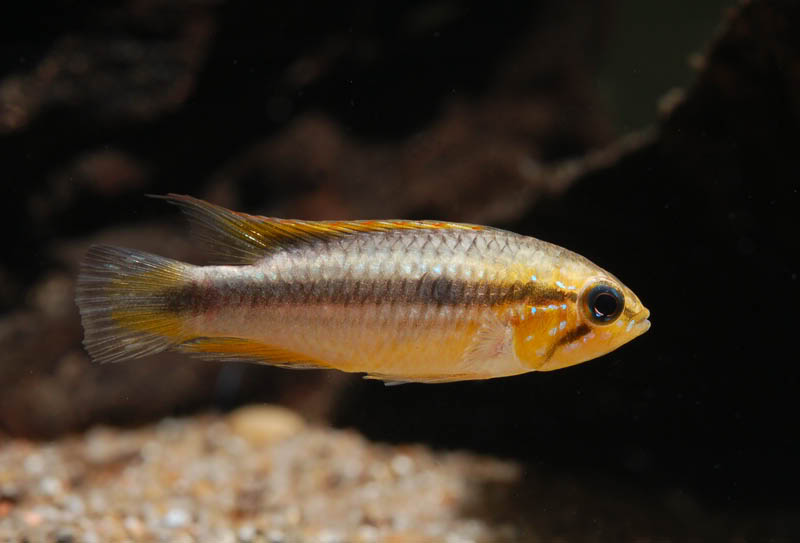
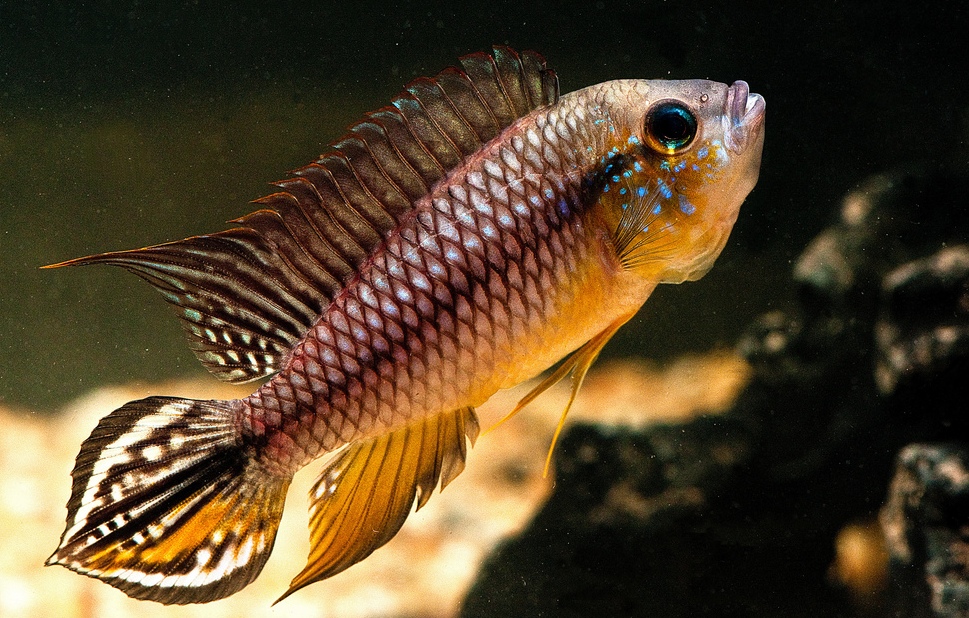
雄鱼更大、更鲜艳,鳍条延长也更明显。
繁殖
卵通常产在洞穴或装饰物缝隙内的基质上,由雌鱼照顾卵和仔鱼。护幼雌鱼可能变得很凶,小缸中可能需要移走雄鱼。繁殖水质应按产地或品系处理,不宜给所有鱼套用同一极低 pH。
补充说明
人工选育品系很多,野生种群也常以采集地点或编号流通。保留准确产地信息有助于避免误混和杂交;颜色或编号并不自动代表已经独立命名的物种。
图片
图片来自 SeriouslyFish,版权归各摄影者所有。
English
Overview
Apistogramma agassizii includes many locality forms and selectively bred ornamental lines. Captive-bred and wild fish can differ substantially in adaptability. In particular, the very acidic breeding requirements of certain wild populations should not be treated as a universal maintenance target.
Distribution & habitat
Its range spans much of the Amazon/Solimões basin, from the Ucayali region of Peru eastward to Brazil's Capim River. Slow tributaries, backwaters and creeks with accumulated leaves are typical. Depending on locality and season, these may contain black, clear or white water. Body patterns and colors can vary markedly between populations.
Aquarium setup
A pair can use a footprint of 60 × 30 cm or more, while groups need larger quarters. Soft sand, roots, branches, caves, pots or suitable pipes all provide shelter. Decomposing dry leaves support microbes that offer supplementary food for fry and release organic compounds into the water. Dim light, floating cover, shade-tolerant plants and gentle circulation suit the fish.
In a lightly stocked tank, weekly changes of around 10–15% are a reference point, with abrupt large environmental changes avoided. Commercially bred fish are relatively flexible about pH. Values as low as 3–4 concern possible breeding requirements of some wild populations, not all fish bearing this name. Wild individuals may also require much lower hardness, so provenance matters.
Diet & feeding
The species is primarily carnivorous and apparently feeds largely on bottom-dwelling invertebrates. Offer brine shrimp, water fleas, bloodworm and similar live or frozen foods regularly. Many fish gradually learn to eat dry preparations, usually accepting pellets more readily than flakes.
Behaviour & compatibility
Captive-raised fish are the preferred choice for a general community. Wild specimens are better kept in a dedicated aquarium or with small, quiet dither fishes. Avoid combining them with other species of Apistogramma where possible.
Sexual dimorphism
Males are larger and more colorful, with stronger fin extensions.
Breeding
Eggs are normally placed on a surface inside a cave or crevice. The female guards the eggs and fry and can become highly aggressive; the male may need removal from a small aquarium. Match breeding water to the population or line rather than applying one extremely low pH to every fish.
Notes
Numerous cultivated forms exist, while wild populations often circulate under locality names or identification numbers. Retaining reliable collection information helps avoid unwanted mixing and hybridization. A distinct color or code does not automatically identify a formally separate species.
来源
- https://www.seriouslyfish.com/species/apistogramma-agassizii(抓取于 2026-10-10)
apistogramma-agassizii · 文件: data/species/apistogramma-agassizii.md · 状态: 草稿