五线旗鮰 · Red-Striped Lyretail
概要
| 字段 | 值 |
|---|---|
| 类别 | 鱼 |
| 学名 | Aphyosemion striatum |
| 别名 | 五線旗鮰、Gestreifter Prachtkärpfling、Haplochilus striatus |
| 分类 | 鳉形目 Cyprinodontiformes › 假鳃鳉科 Nothobranchiidae › Aphyosemion |
| 水体 | 淡水 |
| 原产地 | 赤道几内亚、加蓬 |
| 成体体长 | 5 cm |
| 饲养难度 | 入门 |
| 最小水体 | 41 L |
| 最小缸长 | 45 cm |
| 性情 | 温和 |
| 特征 | 会跳缸: 是 |
| 外部数据 | seriouslyfish aphyosemion-striatum;fishbase 9795 |
| 繁殖方式 | 产卵 |
水质参数
| 参数 | 耐受范围 | 最适范围 | 单位 |
|---|---|---|---|
| 水温 | 20–26 | — | °C |
| pH | 6.5–7.5 | — | — |
| 总硬度 | 3–12 | — | dGH |
概述
五线旗鮰(Aphyosemion striatum)是一种较容易繁殖的非一年生鳉鱼,温和而偏胆小。与活跃鱼混养时,它可能难以争到食物,遮蔽和喂食机会比单看体色更值得重视。
分布与栖息地
分布看来位于赤道几内亚米特马莱河下游至加蓬奥果韦河下游之间,包括姆贝伊、科莫等沿海水系;模式产地在奥果韦河支流阿邦加河。它栖息于沿海低地雨林中常年有水的小溪、水潭及淡水沼泽。
饲养环境
建议底面积至少约 45 × 30 cm。暗色底床、密植水草和木材提供躲藏处,浮水植物可柔化灯光。缸盖须贴合,防止跳跃逃逸。
食性与喂食
旗鮰属在野外多摄食水生和陆生无脊椎动物。五线旗鮰在缸中偏爱水蚤、摇蚊幼虫等小型活饵和冷冻饵,多数也能接受优质薄片。应确保它实际获得食物,而不是被较活跃同伴全部抢走。
习性与混养
可谨慎混养温和灯鱼、小型鲤科鱼、小型慈鲷和鲶鱼等,但同伴不能过于强势,也不能小到可能被吞食。它整体温和、较胆小,混养安排应以减少争食和干扰为先。
雌雄区分
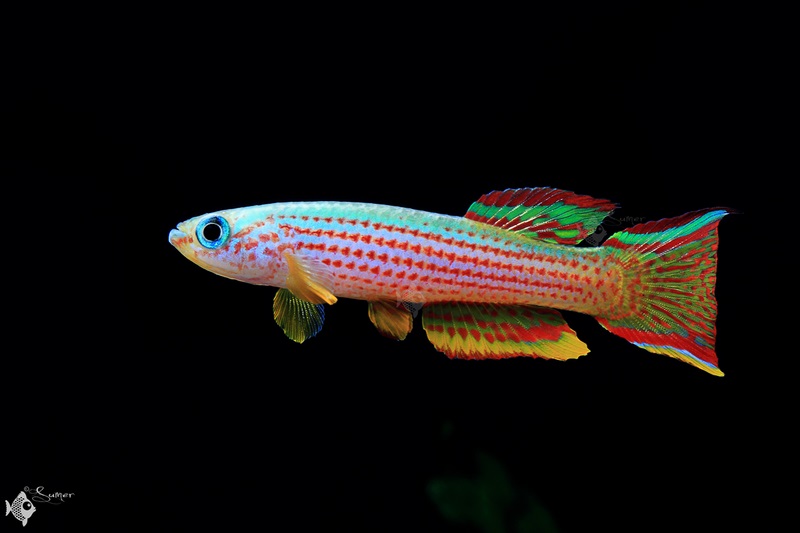
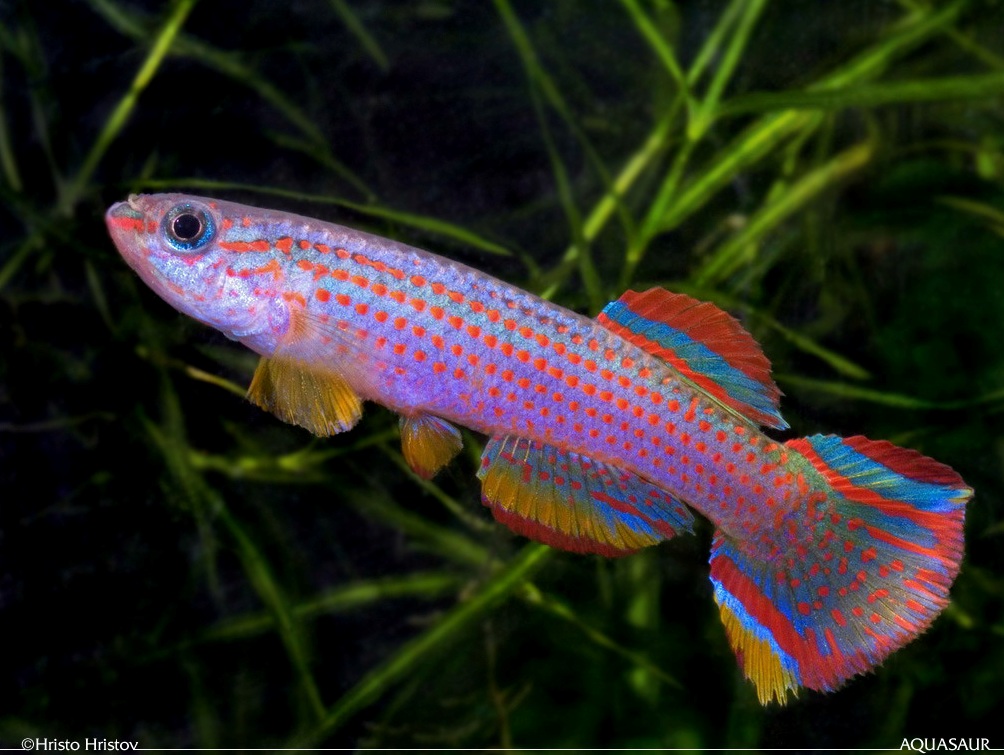
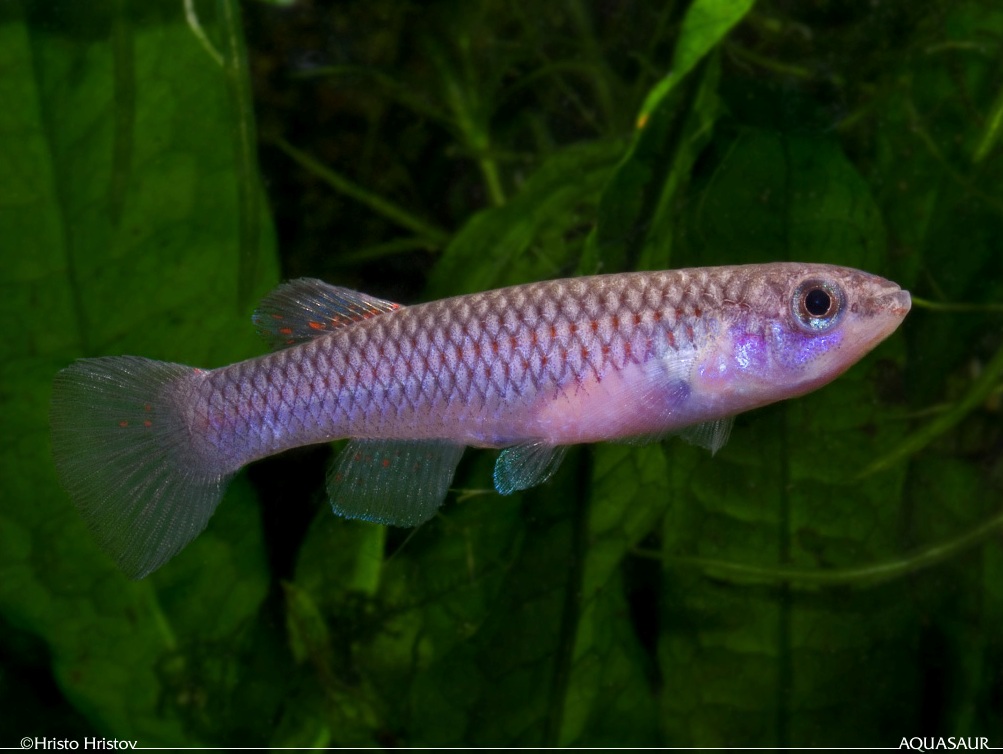
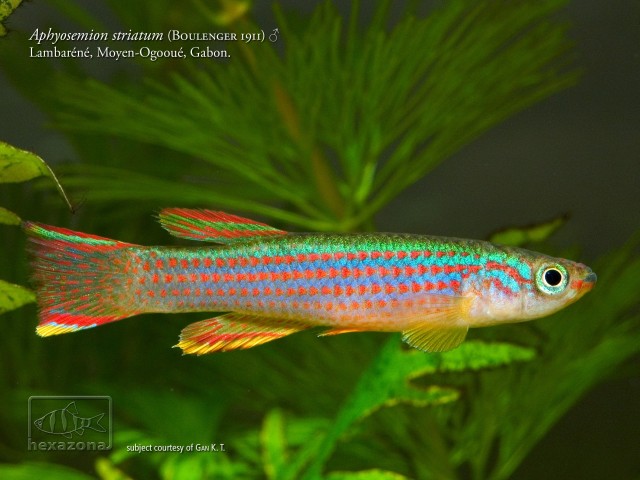
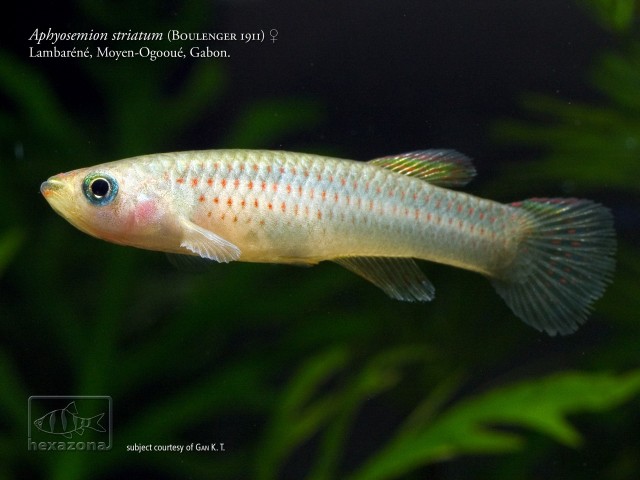
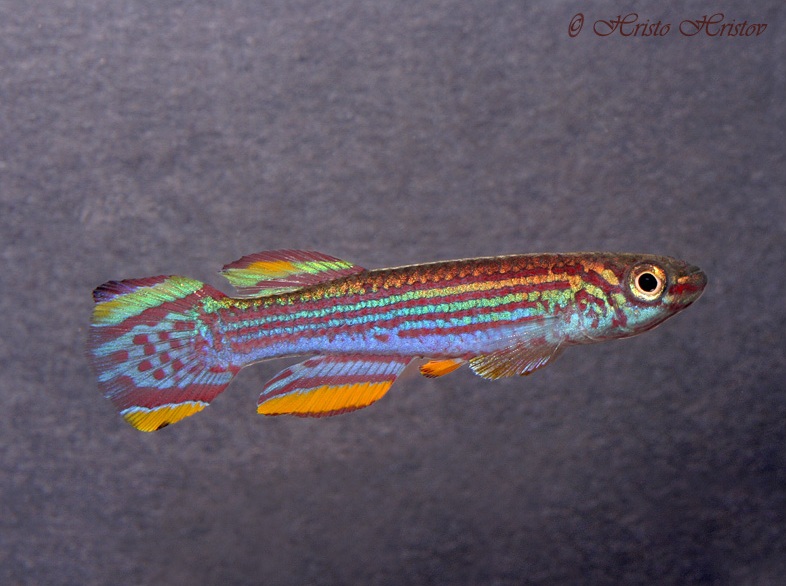
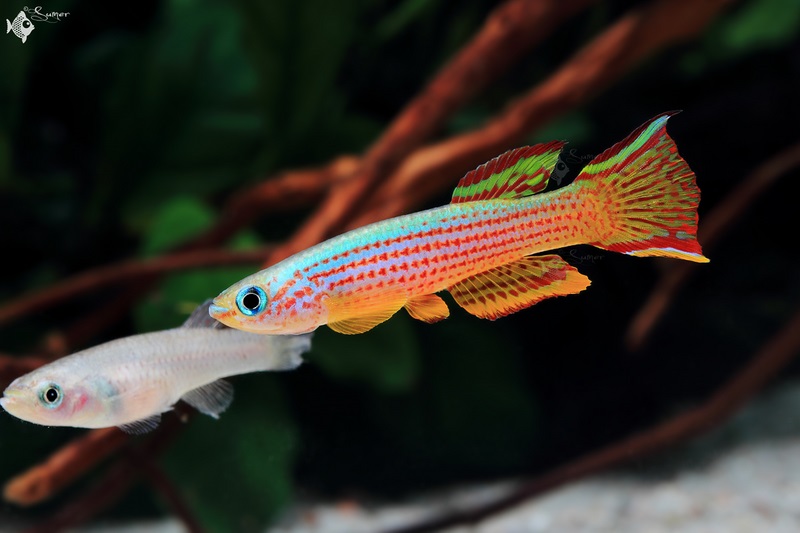
成熟雄鱼较大、颜色更鲜明,尾鳍、背鳍和臀鳍也更延长。
繁殖
可一雄配两雌,也可一对繁殖;三鱼组合的收卵量有时较低。先分开育肥雌雄,让雌鱼免于持续产卵,再挑选状态好的亲鱼。繁殖水宜接近中性,温度保持在适合本种的范围,缸不需直射灯光;轻柔海绵过滤有助于防止水体停滞。
卵产于底部介质或植物间,可用泥炭苔、细叶植物或产卵拖把;裸底配拖把便于维护与收卵。每天可产约 20~30 粒卵,配对约一周后应分开休养,尤其避免雌鱼疲劳。
取卵后可水孵,或放在小容器的湿泥炭苔上,及时移除霉卵并保持避光。水孵约需 10~14 天;湿介质孵育约 18 天后可加水尝试孵化。多批次繁殖时标记种名、日期及卵数。
鱼苗最初需要纤毛虫级别微饵,约两天后可喂丰年虾无节幼体或微虫。初期用浅水,随幼鱼生长逐渐提高水位。每天少量喂两次,每隔 2~3 天少量换水,留意水质和丝绒病寄生虫风险。
补充说明
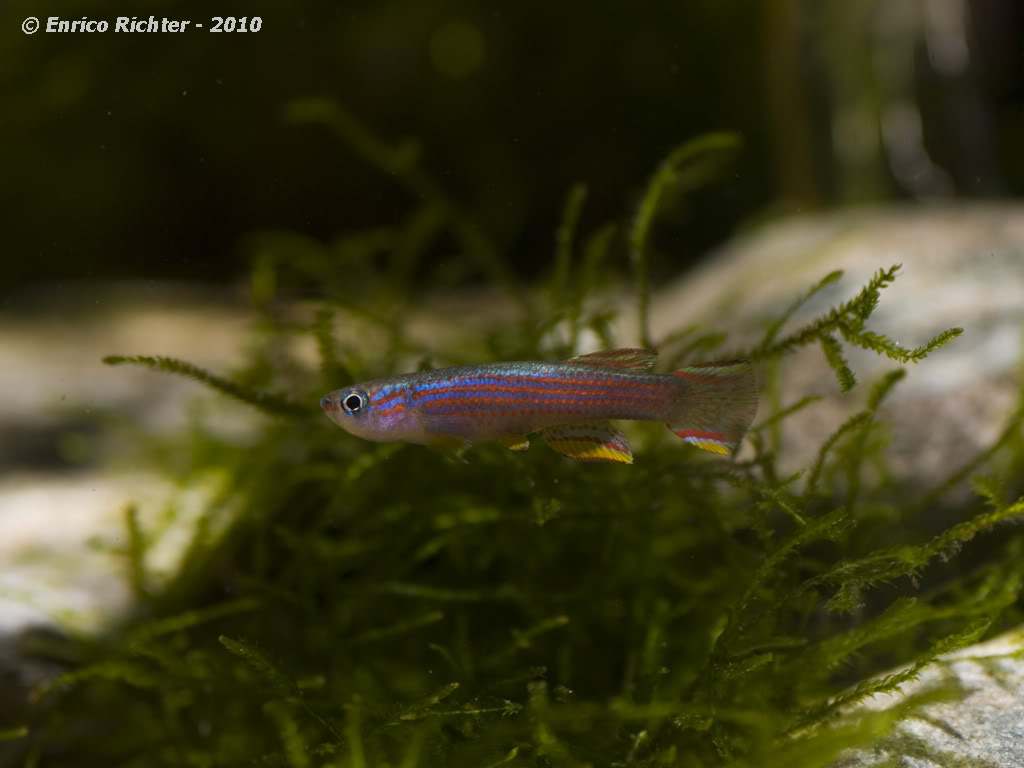
尾柄常有 2~4 条平行红色纵纹,背鳍可见基部与外缘的红带,尾鳍中央有红点而不呈同心纹或垂直条纹。这些组合特征比只看“五线”名称更有助于辨认。非一年生并不意味着寿命固定为某个年数。
图片
图片来自 SeriouslyFish,版权归各摄影者所有。
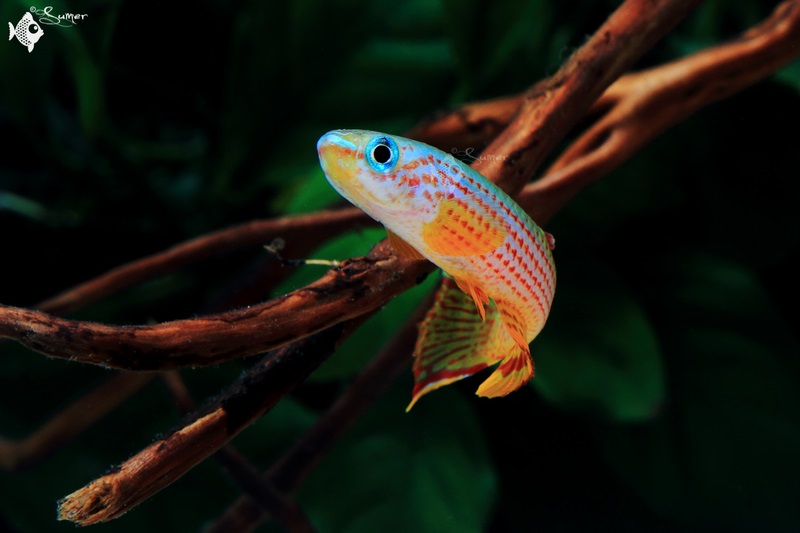
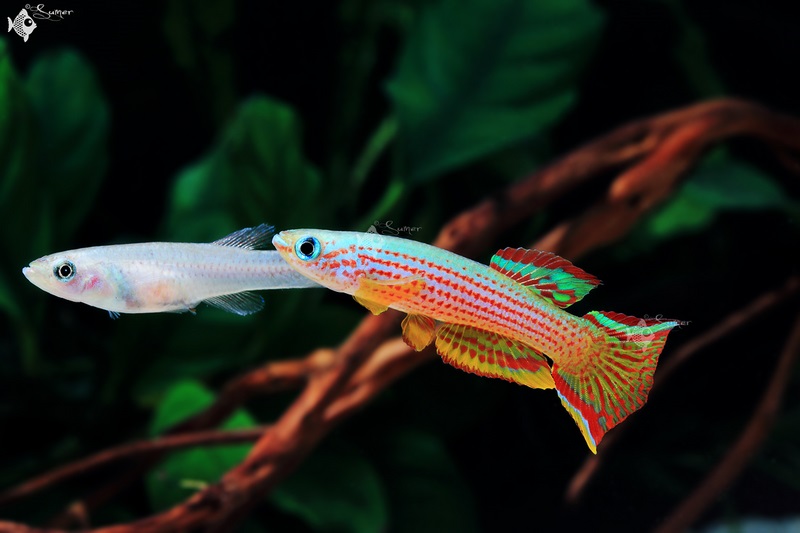
English
Overview
Aphyosemion striatum, the red-striped lyretail, is a relatively straightforward nonannual killifish to breed. Its peaceful, rather shy behavior means that access to food and sheltered space needs particular attention when more active fishes are present.
Distribution & habitat
The range appears to extend from the lower Mitemele in Equatorial Guinea to the lower Ogooué in Gabon, including intervening coastal systems such as the Mbei and Komo. The type locality is in the Abanga, an Ogooué tributary. Permanent streams, pools, and freshwater swamps in lowland coastal rainforest provide its habitat.
Aquarium setup
Use a footprint of at least about 45 × 30 cm. Dark substrate, dense planting, and wood create cover, while floating vegetation softens the light. A close-fitting cover is necessary to prevent jumping escapes.
Diet & feeding
Wild members of Aphyosemion generally eat aquatic and terrestrial invertebrates. In captivity, red-striped lyretails favor small live or frozen foods such as Daphnia and bloodworms, and most accept quality flakes. Check that the fish actually receive their share instead of losing every meal to more vigorous companions.
Behaviour & compatibility
Carefully selected peaceful tetras, small cyprinids, dwarf cichlids, and catfishes may be suitable. Companions must be neither too domineering nor small enough to be swallowed. This shy species benefits from arrangements that limit feeding competition and disturbance.
Sexual dimorphism
Mature males are larger and more strongly colored, with elongated caudal, dorsal, and anal fins.
Breeding
A male with two females or a single pair can be used, although trios sometimes produce fewer collected eggs. Condition the sexes separately to give females a break from repeated spawning. Use near-neutral water within the species' normal temperature range, without direct artificial illumination. Gentle sponge filtration helps prevent stagnation.
Eggs are placed in bottom material or among plants. Peat moss, fine plants, and artificial mops are possible media; mops over a bare base make maintenance and collection easier. Daily batches may contain around 20–30 eggs. Separate the parents for recovery after about a week, particularly to protect the female from exhaustion.
Collected eggs can develop in water or on damp peat moss in a small container. Remove moldy eggs and keep incubation dark. Water incubation generally lasts 10–14 days. Damp-incubated eggs can be wetted after approximately 18 days to encourage hatching. Label each batch with species, dates, and egg counts.
New fry initially require infusoria-sized food. Artemia nauplii or microworms can follow after about two days. Keep water shallow at first and gradually increase its depth as the fry grow. Feed small portions twice daily, change small amounts of water every two or three days, and watch closely for poor water quality and velvet parasites.
Notes
Useful markings include two to four parallel red stripes on the caudal peduncle, red bands near the base and margin of the dorsal fin, and red spots in the center of the tail rather than concentric patterns or vertical bars. Nonannual life history does not establish a fixed lifespan in years.
来源
- https://www.seriouslyfish.com/species/aphyosemion-striatum(抓取于 2026-10-10)
aphyosemion-striatum · 文件: data/species/aphyosemion-striatum.md · 状态: 草稿