饰边旗鮰 · Splendid Lyretail
概要
| 字段 | 值 |
|---|---|
| 类别 | 鱼 |
| 学名 | Aphyosemion splendopleure |
| 别名 | 飾邊旗鮰、Grüner Glanzprachtkärpfling、Fundulopanchax splendopleuris |
| 分类 | 鳉形目 Cyprinodontiformes › 假鳃鳉科 Nothobranchiidae › Aphyosemion |
| 水体 | 淡水 |
| 原产地 | 喀麦隆、赤道几内亚、加蓬、尼日利亚 |
| 成体体长 | 6 cm |
| 饲养难度 | 入门 |
| 最小水体 | 28 L |
| 最小缸长 | 45 cm |
| 领地性 | 是 |
| 特征 | 会跳缸: 是 |
| 外部数据 | seriouslyfish aphyosemion-splendopleure;fishbase 9793 |
| 繁殖方式 | 产卵 |
水质参数
| 参数 | 耐受范围 | 最适范围 | 单位 |
|---|---|---|---|
| 水温 | 22–26 | — | °C |
| pH | 6–7.2 | — | — |
| 总硬度 | 3–15 | — | dGH |
概述
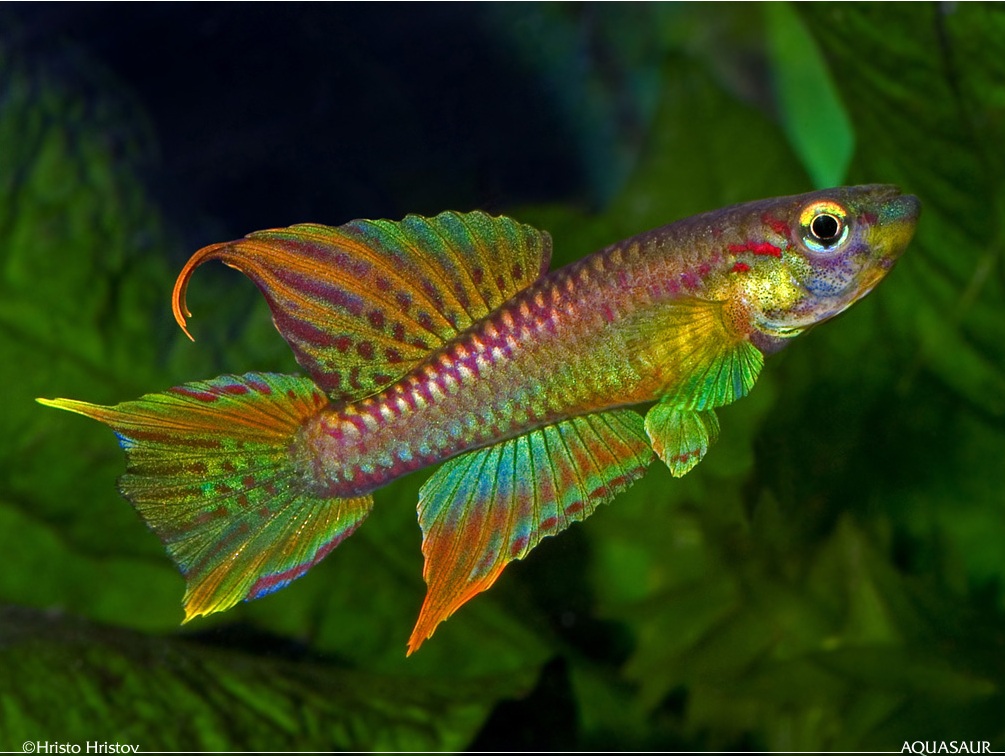
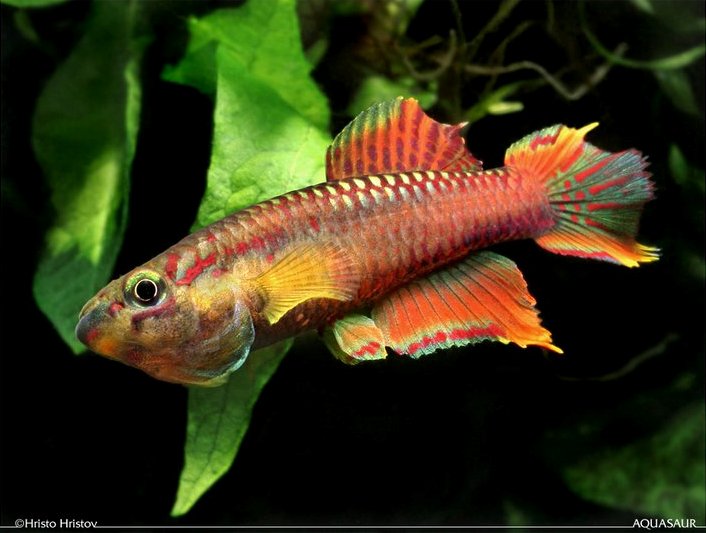
饰边旗鮰(Aphyosemion splendopleure)是一种很胆小的鳉鱼,雄鱼体侧可呈漂亮的绿色虹彩。不同采集地点有不同色型,宜分开保种;它不擅长和其他鱼争食,更适合单种饲养。
分布与栖息地
分布于尼日利亚东南端、喀麦隆西部、赤道几内亚至加蓬西北部的沿海低地。原始描述未给出确切模式产地,后来的重新描述提到喀麦隆西南部 Tiko。常生活在小溪流速较缓的区域。
饲养环境
一对或一雄两雌可使用底面积约 45 × 25 cm 以上的缸。暗色底床、浓密水草和木材可提供安全感,浮水植物有助于弱化灯光。它能跳跃,缸盖必须严密。
食性与喂食
偏爱水蚤、摇蚊幼虫等小型活饵或冷冻饵,多数个体也能接受优质薄片。喂食时应避免让其他鱼把食物抢走。
习性与混养
不推荐加入普通混养缸,其胆怯和竞争能力较弱容易造成问题。同种雄鱼之间可能有领地争执,但通常不会造成严重伤害。不同产地色型应分开,以防杂交。
雌雄区分
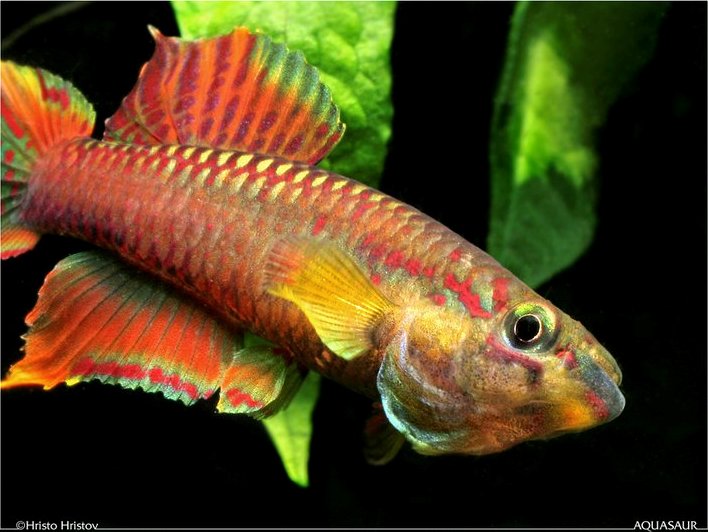
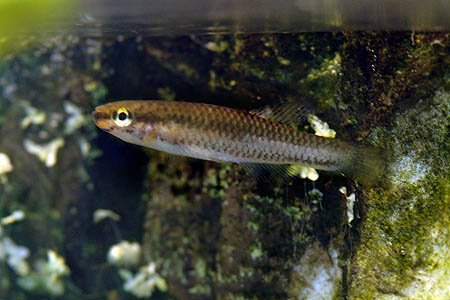
雄鱼明显更鲜艳,背鳍、尾鳍及臀鳍也比雌鱼长。
繁殖
繁殖相对容易,宜用昏暗缸和轻柔海绵过滤,水约 pH 6.0~6.5、24 °C。可先把雌雄分开,以多样活饵和冷冻饵育肥,再选状态好的雄鱼和怀卵雌鱼配对。三鱼组合也可产卵,但未参与繁殖者可能吞卵,降低收卵数量。
卵可产于底部介质或植物丛中,可选细叶植物、产卵拖把或泥炭苔。裸底配拖把便于清洁与取卵。通常每天可有约 10~20 粒卵;约一周后应分开亲鱼休养,尤其保护雌鱼不因持续产卵而衰弱。亲鱼可能吃卵,想增加育苗数量时应温柔取卵另育。
卵可水孵或放在小容器内的湿泥炭苔上孵育,均需避光,及时去除霉卵。水孵通常约 12 天,随温度有变化;湿介质方式可约 18 天后加水尝试孵化。多批操作时标清种名、产地、日期和卵数。
鱼苗起初很小,应先喂纤毛虫等微饵,约两天后再用丰年虾无节幼体或微虫,约两周后逐步添加更大的饵料和冷冻饵。初期水位浅,随生长增加;每天少量喂两次,每隔 2~3 天少量换水,留意水质与丝绒病风险。
补充说明
保留地方型及血系信息很重要,外形相近也不宜直接混养繁殖。部分分类处理把它放入 Chromaphyosemion,检索旧记录时可能遇到这一名称。
图片
图片来自 SeriouslyFish,版权归各摄影者所有。
English
Overview
Aphyosemion splendopleure, the splendid lyretail, is a very shy killifish whose males can show attractive green iridescence. Local color forms should be maintained separately. Poor competitive ability makes a dedicated aquarium preferable to a general community.
Distribution & habitat
Its range follows coastal lowlands from southeastern Nigeria through western Cameroon and Equatorial Guinea to northwestern Gabon. The original description lacked a precise type locality; a later redescription mentioned Tiko in southwestern Cameroon. It occupies slower sections of small streams.
Aquarium setup
A pair or trio can use a footprint of about 45 × 25 cm or larger. Dark substrate, dense plants, and wood provide shelter, while floating vegetation softens the lighting. A tightly fitted lid is essential because the fish jump.
Diet & feeding
Small live or frozen Daphnia, bloodworms, and similar foods are preferred. Quality flakes are also accepted by many individuals. Ensure that competing fishes do not take the food first.
Behaviour & compatibility
A standard community is unsuitable for this timid, easily outcompeted species. Males may defend space against one another, but serious damage is uncommon. Separate locality forms to prevent interbreeding.
Sexual dimorphism
Males are much more colorful and develop longer dorsal, caudal, and anal fins than females.
Breeding
Breeding is relatively easy in a dim aquarium with gentle sponge filtration, around pH 6.0–6.5 and 24 °C. Condition males and females separately on varied live and frozen foods, then select a well-conditioned pair. Trios also spawn, but the extra fish may eat eggs and reduce the harvest.
Eggs are placed in bottom material or vegetation. Fine plants, mops, or peat moss can be used, with mops over a bare base simplifying cleaning and collection. Around 10–20 eggs may be laid daily. Separate the parents for recovery after about a week, particularly to avoid exhausting the female. Remove eggs gently for separate incubation if larger numbers of fry are wanted.
Incubate in water or on damp peat moss in a small container. Keep eggs dark and remove moldy ones promptly. Water incubation takes roughly twelve days, depending on temperature. Damp-incubated eggs can be wetted after about eighteen days to encourage hatching. Label batches with species, locality, dates, and egg numbers.
The fry are tiny and need infusoria first. After about two days, introduce Artemia nauplii or microworms; larger and frozen foods can follow progressively after approximately two weeks. Start with shallow water and increase its depth as the fry grow. Feed small portions twice daily and change small amounts of water every two or three days. Close attention to water quality is needed because fry are susceptible to velvet disease.
Notes
Retain locality and bloodline information even when forms look similar. Some taxonomic treatments place the species in Chromaphyosemion, a name that may appear in older records.
来源
- https://www.seriouslyfish.com/species/aphyosemion-splendopleure(抓取于 2026-10-10)
aphyosemion-splendopleure · 文件: data/species/aphyosemion-splendopleure.md · 状态: 草稿