加蓬旗鮰 · Gabon Lyretail
概要
| 字段 | 值 |
|---|---|
| 类别 | 鱼 |
| 学名 | Aphyosemion gabunense |
| 别名 | Gabun Prachtkärpfling |
| 分类 | 鳉形目 Cyprinodontiformes › 假鳃鳉科 Nothobranchiidae › Aphyosemion |
| 水体 | 淡水 |
| 原产地 | 加蓬 |
| 成体体长 | 5 cm |
| 饲养难度 | 入门 |
| 最小水体 | 28 L |
| 最小缸长 | 45 cm |
| 性情 | 温和 |
| 特征 | 会跳缸: 是 |
| 外部数据 | seriouslyfish aphyosemion-gabunense-gabunense;fishbase 9738 |
| 繁殖方式 | 产卵 |
水质参数
| 参数 | 耐受范围 | 最适范围 | 单位 |
|---|---|---|---|
| 水温 | 22–28 | — | °C |
| pH | 6.5–7.2 | — | — |
| 总硬度 | 5–15 | — | dGH |
概述
加蓬旗鮰(Aphyosemion gabunense)是温和、略胆小的非一年生鳉鱼,生活于常年有水的环境。它可作为入门鳉鱼,但不能忽略防跳、争食压力和育苗时的细小开口饵。
分布与栖息地
模式产地靠近加蓬西部兰巴雷内,被认为是奥果韦河下游流域的特有种,范围包括恩古涅河支流系统。栖息环境包括沼泽、小溪和水潭。
饲养环境
一对或一雄两雌可从约 45 × 25 cm 的底面积起步。采用暗色底床、较密的水草和木材提供遮蔽,浮水植物可进一步柔化灯光。缸盖必须贴合,因为它能熟练跳出缸外。
食性与喂食
偏爱水蚤、摇蚊幼虫等小型活饵或冷冻饵,多数个体也可接受优质薄片。应留意它是否在较活跃的同伴之前获得足够食物。
习性与混养
性情很温和,也容易胆怯和被其他鱼压制争食。小型温和脂鲤、波鱼、合适的小型慈鲷、鼠鱼或小型异型等可供选择,仍需分别核对水质和活动强度。
雌雄区分
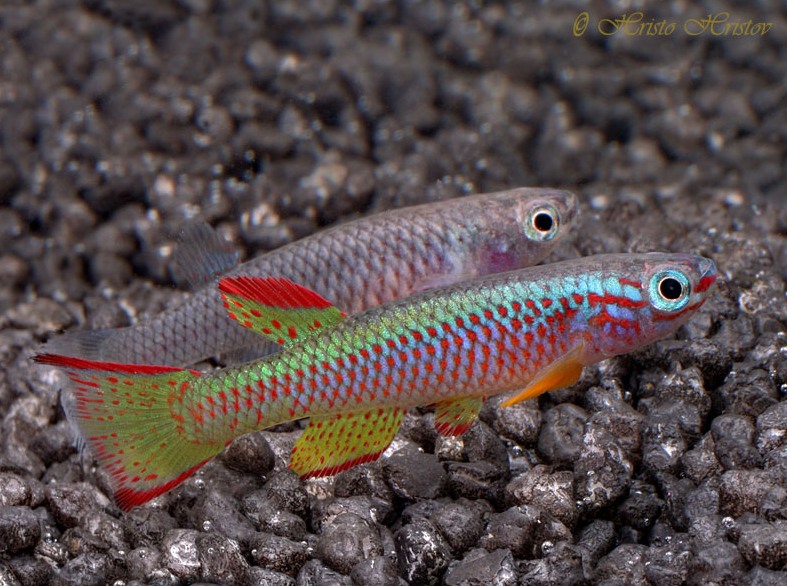
雄鱼比雌鱼鲜艳得多,背鳍、尾鳍及臀鳍也更长。
繁殖
可准备不直射光的繁殖缸,加入轻柔海绵过滤以防水体停滞,使用弱酸性水,约 pH 6.8~7.0。先分开雌雄,以多样活饵和冷冻饵育肥,再挑选状态好的雄鱼和腹部饱满的雌鱼。三鱼组合也可繁殖,但多出的个体可能吞卵,配对常更便于收卵。
卵可产于底部介质或植物丛中,细叶植物、产卵拖把或泥炭苔均可使用;裸底加拖把便于清洁和收集。通常可每天产约 10~20 粒卵,亲鱼配在一起约一周后宜分开休养,尤其避免雌鱼持续产卵而衰弱。卵留在亲鱼缸也可能孵化,但卵和幼鱼有被吃风险。
取出的卵可水孵,或置于小容器内的湿泥炭苔上,均应避光并及时移除霉卵。水孵约需 18~22 天;湿介质孵育则可在约 14 天后加水尝试孵化。各容器应标种名、日期和卵数,避免混杂。
鱼苗很小,最初用纤毛虫等微饵;约两天后可转丰年虾无节幼体或微虫,约两周后再逐步增加更大的饵料和冷冻饵。初期水位要浅,随生长逐渐增加。鱼苗生长较慢,每天少量喂两次,每隔 2~3 天少量换水,特别注意水质及丝绒病风险。
图片
图片来自 SeriouslyFish,版权归各摄影者所有。
English
Overview
Aphyosemion gabunense, the Gabon lyretail, is a peaceful, somewhat shy nonannual killifish from permanent waters. It is a reasonable introduction to killifish care, provided escape prevention, feeding competition, and the tiny first foods needed by fry receive attention.
Distribution & habitat
It was described near Lambaréné in western Gabon and is thought restricted to the lower Ogooué basin, including the Ngounie tributary system. Swamps, small streams, and pools form its habitat.
Aquarium setup
A pair or trio can use a footprint of about 45 × 25 cm or more. Dark substrate, dense patches of plants, and wood provide cover. Floating vegetation further softens the light. Fit the lid tightly because these fish are capable jumpers.
Diet & feeding
Small live or frozen foods such as Daphnia and bloodworms are preferred, while quality flakes are often accepted. Ensure that more energetic companions do not prevent the lyretails from eating adequately.
Behaviour & compatibility
This gentle, shy fish is easily outcompeted. Possible companions include small peaceful characins, rasboras, appropriate dwarf cichlids, Corydoras, and small loricariids, subject to matching water needs and activity levels.
Sexual dimorphism
Males have much stronger coloration and longer dorsal, caudal, and anal fins than females.
Breeding
Prepare a dim breeding aquarium with gentle sponge filtration to prevent stagnation and slightly acidic water around pH 6.8–7.0. Condition males and females separately on varied live and frozen foods before selecting a well-conditioned pair. Trios can also breed, but the extra fish may eat eggs, reducing the number collected.
Eggs can be placed in bottom material or vegetation. Fine plants, spawning mops, or peat moss can serve as the medium; mops over a bare base simplify maintenance and collection. Around 10–20 eggs may be deposited each day. Separate the parents for recovery after about a week, rather than allowing prolonged spawning to exhaust the female. Leaving eggs with the parents is possible, but eggs and fry may be eaten.
Collected eggs can be incubated in water or on damp peat moss in a small container. Keep them dark and remove moldy eggs promptly. Water incubation generally takes 18–22 days. With damp incubation, adding water after roughly 14 days can stimulate hatching. Label each container with species, dates, and egg numbers.
The tiny fry need infusoria initially. After about two days they can take Artemia nauplii or microworms; larger and frozen foods can be introduced progressively after roughly two weeks. Keep the water shallow at first and increase its depth as they grow. Development is fairly slow. Feed small portions twice daily and make small water changes every two or three days, paying particular attention to water quality and susceptibility to velvet disease.
来源
ID:aphyosemion-gabunense · 文件: data/species/aphyosemion-gabunense.md · 状态: 草稿