异色秘鮰 · Arabian Toothcarp
概要
| 字段 | 值 |
|---|---|
| 类别 | 鱼 |
| 学名 | Aphaniops dispar |
| 别名 | 異色祕鮰、Lebias dispar、Cyprinodon lunatus、Cyprinodon cilensis、Cyprinodon darrorensis、Cyprinodon zaccarinii、Cyprinodon zaccarinii var. airebejensis |
| 分类 | 鳉形目 Cyprinodontiformes › Aphaniidae › Aphaniops |
| 水体 | 淡水 |
| 原产地 | 吉布提、埃及、厄立特里亚、沙特阿拉伯、索马里、苏丹、也门 |
| 成体体长 | 8 cm |
| 饲养难度 | 中等 |
| 最小水体 | 108 L |
| 最小缸长 | 120 cm |
| 群居方式 | 群游 |
| 外部数据 | seriouslyfish aphanius-dispar;fishbase 4813 |
| 食性 | 杂食 |
| 领地性 | 是 |
| 繁殖方式 | 附着产卵 |
水质参数
| 参数 | 耐受范围 | 最适范围 | 单位 |
|---|---|---|---|
| 水温 | 4–30 | — | °C |
| pH | 7.5–9 | — | — |
| 总硬度 | 15–35 | — | dGH |
概述
异色秘鮰(Aphaniops dispar)主要分布于红海及亚丁湾周边,不同产地在体色、盐度适应和温度需求上有差别。旧的广义范围已拆出其他物种,饲养和繁殖时应保留具体来源,不能只按一个学名统一安排所有条件。
分布与栖息地
记录涉及埃及、苏丹、厄立特里亚、吉布提、沙特阿拉伯西部、索马里及也门,也包括一些内陆绿洲和盐湖。它通过苏伊士运河进入了地中海东部。
常见于有水草或丝状藻的浅水潟湖、小溪等环境,从淡水到高盐水都有种群,但不同来源并不一定具备完全相同的适应范围。污染、栖地退化和外来鱼竞争威胁部分种群。
饲养环境
大量植物和丝状藻可让雌鱼、弱势雄鱼避开繁殖期的优势雄鱼。它偏好在缸底产卵,可提供长藻石块或较粗砾石,不必依赖悬挂式产卵拖把。水流无需很强。
盐度应根据产地安排,部分种群适合淡水,多数饲养建议为每升加入约 1—3 g 海水盐;高盐来源繁殖所需盐度可能更高,不宜把某一产地用量套给所有鱼。部分种群不耐低于 15 °C,不能仅凭整个物种的宽温度范围安排越冬。室外饲养也应以当地气候和种群来源为前提。
食性与喂食
属于杂食性,但与不少近缘种相比更偏植物性,天然食物中藻类和其他植物材料占较大部分。缺少丝状藻时,可用含螺旋藻的优质饲料补充,同时规律供应丰年虾、水蚤或红虫等小型活饵、冷冻饵,春夏繁殖时尤其重要。
习性与混养
特殊水质和种群保存需求使其更适合单种群养,每尾雄鱼搭配两至三尾雌鱼。不同地理来源保持独立,避免丢失血系与身份信息。
雌雄区分
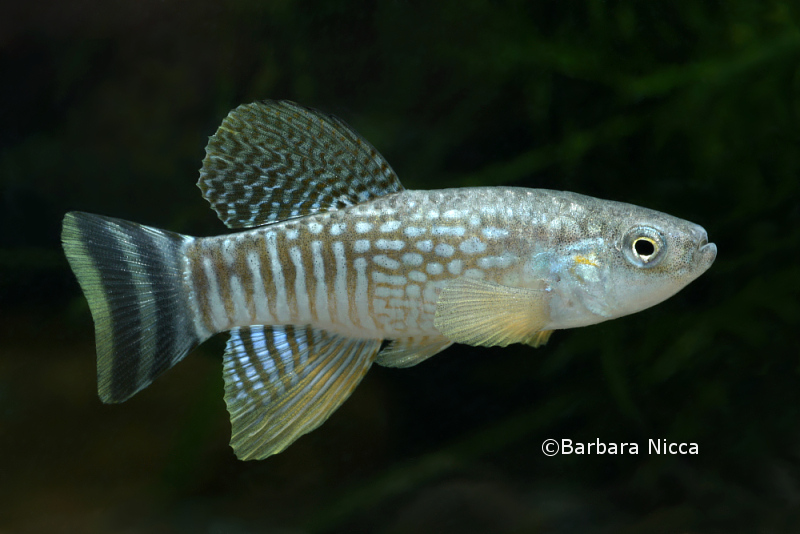
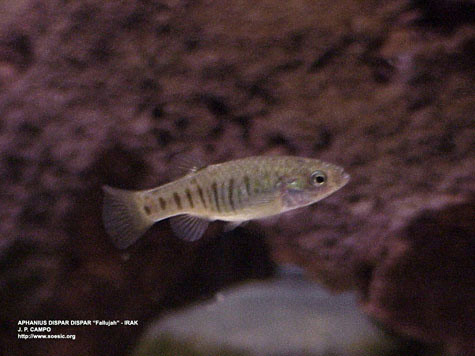
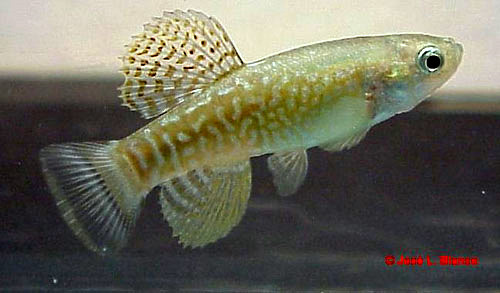
雄鱼体侧有银色点状花纹,部分种群后半身会转为较完整竖带,背鳍和臀鳍明显延长,尾鳍常有两至三道暗带。雌鱼更大、更朴素,体侧为暗斑或条纹,鳍透明。花纹需要结合产地观察。
繁殖
通常在四至九月连续分批产卵,偏向底床或底部附着面。雄鱼形成临时领地并驱赶竞争者,卵单枚或少量释放,成鱼发现后可能吃掉,因此繁殖期应每日检查缸底。
小卵应连附着物谨慎转移,或产卵后移出成鱼,让幼鱼在原缸发育。孵化水的温度和化学条件与亲鱼缸一致,通常约十至十四天孵化,自由游动后可吃丰年虾无节幼体及微虫。
补充说明
来源标记比旧的广义分布列表更有用。历史上归入本种的多个地区种群已被分开处理,其繁殖和盐度记录也不能不加区别地移用。
图片
图片来自 SeriouslyFish,版权归各摄影者所有。
English
Overview
Aphaniops dispar occurs mainly around the Red Sea and Gulf of Aden, with locality-associated differences in appearance and environmental requirements. Several populations formerly included under this broad name have been separated as other species. Preserve collection data instead of assuming identical salinity and temperature needs for all stock.
Distribution & habitat
Records include Egypt, Sudan, Eritrea, Djibouti, western Saudi Arabia, Somalia, and Yemen, with inland oasis and salt-lake populations as well. It has entered the eastern Mediterranean through the Suez Canal.
Shallow lagoons and streams with plants or filamentous algae are typical. Populations span fresh to highly saline waters, but this pooled range does not establish equal tolerance in every locality. Pollution, habitat degradation, and competition from introduced fishes affect some populations.
Aquarium setup
Dense cover gives females and subordinate males relief from vigorous breeding males. Bottom-oriented spawning favors algae-coated stones or coarse gravel rather than depending on suspended mops. Strong current is unnecessary.
Match salinity to origin. Some stocks suit freshwater, while the general maintenance suggestion for many is marine salt at about 1–3 g/L. Hypersaline stocks may need substantially greater salinity for breeding, so a single locality's regime should not be universalized. Some populations fare poorly below 15 °C despite the broad overall temperature range. Outdoor wintering likewise depends on origin and local conditions.
Diet & feeding
This omnivore has a pronounced plant-feeding tendency, with algae and other plant material contributing substantially to the natural diet. Use a quality Spirulina-containing preparation where filamentous algae are absent. Also provide regular small live or frozen foods such as brine shrimp, water fleas, and bloodworms, especially during sustained spring and summer reproduction.
Behaviour & compatibility
A dedicated group is preferable because of its particular water requirements and the importance of maintaining known stocks. Keep two or three females per male and separate geographic lines.
Sexual dimorphism
Males show silvery spots, sometimes merging into bars posteriorly, with extended dorsal and anal fins and commonly two or three dark tail bands. Females are larger and plainer, with dark flank markings and clear fins. Interpret pattern in the context of locality.
Breeding
Repeated small spawnings usually occur from April through September, with eggs placed in or near the bottom. Males defend temporary sites against rivals. Eggs are released singly or in small groups and may be eaten when discovered, making daily inspection useful during breeding.
Move delicate eggs carefully with attached material, or remove the adults and rear young in the spawning aquarium. Match incubation water to the parents' chemistry and temperature. Hatching normally takes ten to fourteen days, and free-swimming fry accept brine-shrimp nauplii and microworms.
Notes
Locality labels are more informative than an old pooled distribution. Breeding and salinity examples from populations now assigned elsewhere should not be transferred automatically to this species.
来源
- https://www.seriouslyfish.com/species/aphanius-dispar(抓取于 2026-10-10)
aphaniops-dispar · 文件: data/species/aphaniops-dispar.md · 状态: 草稿