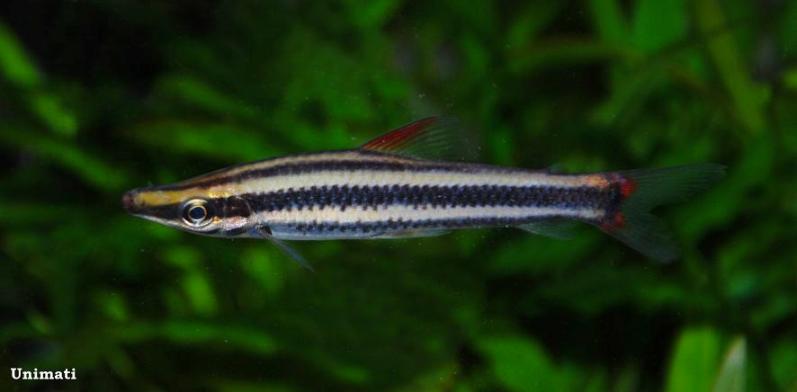
红尾上口脂鲤 · Striped Headstander
概要
| 字段 | 值 |
|---|---|
| 类别 | 鱼 |
| 学名 | Anostomus anostomus |
| 别名 | 紅尾上口脂鯉、Striped Anostomus、Prachtkopfsteher、Salmo anostomus、Anostomus gronovii、Mormyrynchus gronoveii、Anostomus salmoneus |
| 分类 | 脂鲤目 Characiformes › 小口脂鲤科 Anostomidae › Anostomus |
| 水体 | 淡水 |
| 原产地 | 巴西、圭亚那、秘鲁、委内瑞拉 |
| 成体体长 | 20 cm |
| 饲养难度 | 入门 |
| 最小水体 | 108 L |
| 最小缸长 | 120 cm |
| 群居方式 | 独居 |
| 领地性 | 是 |
| 外部数据 | seriouslyfish anostomus-anostomus;fishbase 10766 |
| 食性 | 杂食 |
水质参数
| 参数 | 耐受范围 | 最适范围 | 单位 |
|---|---|---|---|
| 水温 | 20–28 | — | °C |
| pH | 5.5–7.5 | — | — |
| 总硬度 | 1–18 | — | dGH |
概述
红尾上口脂鲤(Anostomus anostomus)常在石面啄食藻类和小动物,适合有水流、溶氧充足的宽敞环境。野外虽成群活动,缸中只放少数同种却容易不断争斗;单条或足够大的群体通常比两三条更合适。
分布与栖息地
广布于秘鲁、巴西、委内瑞拉和圭亚那的亚马孙河及奥里诺科河水系。典型栖地是急流河段的岩石岸边,利用石面附着藻和小型无脊椎动物。
饲养环境
底面积至少约 120 × 30 cm,群养需要更大空间。可铺沙底,堆放圆滑石块,加入根枝,部分枝条可伸出水面。活水草可能被吃掉。
保持明显但合适的水流和充足溶氧,较明亮的光线可促进石面藻类生长,供鱼啄食。本属鱼善跳,缸盖应严密贴合。
食性与喂食
属于杂食刮食鱼,野外从硬表面摄取藻类、昆虫幼体等。缸内提供小型活饵或冷冻饵,同时保证充足植物性食物,如焯软菠菜、生菜、黄瓜、西葫芦和藻片。
习性与混养
少量同种相处时争执明显。足够大的缸可养 6 条以上,否则以单条搭配温和的中大型鱼为宜。可考虑体型匹配的脂鲤、甲鲶类及温和慈鲷,适应流水的种类尤其合适。
雌雄区分
成熟雌鱼通常略大,腹部更圆。
繁殖
有南美洲和亚洲商业繁殖的说法,但没有足够明确的家庭繁殖流程可供照做。
补充说明
本科许多鱼类会以头向下的倾斜姿势活动或取食,因而常被统称为倒立鱼。这个俗称涉及多个物种,不能据此假定所有鱼的群养和食性需求完全相同。
图片
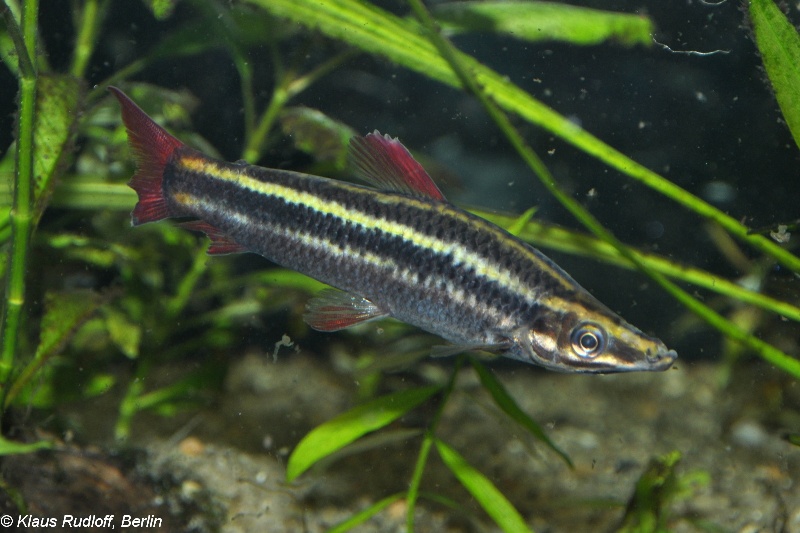
图片来自 SeriouslyFish,版权归各摄影者所有。
English
Overview
Rock-grazing Anostomus anostomus needs room, moving water, and good oxygenation. Although it forms shoals in nature, small captive groups can be persistently quarrelsome. A single fish or a sufficiently large group is preferable to keeping just a few together.
Distribution & habitat
Its Amazon and Orinoco range covers Peru, Brazil, Venezuela, and Guyana. Rocky margins of fast rivers supply surfaces bearing algae and small invertebrates.
Aquarium setup
Start with at least about 120 × 30 cm of floor space, increasing this for a group. Sand, rounded stones, roots, and branches make a suitable arrangement, with some wood extending above the surface. Plants may be eaten.
Provide good circulation and oxygen levels. Bright illumination encourages algae for grazing. Members of this genus jump well, so fit a secure cover.
Diet & feeding
This omnivorous grazer takes algae, insect larvae, and other small items from hard surfaces in nature. Combine small live or frozen foods with generous plant foods, including softened spinach, lettuce, cucumber, zucchini, and algae wafers.
Behaviour & compatibility
A few conspecifics may fight frequently. Six or more can work in a substantially larger aquarium; otherwise, keep one with peaceful medium or large companions. Appropriately sized characins, armored catfishes, and peaceful cichlids are possibilities, especially fishes adapted to flowing water.
Sexual dimorphism
Mature females tend to be slightly larger and rounder through the abdomen.
Breeding
Commercial production in South America and Asia has been reported tentatively, but a clear home-breeding procedure is not established here.
Notes
The head-down posture of many anostomids explains the broad headstander common name. It covers multiple fishes and should not imply identical dietary or social requirements across them.
来源
- https://www.seriouslyfish.com/species/anostomus-anostomus(抓取于 2026-10-10)
anostomus-anostomus · 文件: data/species/anostomus-anostomus.md · 状态: 草稿