Anomalochromis thomasi · African Butterfly Cichlid
概要
| 字段 | 值 |
|---|---|
| 类别 | 鱼 |
| 学名 | Anomalochromis thomasi |
| 别名 | Afrikanischer Schmetterlingsbuntbarsch、Paratilapia thomasi |
| 分类 | 慈鲷目 Cichliformes › 慈鲷科 Cichlidae › Anomalochromis |
| 水体 | 淡水 |
| 原产地 | 几内亚、利比里亚、塞拉利昂 |
| 成体体长 | 8 cm |
| 饲养难度 | 入门 |
| 最小水体 | 72 L |
| 最小缸长 | 80 cm |
| 外部数据 | seriouslyfish anomalochromis-thomasi;fishbase 8136 |
| 性情 | 温和 |
| 领地性 | 是 |
| 繁殖方式 | 附着产卵 |
水质参数
| 参数 | 耐受范围 | 最适范围 | 单位 |
|---|---|---|---|
| 水温 | 23–27 | — | °C |
| pH | 5.5–7.5 | — | — |
| 总硬度 | 1–15 | — | dGH |
概述
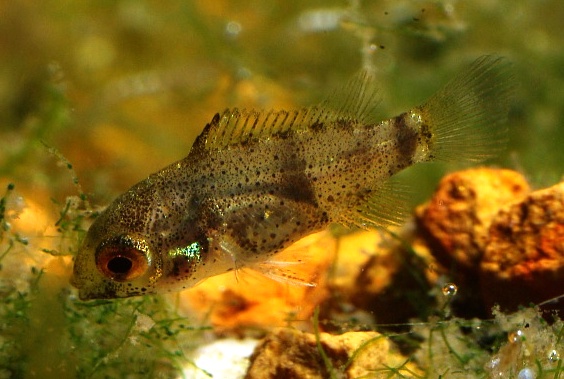
Anomalochromis thomasi 是相对温和、较易饲养和繁殖的小型慈鲷。幼鱼在售卖缸中可能不显眼,安定后色彩会更好;它偏胆小,选择不抢食、不强势的伙伴比追求热闹混养更重要。
分布与栖息地
产于塞拉利昂、几内亚和利比里亚的森林溪流。岸边及上方植物密集,腐败有机物释放的单宁常使水呈茶色。
饲养环境
准备平坦石面供产卵,并以花盆洞、树根和沉木提供多个藏处。植物并非必需,但能增加安全感,通常也适合草缸;日常不会大规模翻底砂,繁殖时则会挖浅坑安置幼鱼。
食性与喂食
通常不挑食,优质慈鲷颗粒可作基础,定期搭配活饵和冷冻饵保持多样,繁殖调理也可加强这类食物。
习性与混养
宜小群饲养,平时性情温和,产卵时会守域。不要与过于强势或动作猛烈的鱼同养;小型温和鱼可作陪游,群内形成的配对要有独立活动和育幼区域。
雌雄区分
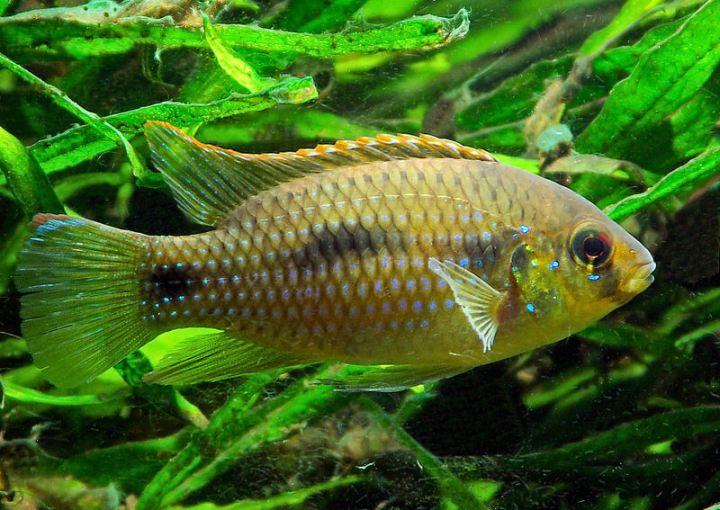
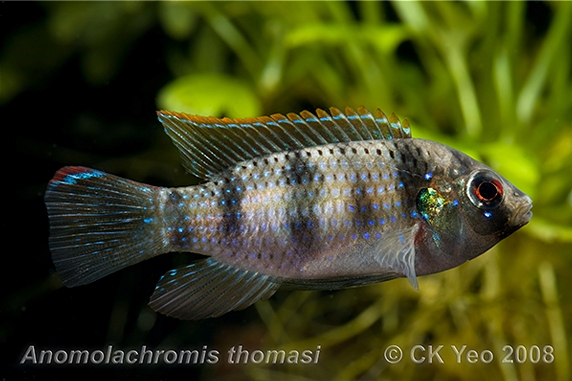
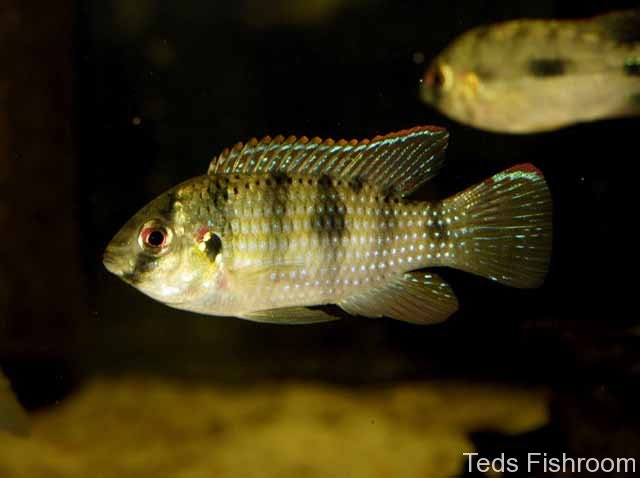
雄鱼较大,黑色斑纹通常不如雌鱼清晰。雌鱼抱卵时腹部明显圆润。
繁殖
属底质产卵型,两性共同参与照料。可从至少六尾幼鱼养起,自然配对;优质活饵和冷冻饵用于调理。设置平石及宽叶植物,轻柔海绵过滤即可,水质从微酸至微碱都可能繁殖。
雌鱼先清理多个候选表面,随后双方共同选择并清理一处。雌鱼一行行产卵、雄鱼受精,一次最多约五百枚。通常约 48 小时孵化,期间多由雌鱼照卵、雄鱼守卫,但角色可交换。
双方会挖浅坑并数次转移幼鱼,再约 72 小时起游;起游后卵黄囊通常还要约十二小时才耗尽,此后可喂微虫及丰年虾无节幼体。亲鱼照料常持续约一个月,鱼苗生长较慢。
图片
图片来自 SeriouslyFish,版权归各摄影者所有。
English
Overview
A relatively undemanding dwarf cichlid, Anomalochromis thomasi becomes more attractive once settled than its often muted juvenile appearance suggests. It is peaceful but shy, so calm companions matter more than a busy community.
Distribution & habitat
It inhabits forest streams in Sierra Leone, Guinea, and Liberia. Dense overhanging vegetation shades water that is often stained tea-colored by decomposing organic matter.
Aquarium setup
Provide flat spawning surfaces and plenty of retreats among pot caves, roots, and wood. Plants are optional but useful cover. It is normally suitable for planted aquariums without extensive substrate disturbance, although breeding pairs excavate shallow nursery pits.
Diet & feeding
Most foods are accepted. Quality cichlid pellets can form the base, with regular live and frozen additions to maintain variety and condition breeders.
Behaviour & compatibility
A small group suits its loosely social nature. Territorial defense emerges during spawning despite its otherwise peaceful disposition. Avoid vigorous or domineering companions; small calm fishes may act as dither fish, while breeding pairs need room to defend their own area.
Sexual dimorphism
Males grow larger and usually have less distinct dark markings. Egg-filled females become noticeably round in the abdomen.
Breeding
This surface spawner is readily bred, with both parents contributing. Start with at least six juveniles to allow pairing, condition them with live and frozen foods, and provide flat stones and broad leaves under gentle sponge filtration. Breeding can occur in slightly acidic or slightly alkaline water.
After inspecting and cleaning several sites, the pair selects one. The female deposits rows of eggs for the male to fertilize, potentially totaling about five hundred. Hatching takes roughly 48 hours; females usually tend eggs while males defend, though roles can switch.
Parents move larvae among shallow pits before free swimming about 72 hours later. Yolk reserves may persist for roughly twelve more hours, after which microworms and Artemia nauplii are suitable. Care often continues for about a month, and fry grow slowly.
来源
- https://www.seriouslyfish.com/species/anomalochromis-thomasi(抓取于 2026-10-10)
anomalochromis-thomasi · 文件: data/species/anomalochromis-thomasi.md · 状态: 草稿