绿宝丽鱼 · Green Terror Cichlid
概要
| 字段 | 值 |
|---|---|
| 类别 | 鱼 |
| 学名 | Andinoacara rivulatus |
| 别名 | 綠寶麗魚、Goldsaumbuntbarsch、Chromis rivulata、Acara aequinoctialis、Aequidens azurifer |
| 分类 | 慈鲷目 Cichliformes › 慈鲷科 Cichlidae › Andinoacara |
| 水体 | 淡水 |
| 原产地 | 厄瓜多尔及秘鲁 |
| 成体体长 | 30 cm |
| 饲养难度 | 困难 |
| 最小水体 | 304 L |
| 最小缸长 | 150 cm |
| 外部数据 | seriouslyfish andinoacara-rivulatus;fishbase 12209 |
| 食性 | 杂食 |
| 性情 | 攻击性 |
| 领地性 | 是 |
| 特征 | 翻底砂: 是 |
| 繁殖方式 | 附着产卵 |
水质参数
| 参数 | 耐受范围 | 最适范围 | 单位 |
|---|---|---|---|
| 水温 | 20–24 | — | °C |
| pH | 6.5–8 | — | — |
| 总硬度 | 5–25 | — | dGH |
概述
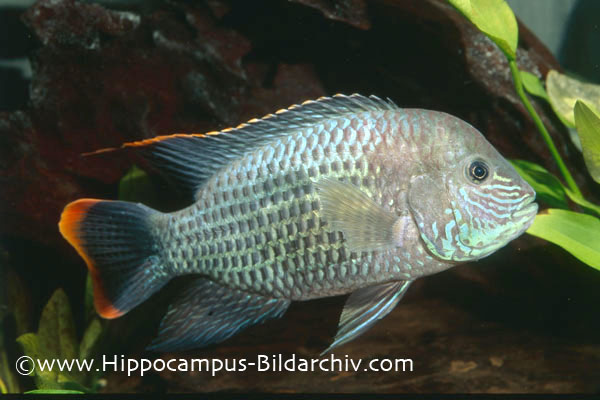
绿宝丽鱼(Andinoacara rivulatus)是体形较大、领地性和攻击性都强的慈鲷。通常应单养或只留相容配对;成熟雄鱼的大额隆和鲜明外观,并不意味着它能在一般混养缸中安稳生活。
分布与栖息地
原生于秘鲁极北部及厄瓜多尔西部沿海水系,向北至少到 Esmeraldas 河流域,可能还更远。北端种群可能属于另一种,暂不能把所有产地差异都当作已解决的分类。主要生活于沿海地区的淡水溪流、河流。
饲养环境
缸底面积至少约 150 × 45 厘米。软沙、沉木和大平石可提供活动、遮蔽及产卵面。若尝试混养,应增加视线隔断,但不能指望造景消除攻击。浮水植物可遮光,扎根水草则容易被挖起,附生植物更合适。它对水质恶化较敏感,生物过滤和规律维护都不能松懈。
食性与喂食
本种杂食,通常不挑食。以优质慈鲷条状粮为基础,搭配蚯蚓、虾和贝肉等,同时保留豌豆、菠菜等植物性食物。牛心及其他红肉不适合常规投喂,可能影响消化。
习性与混养
一般以单只或单对最稳妥。超过约 650 升的大缸才可考虑强健慈鲷、大型鲶类或足够大的活跃鱼作同伴,仍要观察冲突。不要把繁殖配对留在社区缸中;产卵后其他鱼可能受到致命攻击。
雌雄区分
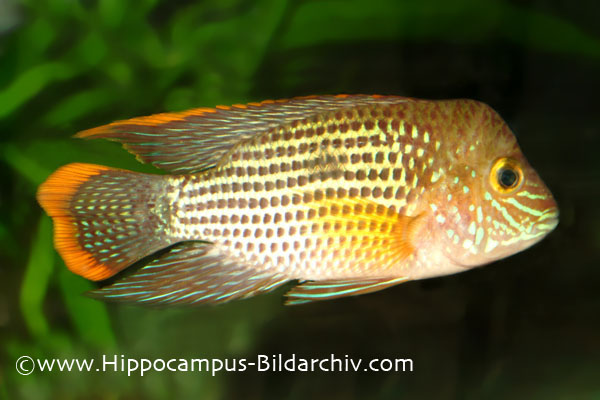
雄鱼显著大于雌鱼,成熟后有较大发达额隆,背鳍、臀鳍常延长。野外额隆主要随繁殖期发展,缸养雄鱼则可能长期明显。
繁殖
安全配对是主要难点,直接把成年雌雄放在一起可能导致雌鱼死亡。建议至少 6 条幼鱼共同养大,让其自然配对,随后移走其余鱼。透明隔板可用于适应,但不应视为绝对安全。繁殖时参考略软水、pH 约 6.5~7.0、24 °C,使用气动过滤及平石,配合活饵、冻饵养壮。
约 10~15 厘米时可性成熟。较大幅度、略凉的换水曾用于触发产卵。双方清理石面、花盆或挖出的坑后逐行产卵受精,一次可达约 400 枚。卵约 3~4 天孵化,仔鱼被搬入坑中,再约 6~8 天自由游动,开口可吃微虫、丰年虾无节幼体和粉状干粮。亲鱼照顾常持续约六周;过早移走幼鱼可能刺激雄鱼再次求偶,威胁未准备好的雌鱼。
图片
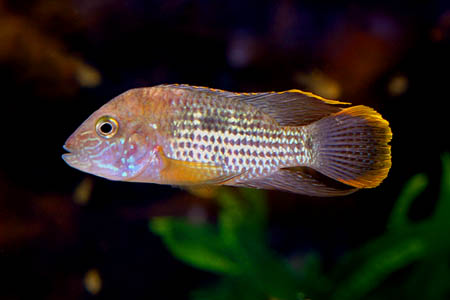
图片来自 SeriouslyFish,版权归各摄影者所有。
English
Overview
Andinoacara rivulatus is a large, aggressive and territorial cichlid usually best kept alone or as a compatible pair. The mature male's impressive hump and appearance should not distract from the space and management needed to control conflict.
Distribution & habitat
It is native to extreme northern Peru and coastal drainages of western Ecuador, extending at least to the Esmeraldas system and possibly farther north. Northern populations may represent another species, so their taxonomic boundaries remain uncertain. Freshwater streams and rivers in coastal regions form its habitat.
Aquarium setup
Provide a footprint of at least approximately 150 × 45 cm. Soft sand, wood and large flat stones supply shelter and possible spawning surfaces. Visual barriers may reduce conflict in attempted communities but will not remove aggression. Floating cover and attached plants are preferable to rooted vegetation, which may be excavated. Effective biological filtration and disciplined maintenance are necessary because water-quality deterioration is poorly tolerated.
Diet & feeding
This generally unfussy omnivore can receive quality cichlid sticks with earthworms, prawns and mussels. Include plant foods such as peas and spinach. Beef heart and other red meats are unsuitable routine offerings because they can adversely affect digestion.
Behaviour & compatibility
A single fish or isolated pair is normally the most practical arrangement. Tanks larger than roughly 650 liters offer possibilities for robust cichlids, large catfishes or sufficiently large active companions, but still require close observation. Do not leave a breeding pair in a community: other occupants may suffer lethal attacks once spawning begins.
Sexual dimorphism
Males are substantially larger and develop prominent forehead humps, often with extended dorsal and anal fins. The hump is mainly seasonal in wild fish but may remain conspicuous in captivity.
Breeding
Safe pairing is the main difficulty. Direct introduction of unfamiliar adults can result in the female being killed. Raising at least six juveniles and retaining a naturally formed pair is preferable; remove all other fish afterward. A transparent divider can assist familiarization but does not establish guaranteed compatibility. Breeding conditions can use slightly soft water around pH 6.5–7.0 and 24 °C, air-powered filtration, flat stones and generous live or frozen foods.
Maturity occurs at roughly 10–15 cm. Substantial changes with somewhat cooler water have stimulated spawning. After cleaning a stone, pot or excavated pit, the female lays rows and the male fertilizes them, with up to about 400 eggs. Hatching takes three to four days. Fry are transferred to a pit and swim freely after another six to eight days, when microworms, brine-shrimp nauplii and powdered dry foods are suitable. Care often lasts around six weeks. Premature brood removal may prompt renewed courtship and place an unready female at risk from the male.
来源
- https://www.seriouslyfish.com/species/andinoacara-rivulatus(抓取于 2026-10-10)
andinoacara-rivulatus · 文件: data/species/andinoacara-rivulatus.md · 状态: 草稿