美宝丽鱼 · Blue Acara
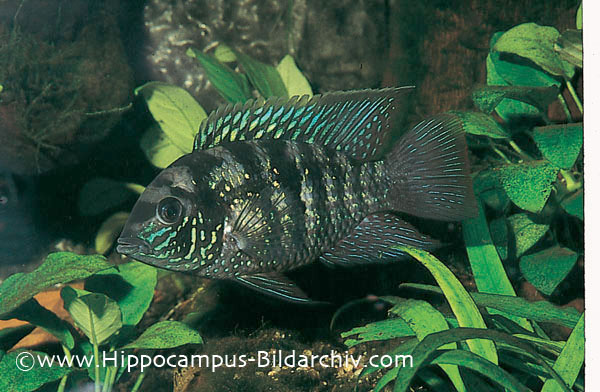
概要
| 字段 | 值 |
|---|---|
| 类别 | 鱼 |
| 学名 | Andinoacara pulcher |
| 别名 | 蓝宝丽鱼、美寶麗魚、藍寶麗魚、Blaupunktbuntbarsch、Cychlasoma pulchrum |
| 分类 | 慈鲷目 Cichliformes › 慈鲷科 Cichlidae › Andinoacara |
| 水体 | 淡水 |
| 原产地 | 特立尼达和多巴哥及委内瑞拉 |
| 成体体长 | 15 cm |
| 饲养难度 | 入门 |
| 外部数据 | seriouslyfish andinoacara-pulcher;fishbase 4727 |
| 食性 | 肉食 |
| 特征 | 翻底砂: 是 |
| 繁殖方式 | 附着产卵 |
| 领地性 | 是 |
水质参数
| 参数 | 耐受范围 | 最适范围 | 单位 |
|---|---|---|---|
| 水温 | 22–28 | — | °C |
| pH | 6.5–8 | — | — |
| 总硬度 | 5–25 | — | dGH |
概述
美宝丽鱼(Andinoacara pulcher)是相对温和、容易繁殖的中型慈鲷。它适合观察基质产卵和双亲护幼,但仍会吞食足够小的同伴,并有翻挖底床的习惯。
分布与栖息地
原生于特立尼达和多巴哥及委内瑞拉部分地区,其他一些国家也有引入。自然栖息环境多样,从浑浊静水到清澈、流动的溪流与河流均可利用。
饲养环境
一对鱼使用 120 × 30 厘米底面积的缸只是勉强足够。建议柔软沙底和沉木枝条,浮水植物可遮光;扎根水草容易被挖出,附着在装饰物上的耐阴植物更容易保住。它对水质恶化较敏感,需有效生物过滤和严格、持续的维护。
食性与喂食
食物以动物性为主,可轮换摇蚊幼虫、丰年虾、切碎贝肉、虾和蚯蚓,多数干粮也会接受。保持不同食物搭配,有助在养护和繁殖阶段维持体况。
习性与混养
在同体型慈鲷中较温和,可选择大到不会被吞下的同伴,如适当大小的灯鱼、鲶类;足够大的缸也可考虑其他较温和慈鲷。配对后若空间不足,应移走其他鱼,避免领地冲突。
雌雄区分
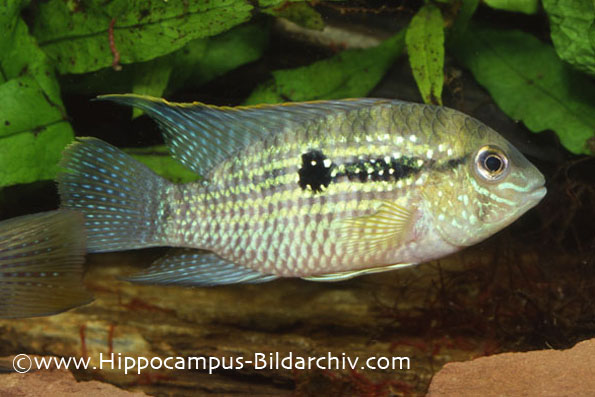
成熟雄鱼背鳍和臀鳍末端略尖,雌鱼整体通常较圆润。
繁殖
可由 6 条幼鱼共同养大,让其自然配对。繁殖水可略软,pH 约 6.5~7.0、25~28 °C;使用气动过滤减少仔鱼被吸入的风险,准备平石或宽叶植物作为产卵面,并用活饵、冻饵养壮亲鱼。
双方先清理平石、叶面或底床坑,雌鱼逐行产卵,雄鱼随后受精,一次可达约 200 枚。卵约 48~72 小时孵化,通常雄鱼守卫地点、雌鱼照料卵,也可能交换职责。再过约 72 小时仔鱼自由游动,可吃微虫和丰年虾无节幼体。亲鱼照顾常持续约两周,之后可能再次繁殖。
补充说明
本种过去列在 Aequidens,后改入现属。部分人工品系与野生外观有明显差异,市场上也存在与近缘种杂交的个体,不能仅凭“蓝色”认定血统。
图片
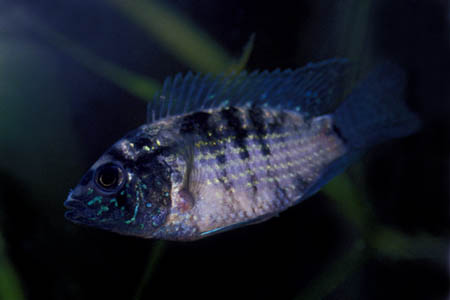
图片来自 SeriouslyFish,版权归各摄影者所有。
English
Overview
Andinoacara pulcher is a relatively tolerant medium-sized cichlid and an accessible species for observing substrate spawning and parental care. Nevertheless, it can swallow very small companions and is an enthusiastic excavator.
Distribution & habitat
It is native to Trinidad and Tobago and parts of Venezuela, with introduced populations elsewhere. Natural habitats range from turbid still waters to clear, flowing streams and rivers.
Aquarium setup
A footprint of 120 × 30 cm is only just sufficient for a pair. Soft sand and branching wood are suitable furnishings, and floating plants supply shade. Rooted plants may be dug up, so plants attached to hard surfaces are more likely to survive. Efficient biological filtration and consistent maintenance are essential because declining water quality can cause problems.
Diet & feeding
The diet is mainly carnivorous. Rotate bloodworm, brine shrimp, chopped mussel or prawn and earthworms; most dry foods are also accepted. A varied menu supports good condition during routine care and breeding preparation.
Behaviour & compatibility
For its size, this is a relatively peaceful cichlid. Choose companions too large to swallow, such as appropriately sized characins or catfishes. Other gentle cichlids may work in a sufficiently large aquarium. Once a pair forms, remove remaining fish if space cannot accommodate their territory.
Sexual dimorphism
Mature males develop slightly pointed dorsal and anal fins, while females usually have a rounder overall appearance.
Breeding
Raising six juveniles together allows natural pairing. For breeding, slightly soft water around pH 6.5–7.0 and 25–28 °C is suitable. Air-powered filtration reduces the risk of fry entering filter intakes. Provide flat stones or broad leaves and condition the adults with live and frozen foods.
The pair cleans a rock, leaf or excavated depression. The female deposits successive rows of eggs and the male fertilizes them, producing as many as approximately 200. Hatching takes about 48–72 hours. The male usually guards the site while the female tends the clutch, though duties may be exchanged. Fry swim freely roughly another 72 hours later and can take microworms and brine-shrimp nauplii. Care generally lasts about two weeks, after which the adults may spawn again.
Notes
Formerly placed in Aequidens, the species is now assigned to Andinoacara. Some captive lines differ markedly from wild fish, and hybrids with relatives occur in the trade. Blue color alone cannot establish ancestry.
来源
- https://www.seriouslyfish.com/species/andinoacara-pulcher(抓取于 2026-10-10)
andinoacara-pulcher · 文件: data/species/andinoacara-pulcher.md · 状态: 草稿