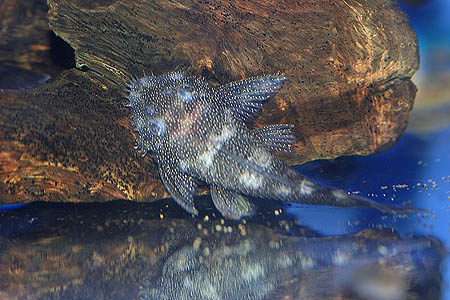
Ancistrus sp. · L255
概要
| 字段 | 值 |
|---|---|
| 类别 | 鱼 |
| 学名 | Ancistrus sp. |
| 别名 | Spotted Medusa Plec |
| 分类 | 鲶形目 Siluriformes › 骨甲鲶科 Loricariidae › Ancistrus |
| 水体 | 淡水 |
| 原产地 | 巴西 |
| 成体体长 | 13 cm |
| 饲养难度 | 入门 |
| 最小水体 | 72 L |
| 最小缸长 | 80 cm |
| 性情 | 温和 |
| 外部数据 | seriouslyfish ancistrus-sp |
| 领地性 | 是 |
| 繁殖方式 | 附着产卵 |
水质参数
| 参数 | 耐受范围 | 最适范围 | 单位 |
|---|---|---|---|
| 水温 | 25–30 | — | °C |
| pH | 6–7 | — | — |
| 总硬度 | 2–10 | — | dGH |
概述
L255(Ancistrus sp.)头宽、身体扁,终生保有浅色斑纹。它需要富氧、有明显水流的环境和较高蛋白食物,进口后可能消瘦,购入时应检查腹部和眼睛状态。
分布与栖息地
仅知于巴西帕拉州欣古河中游水系,生活在浅而急的水流中,躲在岩石底材之间。
饲养环境
至少约 80 × 30 cm 的缸底面积可容纳少数个体,组群需扩大空间。砂或细砾配圆石模拟溪流,提供足够洞穴,让每尾有自己的退避处。水草不是必需,强流条件下并非所有水草都能适应。
充分增氧和持续水流不可少,普通静水混养缸难以满足要求。新鱼尤其要确认实际进食,腹部凹陷和眼睛下陷是严重消瘦线索。
食性与喂食
比多数胡子异型更偏好高蛋白菜单。以优质沉底粮搭配红虫、切碎贻贝、虾肉等活饵或冷冻动物饵,不能只指望它刮藻维生。
习性与混养
整体温和,但因水流、含氧要求特殊,不适合随意混养。可选择同样需要富氧流水的伙伴,多尾饲养时须各有洞穴,并预期会发生领地争执。
雌雄区分
只有雄鱼会长出覆盖头部的浓密肉质触须。
繁殖
人工繁殖已有记录但不容易。可从至少六尾幼鱼养起让其配对,性别明确后考虑一雄配两尾或更多雌鱼,减少雄间争斗。准备入口只略大于鱼体的洞,优先石洞,陶盆和管道也可用;水要软、偏酸、富氧且流动充分。
雌鱼进洞产卵后,雄鱼回洞受精并独自扇水、护卵,也可能接受多尾雌鱼的卵。卵约 4~5 天孵化,幼鱼继续在洞内吸收卵黄,离洞后要及时提供焯菠菜、黄瓜、藻片及微虫、丰年虾无节幼体等多样食物,避免幼鱼饥饿。常见可期待至少约 40~50 尾,长势差异明显时分开培育,防大苗抢食。
成鱼通常不伤幼鱼,可留在原缸或转入水质相同的育苗缸。催产可尝试约 50%~70% 稍凉换水,间隔数日重复,但降温仍需保持在适宜范围。
补充说明
相似的近缘异型(Ancistrus ranunculus)幼鱼浅斑会随成长褪去,L255 则保留。捕捞要防胸鳍棘和颊部齿突挂网。雄鱼触须模仿幼鱼吸引雌鱼的解释仍是假说。
图片
图片来自 SeriouslyFish,版权归各摄影者所有。
English
Overview
L255, an unidentified Ancistrus, has a broad head, flattened body, and pale markings that persist into adulthood. Strong oxygenation, moving water, and relatively protein-rich food are important, particularly for newly imported fish in poor condition.
Distribution & habitat
It is known only from the middle Xingu drainage in Pará, Brazil, where it lives among rocks in shallow, rapidly flowing water.
Aquarium setup
Allow at least an 80 × 30 cm footprint for a few fish and more room for a group. Sand or gravel with rounded rocks creates a stream setting. Supply enough caves for individual retreats. Plants are optional and not all tolerate the required current.
Maintain substantial water movement and oxygenation. An ordinary still-water community is unsuitable. Check that new fish actually feed; a hollow abdomen and sunken eyes indicate serious emaciation.
Diet & feeding
It favors a more protein-rich menu than many bristlenoses. Supplement quality sinking foods with bloodworms, chopped mussels, shrimp meat, and comparable live or frozen animal foods. Algae alone should not be relied upon.
Behaviour & compatibility
Generally peaceful toward suitable companions, it nevertheless has specialized oxygen and flow requirements. Choose fishes sharing those conditions. Provide a separate refuge for each L255 and expect territorial disputes.
Sexual dimorphism
Only males develop the full bushy covering of fleshy head tentacles.
Breeding
Aquarium reproduction is possible but difficult. Raising at least six juveniles allows partner selection; once sexed, keeping one male with two or more females can reduce rivalry. Offer caves whose entrances are only slightly wider than the fish. Rock is preferred, though pots and tubes can work. Soft acidic water, ample oxygen, and strong circulation are important.
A female lays inside the cave before the male returns to fertilize and tend the eggs. He fans and guards them alone and may accept eggs from several females. Hatching takes about four or five days, followed by further yolk absorption in the cave.
Once fry emerge, provide frequent access to foods such as blanched spinach, cucumber, algae wafers, microworms, and Artemia nauplii. Around 40–50 or more young may result. Separate unevenly growing juveniles if larger fish monopolize food. Adults normally leave them unharmed; transfer to a nursery with identical water is another option.
If spawning stalls, changes of approximately 50–70% with slightly cooler water can be tried every few days, remaining within appropriate temperatures.
Notes
Pale juvenile markings fade in Ancistrus ranunculus but persist in L255. Cheek and pectoral spines can snag nets. The suggestion that male tentacles mimic fry to attract females remains a hypothesis.
来源
- https://www.seriouslyfish.com/species/ancistrus-sp(抓取于 2026-10-10)
ancistrus-sp · 文件: data/species/ancistrus-sp.md · 状态: 草稿