Anatolichthys villwocki · Sakarya Toothcarp
概要
| 字段 | 值 |
|---|---|
| 类别 | 鱼 |
| 学名 | Anatolichthys villwocki |
| 别名 | Aphanius villwocki |
| 分类 | 鳉形目 Cyprinodontiformes › Aphaniidae › Anatolichthys |
| 水体 | 淡水 |
| 原产地 | 土耳其 |
| 成体体长 | 6 cm |
| 饲养难度 | 中等 |
| 最小水体 | 108 L |
| 最小缸长 | 120 cm |
| 群居方式 | 群游 |
| 外部数据 | seriouslyfish aphanius-villwocki;fishbase 62012 |
| 繁殖方式 | 产卵 |
| 领地性 | 是 |
水质参数
| 参数 | 耐受范围 | 最适范围 | 单位 |
|---|---|---|---|
| 水温 | 2–30 | — | °C |
| pH | 6.5–8.5 | — | — |
| 总硬度 | 10–30 | — | dGH |
概述
Anatolichthys villwocki 是土耳其 Sakarya 流域的鳉鱼,不同种群来自淡水泉流、盐湖或温泉附近,不能用一套加盐方案覆盖所有来源。保留产地名和冬季低温,是长期繁育的重要部分。
分布与栖息地
原生于土耳其中西部 Sakarya 水系,包括 Çavuşçu 湖。Pınarbaşı、Ahiler、Abbashalimpaşa 等产地的花纹和颜色有所差异,繁殖记录应保留这些名称。
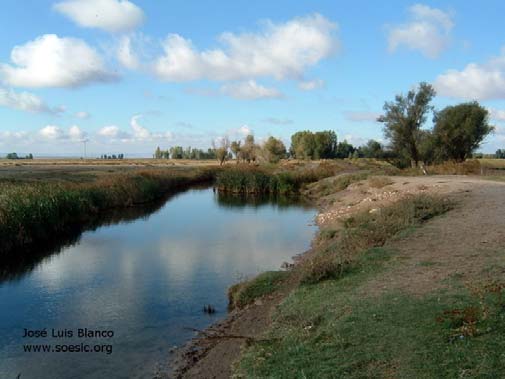
模式地是泉水补给池塘的排水渠,清水中有水草,底部为砂砾;另有种群生活在高盐的 Çavuşçu 湖及其沼泽,Imamoğlu 附近也有温泉溪流记录。外来食蚊鱼曾进入部分地点并造成竞争压力。
饲养环境
按群体饲养规划至少约 120 × 30 cm 底面积。设置细毛拖把、莫丝、金鱼藻及丝状藻,遮断视线并提供附卵表面,让雌鱼和弱势雄鱼能躲开繁殖期追逐。
可裸底或用惰性砂砾,过滤无需强流。先确认种源,部分种群以约 1–3 g/L 海水盐养护较合适,淡水来源不能一概照搬。气候适宜时可室外饲养,并给予每天数小时自然光。每年安排数月低温冬季,缺少冷季可能减少产卵能力并缩短寿命。
食性与喂食
同属鱼摄食微小甲壳动物、蠕虫、昆虫幼虫和其他浮游动物,也吃藻与植物。缸内可接受干粮,仍应规律搭配丰年虾、水蚤和红虫等活饵或冻饵,尤其在春夏连续繁殖期间。没有丝状藻时可加入含螺旋藻的配方。
习性与混养
适合按产地分群专养,每雄配两至三雌。繁殖期活动强烈,加上不同水质要求,不宜放入普通社区缸。多处遮蔽能使弱势鱼脱离优势雄鱼的视线。
雌雄区分
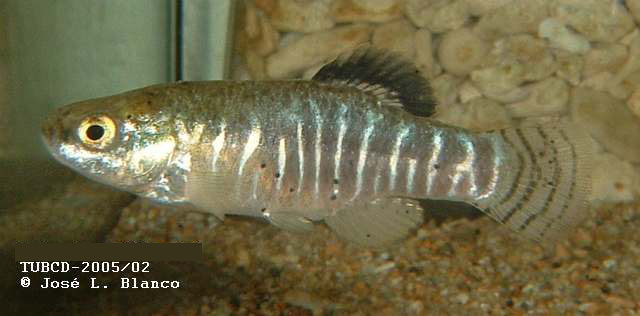
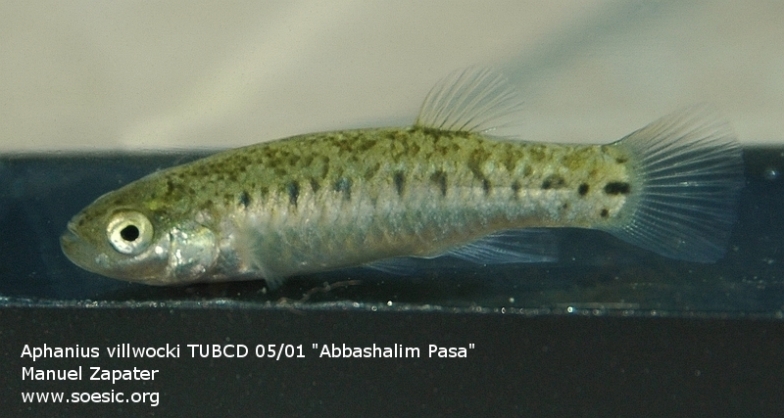
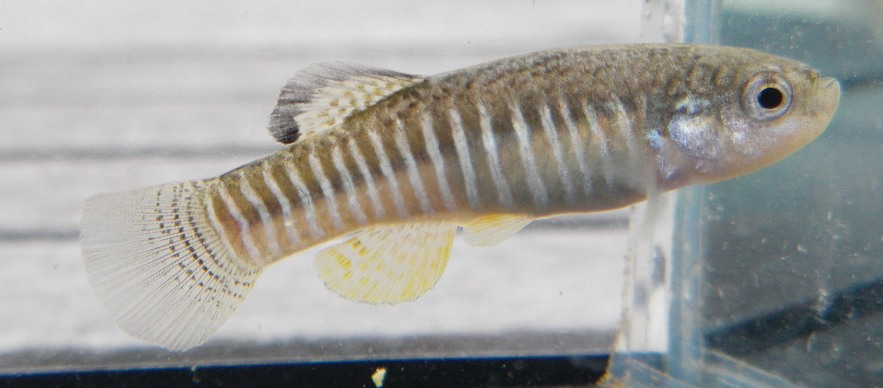
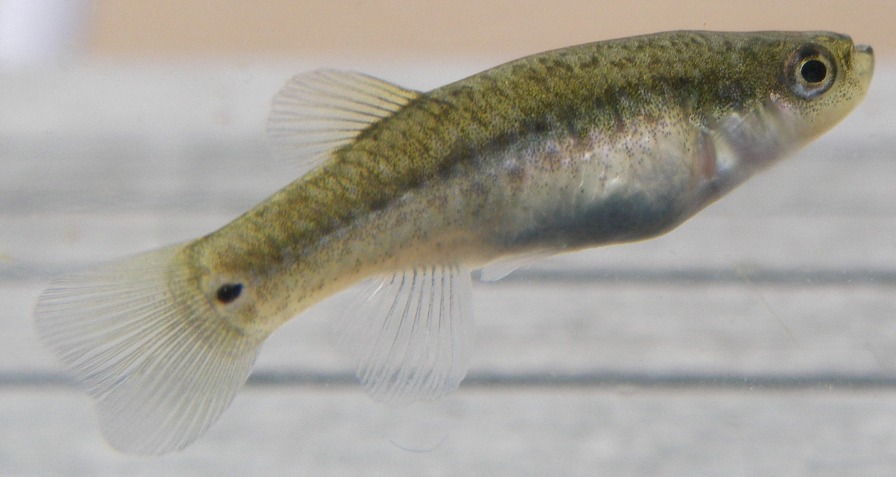
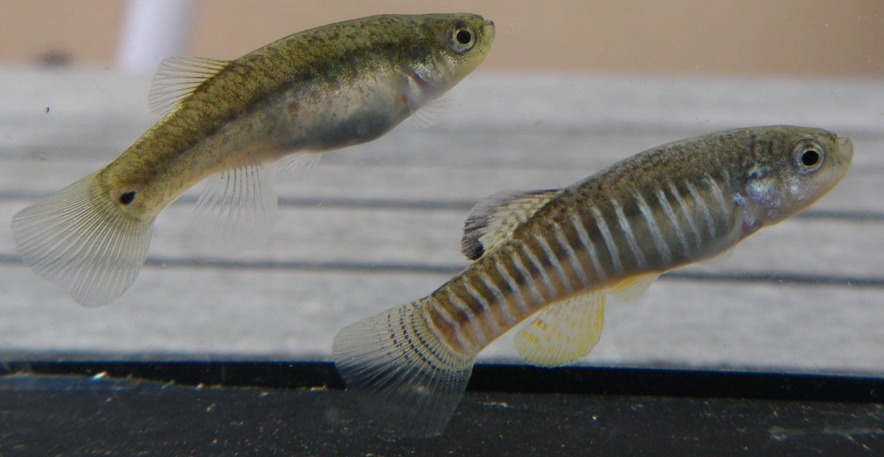
雄鱼身体偏黄,体侧有十三至十九条浅色竖带,尾鳍有黄色斑点组成的浅带,背鳍和臀鳍带黄点及宽暗边。雌鱼更大、颜色朴素,尾柄有暗点,身体后半部有时也见小斑,各鳍透明。
繁殖
通常四至九月持续分批产卵,雄鱼形成短期领域并驱赶其他雄鱼。卵以细丝附着于藻或产卵拖把等表面,亲鱼可能吃卵和仔鱼,繁殖期间每日检查较合适。
移卵时取下附卵的介质,不直接夹卵;或者每隔几天整束换掉。孵化容器的温度和水质应与亲鱼缸一致,一般七至十五天孵化。自由游动的鱼苗即可吃丰年虾无节幼体和微虫。
补充说明
它曾被视为 Anatolichthys anatoliae 的一种形态,后确认独立地位。产地差异兼具外观和饲养意义,因此不能只按相似花纹混并种源。
图片
图片来自 SeriouslyFish,版权归各摄影者所有。
English
Overview
Anatolichthys villwocki comes from Turkey's Sakarya drainage. Populations occupy freshwater springs, saline lakes, and thermal streams, so one salt prescription cannot represent every origin. Locality records and a cool winter are important for sustained captive breeding.
Distribution & habitat
The native range covers the Sakarya system in west-central Turkey, including Lake Çavuşçu. Forms labeled Pınarbaşı, Ahiler, and Abbashalimpaşa differ in pattern and color; keep those labels with their descendants.
The type locality is a clear, vegetated drainage channel from a spring-fed pond over sand and gravel. Other populations occupy hypersaline Lake Çavuşçu and nearby marshes, with another recorded in a thermal stream near Imamoğlu. Introduced mosquitofish have created competition at some sites.
Aquarium setup
Use at least about 120 × 30 cm for a group. Fine spawning mops, moss, hornwort, and filamentous algae provide egg attachment sites and interrupt sightlines, allowing females and subordinate males to escape breeding pursuit.
A bare base or inert sand and gravel works with gentle filtration. Establish the origin first: some populations benefit from marine salt at about 1–3 g/L, which should not automatically be applied to freshwater lines. Outdoor keeping and several hours of natural light are useful where the climate is suitable. Provide a cool winter lasting several months; its absence may reduce reproductive output and lifespan.
Diet & feeding
Relatives eat small crustaceans, worms, insect larvae, and other zooplankton, plus algae and plant matter. Combine accepted dry foods with regular live or frozen brine shrimp, Daphnia, and bloodworms, especially during extended spring and summer breeding. Include a spirulina-enriched food if filamentous algae are absent.
Behaviour & compatibility
Maintain separate locality groups with two or three females per male. Vigorous breeding behavior and particular water requirements make conventional community housing inappropriate. Several sheltered areas let subordinate fish leave a dominant male's sight.
Sexual dimorphism
Males are yellowish with thirteen to nineteen pale flank bars. Tail markings include pale bands composed of yellow spots; dorsal and anal fins carry yellow flecks and broad dark borders. Larger, plain females have a dark tail-base spot, sometimes smaller rear-body spots, and clear fins.
Breeding
Repeated spawning usually runs from April to September. Males establish temporary territories and repel rivals. Fine threads attach eggs to algae or spawning material. Adults may eat eggs and fry, making daily inspection useful.
Transfer the material bearing eggs without gripping the eggs directly, or exchange whole mops every few days. Match incubation conditions to the adult aquarium. Hatching usually takes seven to fifteen days. Newly free-swimming fry can immediately take brine shrimp nauplii and microworms.
Notes
Previously regarded as a form of Anatolichthys anatoliae, it was later recognized separately. Locality differences affect both appearance and care, so visual similarity should not be used to merge breeding stocks.
来源
- https://www.seriouslyfish.com/species/aphanius-villwocki(抓取于 2026-10-10)
anatolichthys-villwocki · 文件: data/species/anatolichthys-villwocki.md · 状态: 草稿