Anatolichthys transgrediens · Acı Toothcarp
概要
| 字段 | 值 |
|---|---|
| 类别 | 鱼 |
| 学名 | Anatolichthys transgrediens |
| 别名 | Turkichthys transgrediens |
| 分类 | 鳉形目 Cyprinodontiformes › Aphaniidae › Anatolichthys |
| 水体 | 淡水 |
| 原产地 | 土耳其 |
| 成体体长 | 5 cm |
| 饲养难度 | 中等 |
| 群居方式 | 群游 |
| 外部数据 | seriouslyfish aphanius-transgrediens;fishbase 49825 |
| 繁殖方式 | 产卵 |
| 领地性 | 是 |
水质参数
| 参数 | 耐受范围 | 最适范围 | 单位 |
|---|---|---|---|
| pH | 8–10 | — | — |
| 总硬度 | 15–30 | — | dGH |
概述
Anatolichthys transgrediens 是 Acı 湖盆地特有的小型鳉鱼,主要利用湖缘泉水,而不是直接生活在盐分极高的湖心。繁育时应保持独立种源,提供偏碱矿化水、低温冬季和适合收卵的细软介质。
分布与栖息地
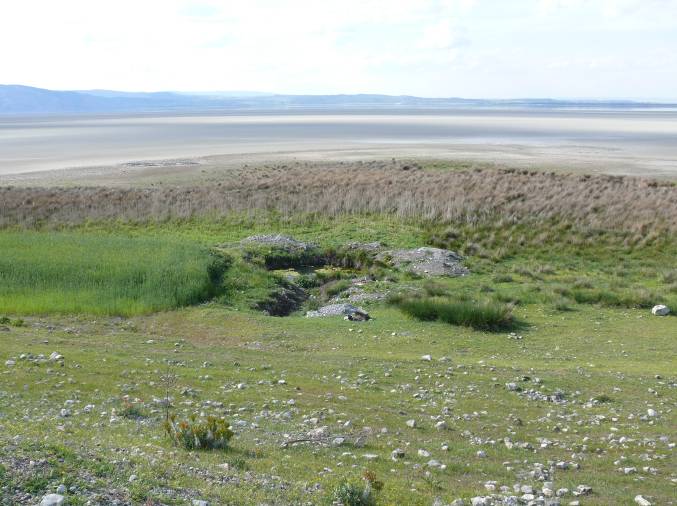
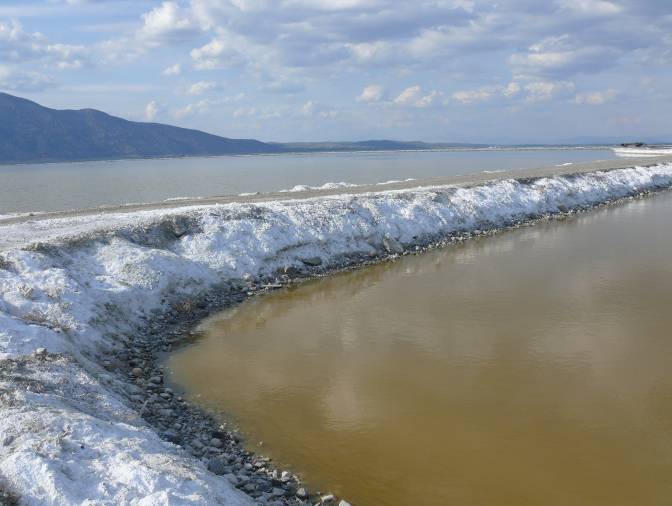
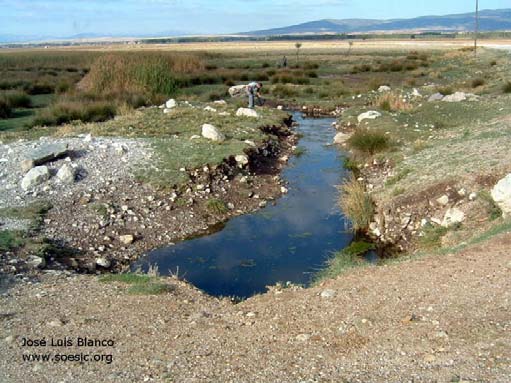
仅见于土耳其西南安纳托利亚湖区的 Acı 湖盆地。湖本身盐类丰富,水位季节变化大;鱼多局限于周边浅的淡水至微咸泉水,常有丝状藻和轮藻。
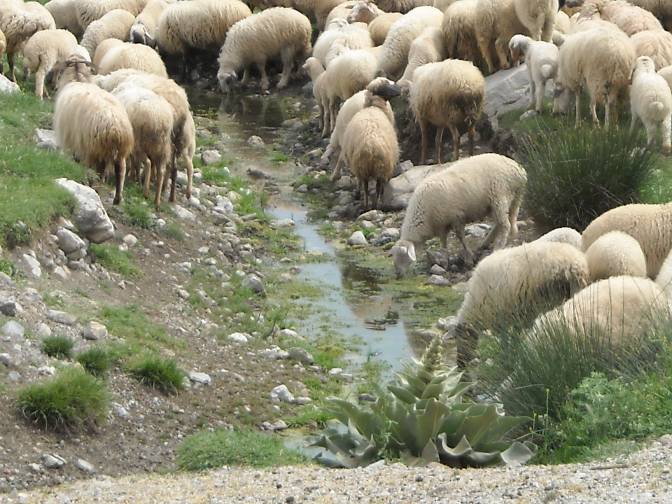
湿季高水位曾使相邻泉口间发生联系。历史调查显示可见种群大幅减少,外来食蚊鱼竞争及放牧造成的环境退化与下降有关,因此不同来源的繁育记录尤其值得保存。
饲养环境
较大群体宜采用约 120 × 30 cm 或更大的底面积。造景可简单,细毛拖把和丝状藻为主要遮蔽及附卵处;莫丝、金鱼藻可以尝试,但对加盐环境未必适应。
缸内按约 1–2 g/L 添加海水盐,保持偏碱条件。可裸底或用惰性砂砾,过滤不必强。气候合适时可室外养护,日照有助于状态和发色。需要数月低温冬季,长期缺少低温休整可能降低繁殖力、缩短寿命,不能全年持续加温。
食性与喂食
同属鱼主要摄食小型无脊椎动物和其他浮游动物,也摄入藻及植物成分。缸内配合干粮、小型活饵或冻饵,常用丰年虾、水蚤和红虫。春夏繁殖期需维持高质量食物,若缺少丝状藻,可用含螺旋藻配方补充。
习性与混养
以专养和保留种群为目标,每尾雄鱼配两至三尾雌鱼。雄鱼一般不如一些近亲凶,多雄通常可以共存,但繁殖期仍会形成临时领域,不能省去遮蔽或把不同湖区近亲混在一起繁育。
雌雄区分
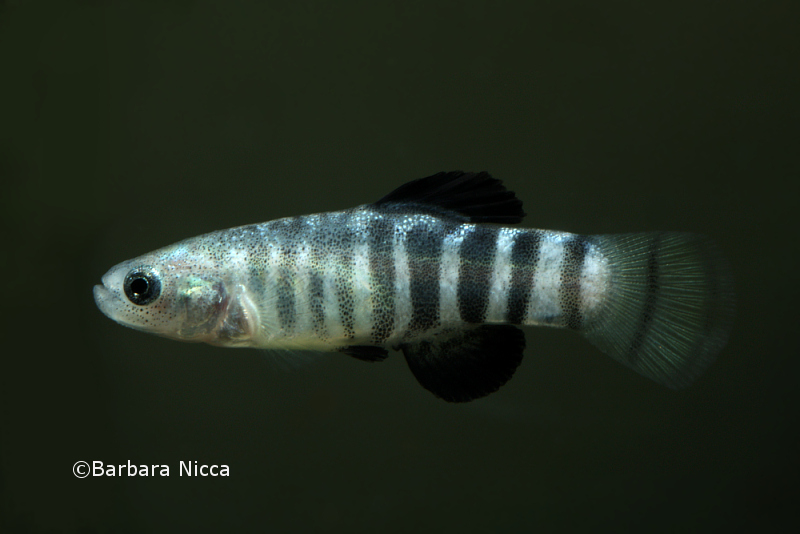
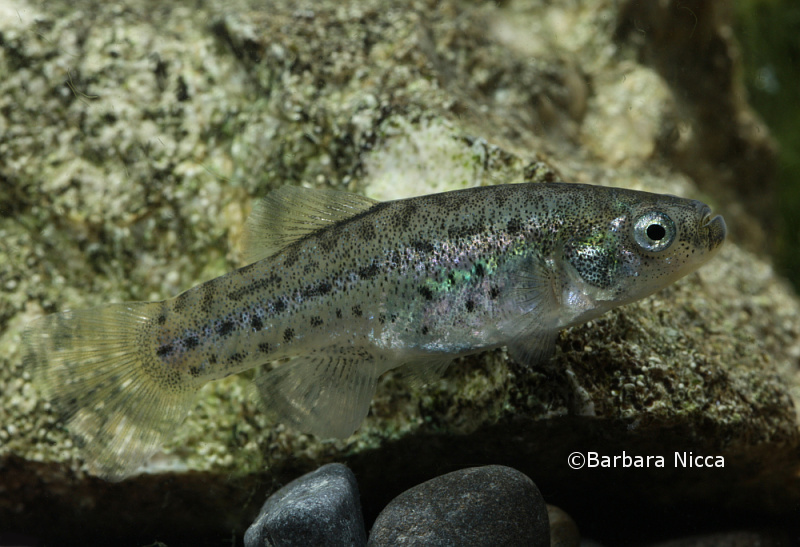
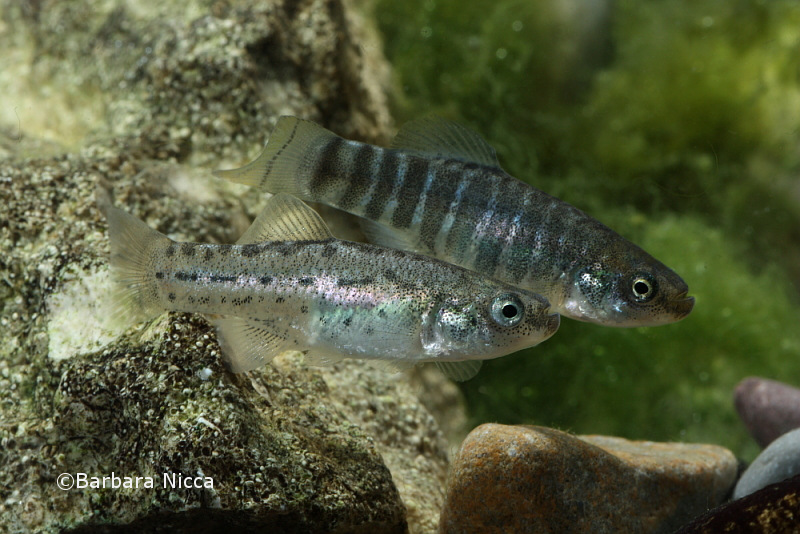
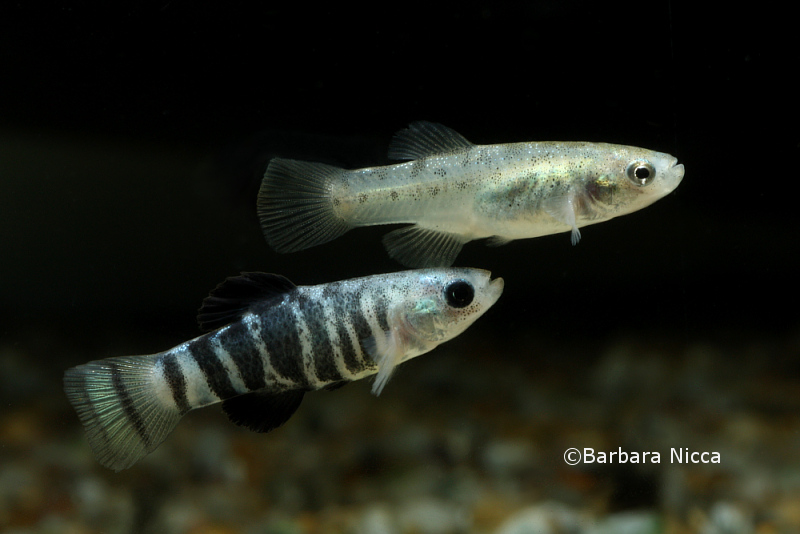
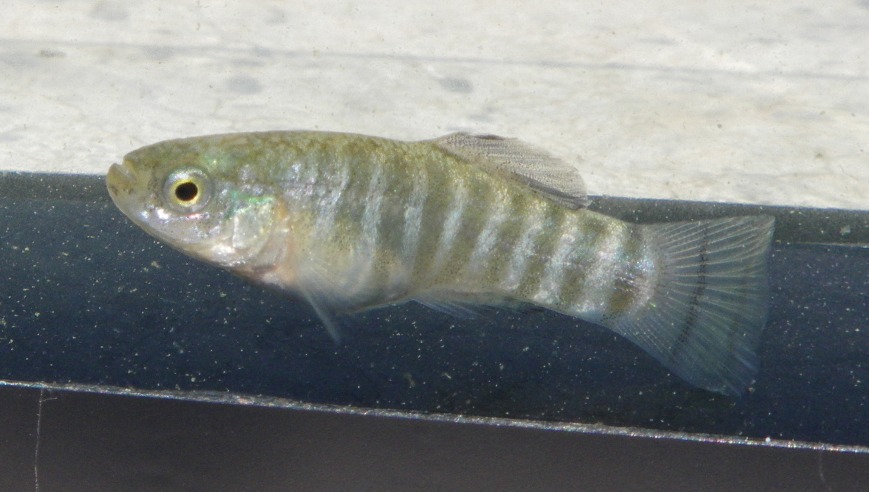
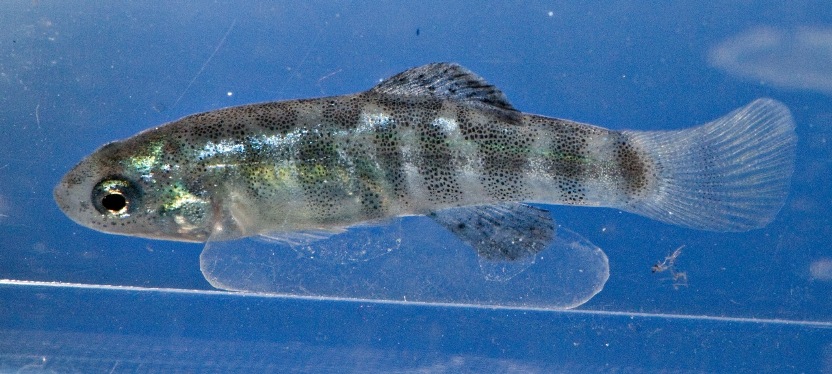
雄鱼有八至十一条不规则灰黑竖带,尾鳍透明底上有暗带,背鳍和臀鳍整体偏暗、基部灰色。雌鱼更大且朴素,体侧是暗斑,鳍透明。
繁殖
分批产卵,春季开始和夏末有两个高峰。雄鱼建立短期领域并驱赶竞争者,卵单枚或小批量排出,以细丝附于藻或其他介质。亲鱼可能吃卵和苗,繁殖期每日检查产卵介质较合适。
用细镊移动附卵材料,避免直接碰卵;也可隔几天整束更换。将卵放到水温、水质匹配亲鱼缸的容器,通常六至十二天孵化。初孵苗很小,先喂数天草履虫等微型饵料,长大后再转丰年虾无节幼体或微虫。
补充说明
本种鳞片覆盖、体形和下颌形态介于几种湖区近亲之间,鳞片数量可有个体差异。近亲在缸内能杂交,不能只凭“外形差不多”合并繁殖群。
图片
图片来自 SeriouslyFish,版权归各摄影者所有。
English
Overview
Anatolichthys transgrediens is confined to the Lake Acı basin and mainly uses marginal springs rather than the highly saline central lake. Separate breeding lines, alkaline mineralized water, a cool winter, and fine egg-collecting material are key priorities.
Distribution & habitat
The basin lies in southwestern Anatolia's Turkish Lakes region. Lake water has an extreme salt composition and fluctuating levels. Fish occur chiefly in shallow freshwater to slightly brackish springs around the margins, often containing filamentous algae and stonewort.
High winter water once allowed movement between neighboring spring outlets. Historical surveys recorded a pronounced loss of populations, associated with introduced mosquitofish competition and grazing-related habitat degradation. Preserve source details through captive generations.
Aquarium setup
For a larger group, use about 120 × 30 cm of floor space or more. A simple arrangement works, with fine mops and filamentous algae supplying cover and attachment sites. Moss or hornwort can be tried but may struggle with added salt.
Use marine salt at about 1–2 g/L and maintain alkaline conditions. A bare floor or inert sand and gravel is suitable, with gentle filtration. Outdoor care and natural light can benefit condition where the climate is appropriate. A cool winter lasting several months is needed; uninterrupted heating may reduce fecundity and shorten life.
Diet & feeding
Relatives take small invertebrates and other zooplankton along with algae and plant material. Combine dry food with small live or frozen brine shrimp, Daphnia, and bloodworms. High-quality food is important during reproductive activity. Include a spirulina-enriched product when filamentous algae are absent.
Behaviour & compatibility
Maintain a dedicated group with two or three females per male. Males are usually less combative than some relatives, so several can coexist, but temporary breeding territories still form. Provide cover and avoid combining related lake populations for breeding.
Sexual dimorphism
Males show eight to eleven irregular gray-black bars, dark markings on an otherwise transparent tail, and mostly dark dorsal and anal fins with gray bases. Larger, plainer females have flank blotches and transparent fins.
Breeding
Batch spawning has peaks around early spring and late summer. Males defend temporary territories and court females. Eggs are deposited singly or in small groups and attach by fine threads. Adults may consume eggs or fry, so inspect spawning material daily.
Move the material bearing eggs with fine forceps without touching the eggs, or replace entire mops every few days. Incubate with matching temperature and chemistry. Hatching generally occurs after six to twelve days. Tiny fry need infusoria-sized food for several days before progressing to newly hatched brine shrimp or microworms.
Notes
Scale coverage, body form, and jaw shape are intermediate among several related lake fishes, with individual variation in scales. These relatives can hybridize in aquaria; similar appearance is not a reason to merge breeding groups.
来源
- https://www.seriouslyfish.com/species/aphanius-transgrediens(抓取于 2026-10-10)
anatolichthys-transgrediens · 文件: data/species/anatolichthys-transgrediens.md · 状态: 草稿