四眼鱼 · Four-Eyed Fish
概要
| 字段 | 值 |
|---|---|
| 类别 | 鱼 |
| 学名 | Anableps anableps |
| 别名 | 四眼魚、Vieraugenfisch、Cobitis anableps、Anableps tetrophthalmus、Anableps surinamensis、Anableps gronovii、Anableps lineatus |
| 分类 | 鳉形目 Cyprinodontiformes › 四眼鱼科 Anablepidae › Anableps |
| 水体 | 淡水 |
| 原产地 | 巴西、法属圭亚那、圭亚那、苏里南、委内瑞拉 |
| 成体体长 | 26 cm |
| 饲养难度 | 中等 |
| 最小水体 | 304 L |
| 最小缸长 | 150 cm |
| 群居方式 | 群游 |
| 外部数据 | seriouslyfish anableps-anableps;fishbase 7379 |
| 食性 | 杂食 |
| 繁殖方式 | 卵胎生 |
| 游动层 | 上层 |
| 特征 | 会跳缸: 是 |
水质参数
| 参数 | 耐受范围 | 最适范围 | 单位 |
|---|---|---|---|
| 水温 | 25–31 | — | °C |
| pH | 7.5–9 | — | — |
| 总硬度 | 15–35 | — | dGH |
概述
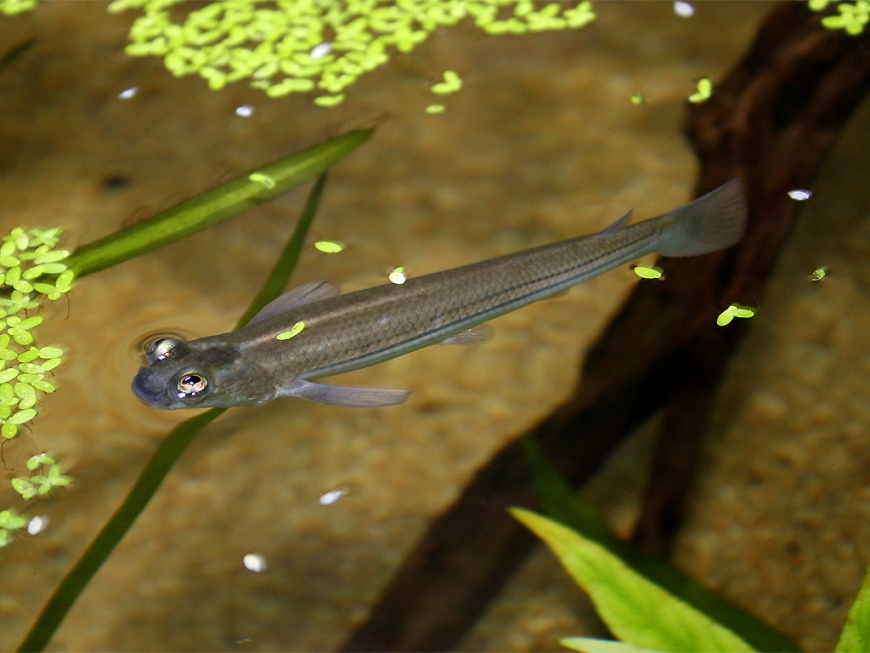
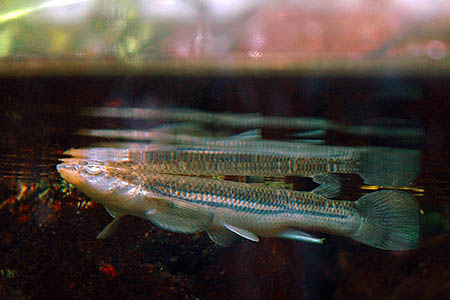
四眼鱼(Anableps anableps)并非真的有四只眼,而是每只眼分成上下两个观察区域,能同时看见水上和水下。它长期停留水面,来自南美红树林潮间带,需要大水面、浅水和咸淡水环境,普通深而窄的水族箱并不合适。
分布与栖息地
沿南美东北海岸分布,从委内瑞拉附近的帕里亚湾,经圭亚那、苏里南和法属圭亚那,延伸至巴西亚马孙河口以南的巴纳伊巴河口。
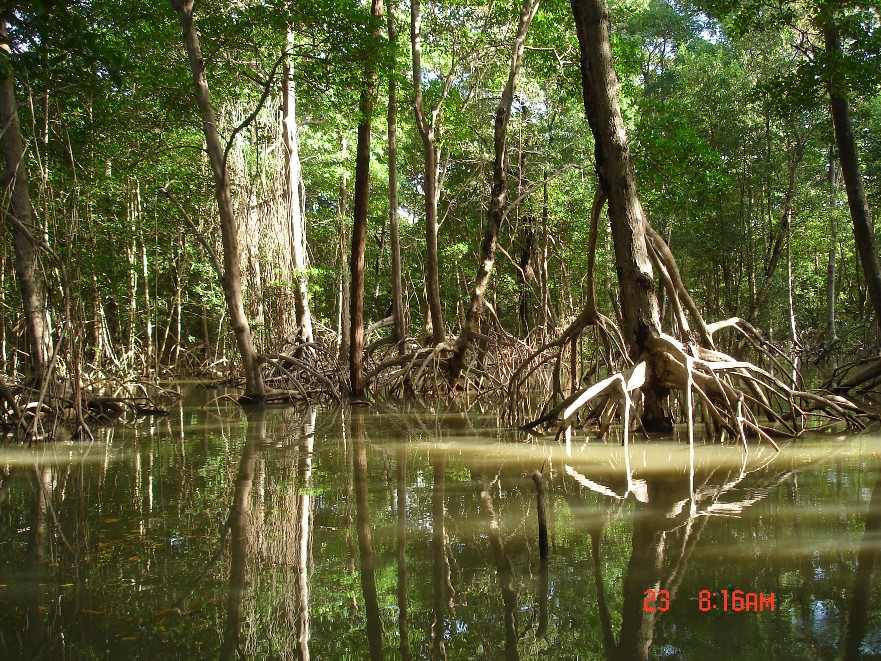
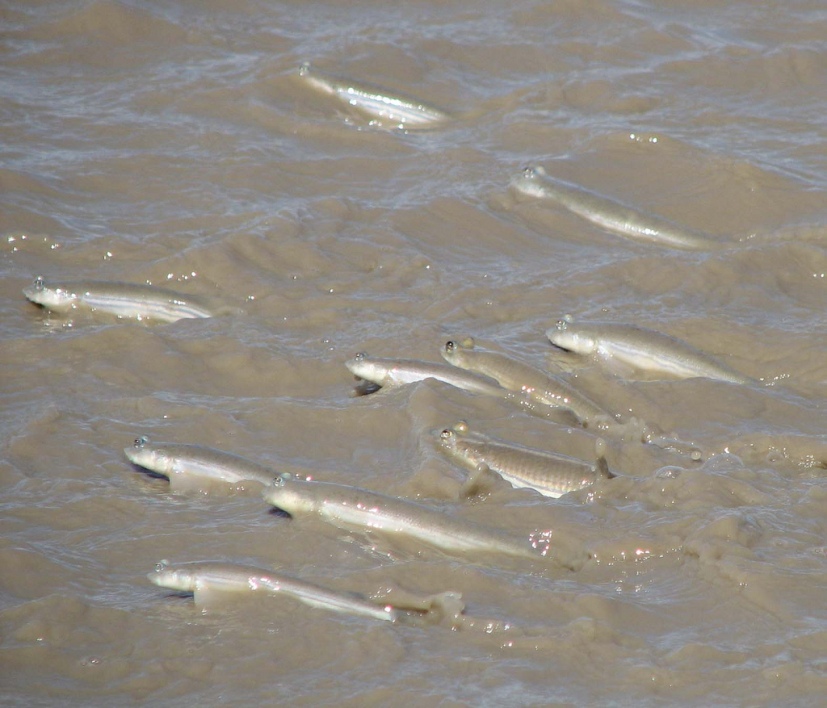
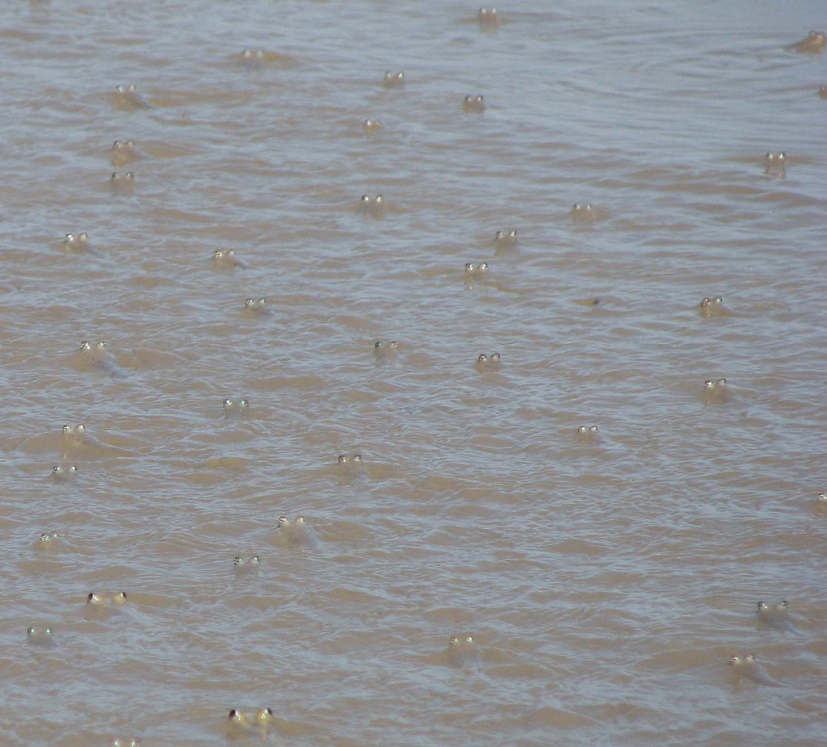
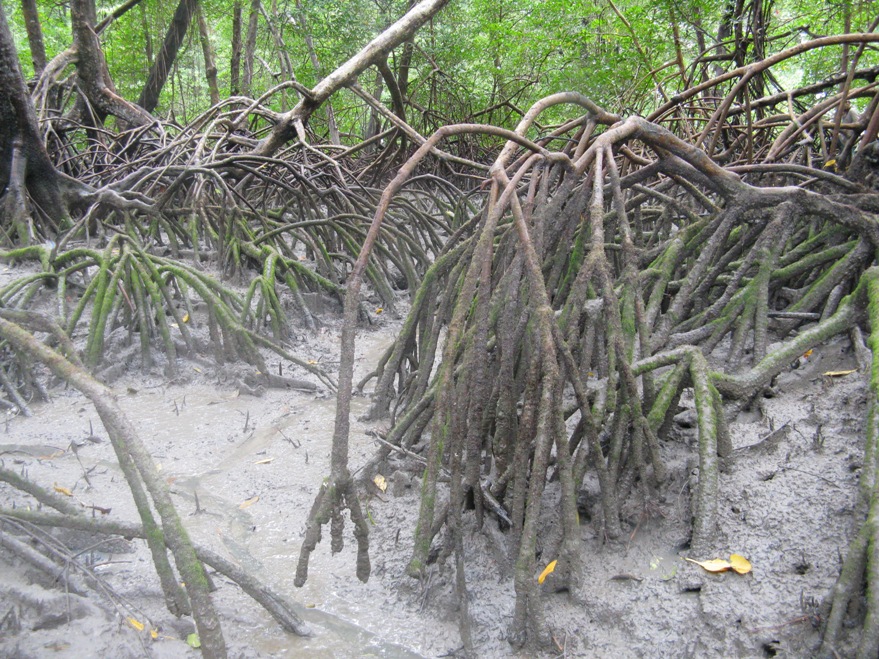
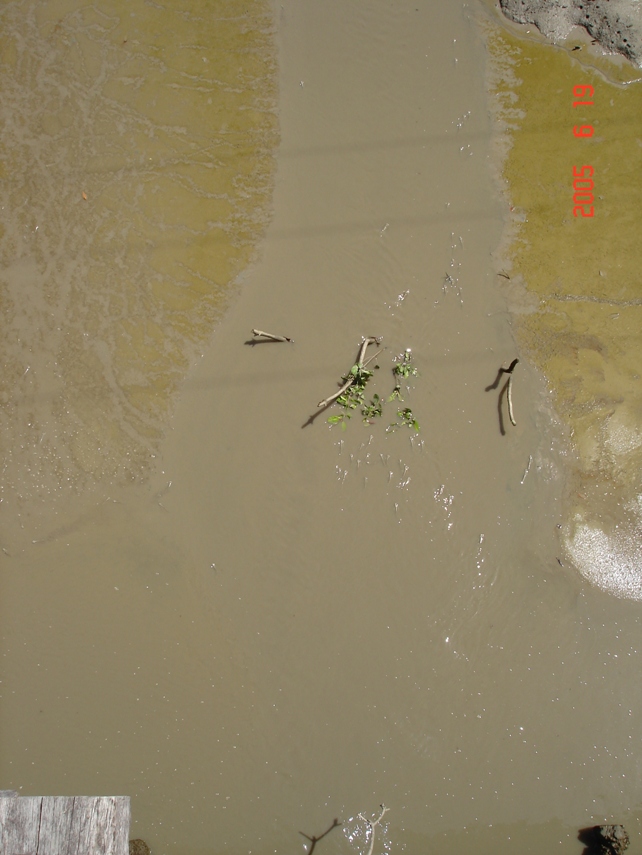
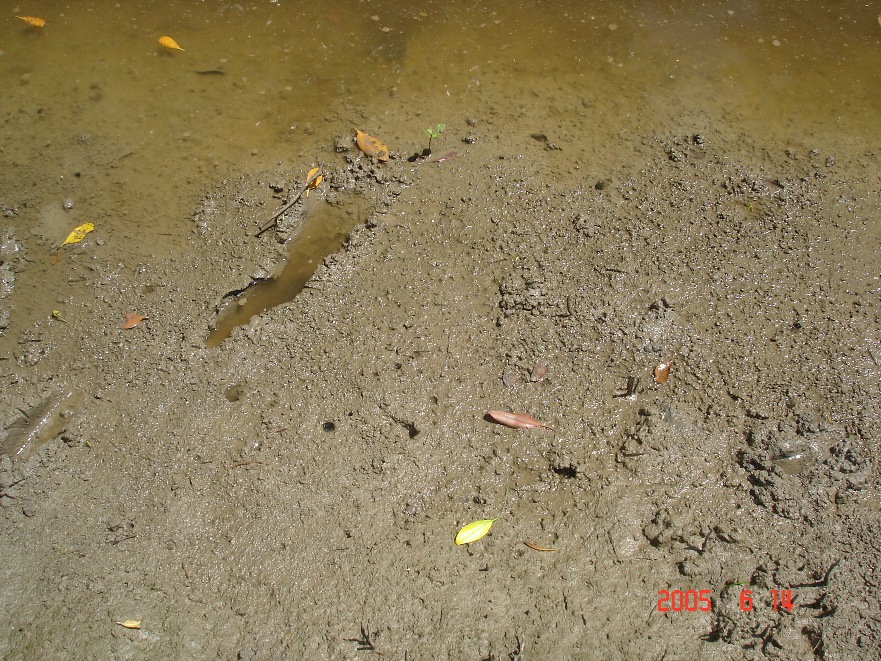
它随潮汐移动:低潮时聚集在永久河道边缘,涨潮后进入被淹没的小水道和红树林觅食。白天的大潮提供较好的取食机会,部分个体也会跳到暴露的泥砂岸上短暂停留。
饲养环境
水面面积比缸高更重要,至少 150 × 45 cm 的底面积也只适合至多约 6 尾成鱼。若要安排更大的群体,需要相应扩大设施。日常可采用比重约 1.005–1.015 的咸淡水,水深约 15 cm 即可,不需要把深缸装满。
以薄层细砂、开阔水面和伸出水面的根枝模拟红树林,另外用平石或底床形成极浅或露出的湿滑区域,供幼鱼及部分成鱼休息、取食。白天明亮照明有利于附着生物生长,但多数水草难以适应这样的布置和盐度。
过滤应足以处理较多排泄物。缸盖要严密,防止有力的跳跃,同时在水面上保留潮湿空气层,不能用封住水面活动空间的方式防逃。
食性与喂食
天然食物随潮汐改变,涨潮时会大量取食红树林根部的红藻,也捕食陆生昆虫、小蟹,兼食端足类、螺、贻贝和蠕虫。它的食性不能简化成只吃昆虫。
缸内可用先行喂养过的果蝇、红虫、丰年虾和切碎蚯蚓,搭配藻类或植物性食物;海鲜与新鲜蔬菜混合的凝胶饵也有使用记录。含螺旋藻的干粮可作补充,不宜成为主要食物。每天分两次投喂,怀孕雌鱼尤其需要多样且充足的食物。
习性与混养
至少饲养 6 尾,更理想的群体为十余尾,但要有对应的大水面空间。缺少同伴时可能紧张,除临产雌鱼外,攻击行为比较少。
优先专缸饲养。很大的系统中可考虑温和且适应相同盐度的河口鱼,但需避开活跃的表层鱼和抢食强烈的同伴;远小于它的鱼可能被捕食。
雌雄区分
雌鱼明显大于雄鱼。雄鱼有突出的管状交接器,表面带鳞,外观结构与常见花鳉类的交接器不同。
繁殖
属于胎生鱼,混合性别的群体通常不难发生交配。生殖器偏左、偏右是否必须相互匹配,存在不同饲养观察,不宜当作绝对的配对规则。
妊娠约 12 周,期间雌鱼食欲增加,临产前会驱赶同伴并寻找安静处。新生鱼约 4–5 cm,出生后即可摄食较大的适口食物。
人工繁殖中有早产及腹部未闭合、组织外露的记录,原因尚不能确定,可能涉及水质、营养、成熟程度或应激。可为怀孕雌鱼安排安静的独立空间并提供动物性食物和藻类,不能把某个单一原因当作已证实结论。
补充说明
分隔的角膜和瞳孔配合同一眼球内部结构,使它能够同时利用水上、水下视野。这个特点与水面边缘的生活方式紧密相关;不能因此把所有近亲都当成具有相同眼部结构或盐度需求。
图片
图片来自 SeriouslyFish,版权归各摄影者所有。
English
Overview
Anableps anableps has two eyes, each divided into upper and lower viewing regions. This permits simultaneous observation above and below the surface. Its life at the mangrove waterline calls for shallow brackish water and extensive surface area rather than a tall, narrow aquarium.
Distribution & habitat
The range follows northeastern South America's coast from the Gulf of Paria near Venezuela through Guyana, Suriname, and French Guiana to Brazil's Parnaíba estuary, beyond the Amazon delta.
Fish remain near permanent-channel margins at low tide, then enter flooded mangrove channels to forage as water rises. Daylight spring tides offer especially favorable feeding opportunities. Individuals sometimes leap onto exposed banks and rest briefly outside the water.
Aquarium setup
A footprint of at least 150 by 45 cm accommodates no more than about six adults; a larger social group requires substantially greater area. Brackish water around specific gravity 1.005–1.015 is a practical maintenance range. A depth near 15 cm is adequate, with open surface space kept readily available.
Use a thin sand layer, open water, and branches projecting through the surface to suggest mangrove roots. Flat stones or raised substrate can provide very shallow or exposed wet areas used particularly by young fish. Bright daytime light promotes attached growth, though most aquatic plants are poorly suited to the conditions.
Substantial filtration must handle the waste load. Secure the cover against powerful jumps while retaining a humid air layer above the water.
Diet & feeding
Natural feeding varies with the tides. Red algae on mangrove roots are important during high water, together with terrestrial insects and small crabs. Amphipods, mollusks, and worms contribute additional food.
Offer a mixture of animal and plant-based items: conditioned fruit flies, bloodworms, brine shrimp, chopped earthworms, and algae-containing foods. Seafood-and-vegetable gel diets have also been used successfully. Spirulina-containing dry foods can supplement the menu but should not dominate it. Two daily meals broadly match the natural feeding cycle, with adequate varied nutrition especially important during pregnancy.
Behaviour & compatibility
Maintain at least six, preferably a dozen or more where sufficient space exists. Fish may become nervous without conspecifics. Aggression is uncommon except around heavily pregnant females.
A dedicated display is preferable. Very large installations may permit peaceful estuarine companions with matching requirements. Avoid energetic surface competitors and voracious feeders. Much smaller fishes may be eaten.
Sexual dimorphism
Females grow considerably larger. Males have a conspicuous tubular, scaled gonopodium whose form differs from that of familiar poeciliid livebearers.
Breeding
A mixed-sex group generally mates readily. Claims that left- and right-oriented reproductive organs require strictly opposite-sided partners are challenged by captive observations of some flexibility, so the pairing rule should not be treated as settled.
Pregnancy lasts around twelve weeks. Appetite increases, and near birth females become intolerant of companions while seeking a quiet site. Newborns are fully formed, about 4–5 cm long, and immediately accept fairly substantial food items.
Premature births and incompletely closed abdominal walls have occurred in captivity. The contribution of diet, water quality, maturity, or stress remains unresolved. Quiet separate accommodation for gravid females and a varied diet containing animal protein and algae are suggested husbandry measures, not a proven cure for every reproductive problem.
Notes
Divided corneas and pupils work with structures inside each eye to support dual viewing. The adaptation suits feeding along the boundary between water and air; it should not be generalized to every relative or used to assume identical salinity requirements.
来源
- https://www.seriouslyfish.com/species/anableps-anableps(抓取于 2026-10-10)
anableps-anableps · 文件: data/species/anableps-anableps.md · 状态: 草稿