红魔鬼 · Red Devil Cichlid
概要
| 字段 | 值 |
|---|---|
| 类别 | 鱼 |
| 学名 | Amphilophus labiatus |
| 别名 | Dicklippigerbuntbarsch、Heros labiatus、Heros lobochilus、Cichlasoma dorsatum、Amphilophus labiatus |
| 分类 | 慈鲷目 Cichliformes › 慈鲷科 Cichlidae › Amphilophus |
| 水体 | 淡水 |
| 原产地 | 中美洲尼加拉瓜的尼加拉瓜湖与马那瓜湖 |
| 成体体长 | 35 cm |
| 饲养难度 | 中等 |
| 群居方式 | 成对 |
| 外部数据 | seriouslyfish amphilophus-labiatus;fishbase 28238 |
| 性情 | 攻击性 |
| 领地性 | 是 |
| 特征 | 翻底砂: 是;会跳缸: 是;吃小鱼: 是 |
| 繁殖方式 | 附着产卵 |
水质参数
| 参数 | 耐受范围 | 最适范围 | 单位 |
|---|---|---|---|
| 水温 | 21–26 | — | °C |
| pH | 6–8 | — | — |
| 总硬度 | 5–25 | — | dGH |
概述
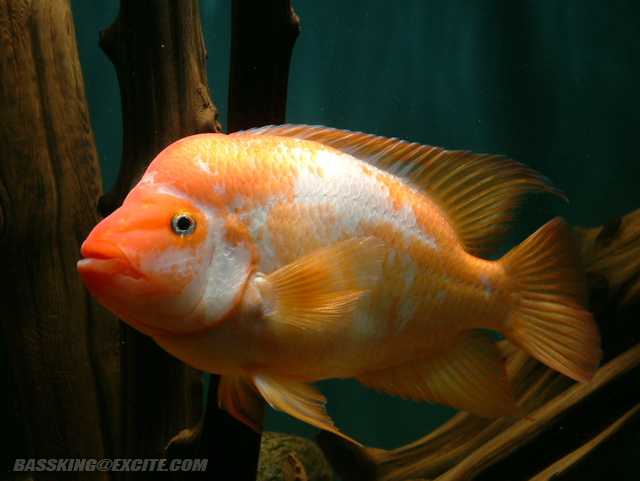
红魔鬼(Amphilophus labiatus)是攻击性很强的大型慈鲷,单独养一尾通常比混养更容易控制风险。商品鱼的橙、红、黄等颜色多来自选择繁育,野外个体主要偏灰;与近亲长期杂交使纯种来源尤其需要辨别。
分布与栖息地
特有于尼加拉瓜的尼加拉瓜湖和马那瓜湖,两湖通过蒂皮塔帕河相连。它通常靠近沉水岩石,在石缝间活动。
饲养环境
单尾也需至少约 150 × 45 cm 的缸底面积,配对或混养要大得多。它会不断翻动底砂、试图移动物件,不适合精细草缸。只用稳固且难以推动的石块、沉木或大花盆;若有其他鱼,应布置足够遮挡视线的区域,但这不能保证消除攻击。
加热器、管件及进出水口都要牢固保护。大而高效的过滤、每周大量换水和充分增氧不可少,厚重缸盖也要可靠,以防兴奋时跃出。
食性与喂食
通常非常贪食,可用优质慈鲷颗粒作基础,搭配蚯蚓、虾、贻贝等动物饵,同时给足豌豆、菠菜等植物性食物。避免牛心及其他红肉。野外会吃小鱼,但缸养没有必要依赖活饵鱼。
习性与混养
无论异种还是同种都可能成为攻击对象。即使超过 1000 L 的大缸与健壮大型鱼试混,也必须持续观察,有些个体完全不容其他鱼。通常不应混入多条雄鱼。不能把“成对”理解为任意雌雄放在一起都安全,繁殖期的冲突尤其强。
雌雄区分
成熟雄鱼通常更大、更粗壮,背鳍和臀鳍更长,额部隆起更明显。野外额隆主要随繁殖状态变化,缸养个体却可能长期保有较大额隆。
繁殖
相容配对能繁殖,但配对本身危险。可从至少六尾幼鱼共同养大、让其自然配对,一旦配对立即移走其余鱼。直接把两尾成鱼合缸可能导致雌鱼死亡;隔板适应也没有绝对保证,应始终准备可靠隔离。繁殖缸不能同时留其他鱼。
求偶可能持续较久并伴随激烈动作,双方挖坑,雌鱼可在洞内、竖直石面或其他硬表面产卵。亲鱼共同照顾卵并守卫领地,维护时也要防咬。约两三天孵化后,幼鱼被移入预挖的坑,再过五至七天起游,用丰年虾无节幼体开口,随后添加细干饲料。
起游前后雄鱼可能再次攻击雌鱼,须视情况用隔板保护。过早移走幼鱼可能诱发雄鱼再次求偶,未恢复的雌鱼也会有危险;配对成功不能取代后续观察。
补充说明
厚唇并非可靠的唯一鉴定点,缸养鱼的嘴唇尤其可能不明显。近亲的体形和额隆也会造成混淆,且商品群有大量杂交历史,保留可靠来源比只看颜色更有意义。
图片
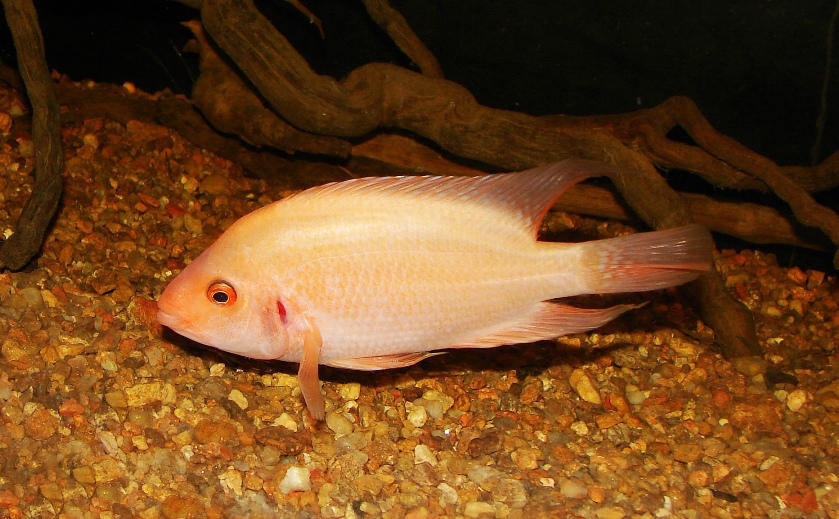
图片来自 SeriouslyFish,版权归各摄影者所有。
English
Overview
A large and exceptionally aggressive cichlid, Amphilophus labiatus is usually more manageable alone than in a community. Most wild fish are grayish; orange, red, and other trade colors reflect selective breeding. Extensive crossing with relatives complicates the identity of captive stock.
Distribution & habitat
It is endemic to Nicaragua’s Lakes Nicaragua and Managua, connected by the Tipitapa River. Fish commonly move among crevices in submerged rocky areas.
Aquarium setup
A single fish needs at least about 150 by 45 cm of floor space; pairs and communities require much more. Expect extensive digging and attempts to move décor. Use stable heavy rocks, wood, or large pots, and create visual barriers if other fish are present without assuming these will prevent attacks.
Protect heaters, plumbing, and filter fittings securely. Large efficient filtration, substantial weekly changes, and strong oxygenation are essential. A secure heavy cover prevents escapes during excited behavior.
Diet & feeding
A greedy, adaptable feeder, it can receive quality cichlid pellets with earthworms, prawns, mussels, and a substantial vegetable component such as peas or spinach. Avoid beefheart and other red meats. It eats smaller fish in nature, but live feeder fish are unnecessary in aquarium care.
Behaviour & compatibility
Both other species and conspecifics may be attacked. Even attempts in aquariums exceeding 1,000 L with robust large fishes need close supervision, and some individuals tolerate no companions at all. Multiple males are generally unsuitable. A male and female are not automatically compatible, especially around spawning.
Sexual dimorphism
Males are generally larger and heavier, with longer dorsal and anal fins and a stronger nuchal hump. In nature the hump changes with breeding condition; captive fish may retain a large one.
Breeding
Obtaining a compatible pair is the difficult part. Growing at least six juveniles together allows natural pairing, after which the remaining fish must be removed promptly. Simply combining adults can result in the female’s death; divider-assisted introduction offers no guarantee. Keep a reliable divider ready and exclude other tankmates.
Courtship may be prolonged and violent, with digging by both fish. Eggs are attached inside a cave or on a hard surface. Both parents guard them and may bite during maintenance. Hatching takes about two or three days, after which young are moved into a pit; free swimming follows five to seven days later. Begin with Artemia nauplii, adding fine dry food as they grow.
Male aggression toward the female can intensify again, making separation necessary. Premature removal of fry may prompt renewed courtship before the female is ready. Continued monitoring remains essential.
Notes
Enlarged lips alone are an unreliable identification feature, particularly in captive-bred fish. Similar body and hump shapes and extensive hybridization make documented provenance more valuable than color alone.
来源
- https://www.seriouslyfish.com/species/amphilophus-labiatus(抓取于 2026-10-10)
amphilophus-labiatus · 文件: data/species/amphilophus-labiatus.md · 状态: 草稿