橘色双冠丽鱼 · Midas Cichlid
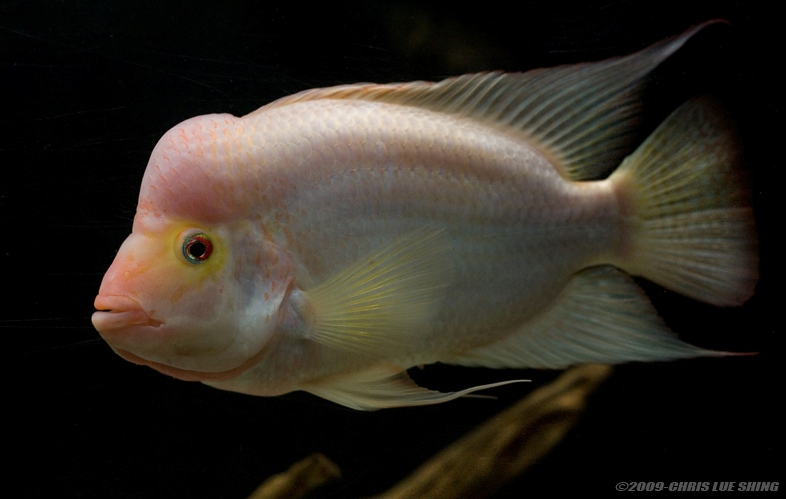
概要
| 字段 | 值 |
|---|---|
| 类别 | 鱼 |
| 学名 | Amphilophus citrinellus |
| 别名 | 红魔丽体鱼、橘色雙冠麗魚、紅魔麗體魚、Zitronenbuntbarsch、Heros citrinellus、Heros basilaris、Cichlasoma granadense |
| 分类 | 慈鲷目 Cichliformes › 慈鲷科 Cichlidae › Amphilophus |
| 水体 | 淡水 |
| 原产地 | 哥斯达黎加及尼加拉瓜 |
| 成体体长 | 35 cm |
| 饲养难度 | 中等 |
| 群居方式 | 成对 |
| 外部数据 | seriouslyfish amphilophus-citrinellus;fishbase 4786 |
| 性情 | 攻击性 |
| 领地性 | 是 |
| 特征 | 翻底砂: 是;会跳缸: 是;吃小鱼: 是 |
| 繁殖方式 | 附着产卵 |
水质参数
| 参数 | 耐受范围 | 最适范围 | 单位 |
|---|---|---|---|
| 水温 | 21–26 | — | °C |
| pH | 6–8 | — | — |
| 总硬度 | 5–25 | — | dGH |
概述
橘色双冠丽鱼(Amphilophus citrinellus)是一种体形厚实、攻击性很强的大型慈鲷。它会搬动底床、冲撞设备,也可能攻击配偶;单养所需空间和混养条件差别很大,不能把一只鱼能够生活的缸当作一对或多鱼可安全共处的缸。
分布与栖息地
原生于尼加拉瓜和哥斯达黎加,多利用湖泊、池塘等较大的永久水体,也见于缓流河段。常沿岩壁、岩岸活动,在缝隙间寻找食物。
饲养环境
单只至少需要约 150 × 45 厘米底面积,配对需要更大空间。沙石每天可能被大量搬移,不适合依赖扎根水草的造景。岩石、沉木及大花盆应重到不易推动,有其他鱼时尽量设置视线隔断,但这只能减轻、不能消除攻击。
加热器、过滤进出水口和管件都需要牢固固定及保护。强大的过滤、充分供氧和每周较大换水用于应对其高排泄量,缸盖应结实且有足够重量,防止激动时跳出。
食性与喂食
通常非常贪食,可用优质慈鲷条状粮作基础,搭配蚯蚓、虾、贻贝等,豌豆和菠菜等植物性食物也应占有适当比例。带壳虾可提供类胡萝卜素,有助维持黄橙体色。牛心和其他红肉不适合作常规食物;虽然野外会吃小鱼,人工饲养并不需要投喂活饵鱼。
习性与混养
本种对异种和同类都可能很凶。只有超过约 1000 升的很大水体,混养强健中美洲慈鲷、大型鲶类或足够大的快速群游鱼才较有讨论余地,仍须严密观察。配对和产卵阶段尤其不适合保留其他同伴。
雌雄区分
成熟雄鱼通常更壮,背鳍和臀鳍更长,额隆更明显。野外额隆主要在繁殖季发达,缸养个体可能长期保留;雄鱼生殖乳突较细长,可辅助区分。
繁殖
难点在于安全形成相容配对,而不只是产卵。一种较可靠办法是将至少 6 条幼鱼共同养大,自然配对后立即移走其余鱼。直接合入成年雌雄可能致死;透明隔板适应法也不能保证安全,需随时准备重新分隔。繁殖缸参考长度约 1.8 米,提供大石和花盆,不留其他鱼。
求偶可能持续较久,伴有甩尾、张口及挖掘。卵常产在洞内或垂直石面,双亲护卵,约 2~3 天孵化后移至坑中,再过约 5~7 天自由游动。此时雄鱼可能更凶,需视情况用隔板保护雌鱼;过早移走幼鱼也可能触发雄鱼要求再次繁殖,威胁尚未准备好的雌鱼。
仔鱼先喂丰年虾无节幼体,再加入适口干粮。条件合适时长得快,幼体先呈灰色,约 5~6 厘米开始变色。
补充说明
它常与 Amphilophus labiatus 混淆,后者厚唇程度有变异,不能只看嘴唇;本种较厚实的体形及较大发达额隆更有参考价值。天然和人工色型很多,且曾参与鹦鹉鱼、罗汉鱼等杂交品系形成,鲜艳外观本身不能证明纯种身份。
图片
图片来自 SeriouslyFish,版权归各摄影者所有。
English
Overview
Amphilophus citrinellus is a large, deep-bodied cichlid with formidable aggression. It moves substrate, attacks equipment and may injure its own partner. Housing one fish and keeping a pair or community safely are very different space requirements.
Distribution & habitat
Native to Nicaragua and Costa Rica, it mainly inhabits large permanent waters such as lakes and ponds, with some records from slow river sections. Rocky banks and walls provide crevices in which it searches for food.
Aquarium setup
Allow at least approximately 150 × 45 cm of floor space for one specimen, and more for a pair. Heavy daily excavation makes a rooted planted layout impractical. Rocks, wood and large pots must resist being moved. Visual barriers may reduce aggression where other fish are present, but cannot eliminate it.
Protect and secure heaters, filter connections and pipework. Strong filtration, abundant oxygen and substantial weekly water changes are needed for this messy fish. Fit a heavy, secure cover because excited individuals can leap out.
Diet & feeding
A quality cichlid stick can form the staple, accompanied by earthworms, prawns, mussels and a meaningful plant component such as peas or spinach. Prawn shells supply carotenoids that can support yellow and orange coloration. Beef heart and other red meats are unsuitable routine choices. Although small fish are eaten in nature, live feeder fish are unnecessary in an aquarium.
Behaviour & compatibility
Both other species and conspecifics may be attacked. Community options become more realistic only in very large systems exceeding roughly 1,000 liters, potentially with robust Central American cichlids, large catfishes or sufficiently large fast swimmers. Even then, monitor interactions closely. Other companions should be excluded when breeding a pair.
Sexual dimorphism
Mature males are generally more robust, with longer dorsal and anal fins and larger forehead humps. Wild fish mainly develop pronounced humps during reproduction, whereas captive individuals may retain them. The male genital papilla is narrower and more elongated.
Breeding
Obtaining a compatible pair safely is the main obstacle. Raise at least six juveniles together and immediately remove the others when a pair forms. Introducing unrelated adults directly can be fatal. Familiarization through a clear divider offers no guarantee, and separation may be needed again at any time. A breeding tank around 1.8 meters long should contain large rocks or pots and no other fish.
Courtship can be prolonged and rough, with tail slapping, gaping and extensive digging. Eggs are usually deposited inside a cave or on a vertical rock surface. Both parents guard them. Hatching occurs in about two to three days, after which fry are transferred to a pit; free swimming follows another five to seven days later. The male may become more aggressive then, requiring a divider to protect the female. Removing the brood prematurely can also prompt another spawning attempt and endanger an unready female.
Start fry on brine-shrimp nauplii and later add suitable dry food. Growth can be rapid; initially gray juveniles begin changing color at approximately 5–6 cm.
Notes
Confusion with Amphilophus labiatus is common. Lip size varies in that species, so assess the deeper build and larger hump of A. citrinellus as well. Numerous natural and artificial colors exist, and the species has contributed to hybrid ornamental lines such as parrot cichlids and flowerhorns. Bright color alone does not demonstrate pure ancestry.
来源
- https://www.seriouslyfish.com/species/amphilophus-citrinellus(抓取于 2026-10-10)
amphilophus-citrinellus · 文件: data/species/amphilophus-citrinellus.md · 状态: 草稿