黑线沙鳅 · Black-Lined Loach
概要
| 字段 | 值 |
|---|---|
| 类别 | 鱼 |
| 学名 | Ambastaia nigrolineata |
| 别名 | 黑線沙鰍、Schwarzstreifenprachtschmerle、Botia (Hymenophysa) nigrolineata |
| 分类 | 鲤形目 Cypriniformes › 沙鳅科 Botiidae › Ambastaia |
| 水体 | 淡水 |
| 原产地 | 中国、老挝、泰国 |
| 成体体长 | 8 cm |
| 饲养难度 | 中等 |
| 最小水体 | 81 L |
| 最小缸长 | 90 cm |
| 群居方式 | 群游 |
| 特征 | 会跳缸: 是 |
| 外部数据 | seriouslyfish ambastaia-nigrolineata;fishbase 50388 |
| 性情 | 温和 |
水质参数
| 参数 | 耐受范围 | 最适范围 | 单位 |
|---|---|---|---|
| 水温 | 20–25 | — | °C |
| pH | 6.5–7.5 | — | — |
| 总硬度 | 5–15 | — | dGH |
概述
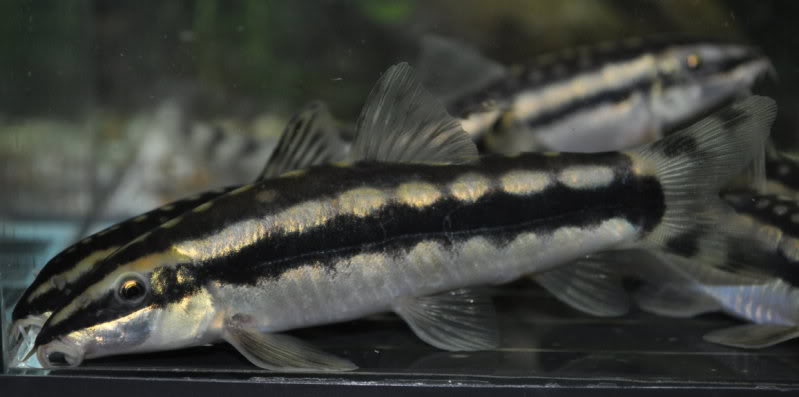
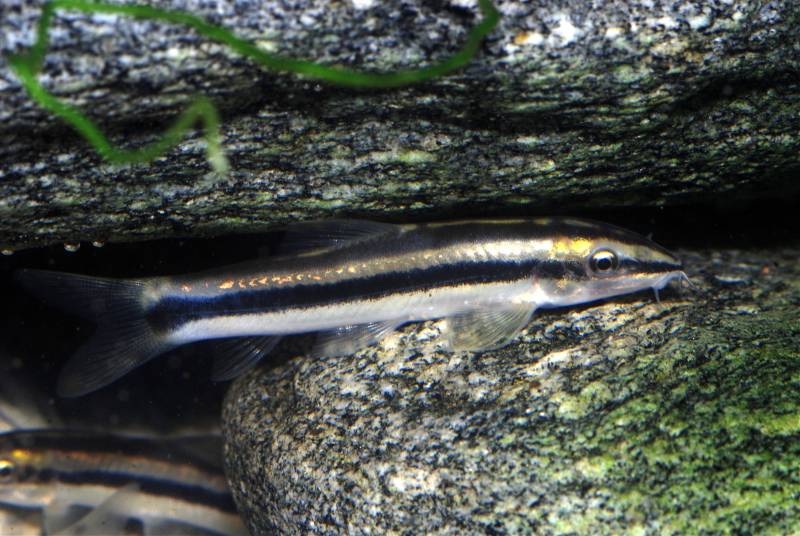
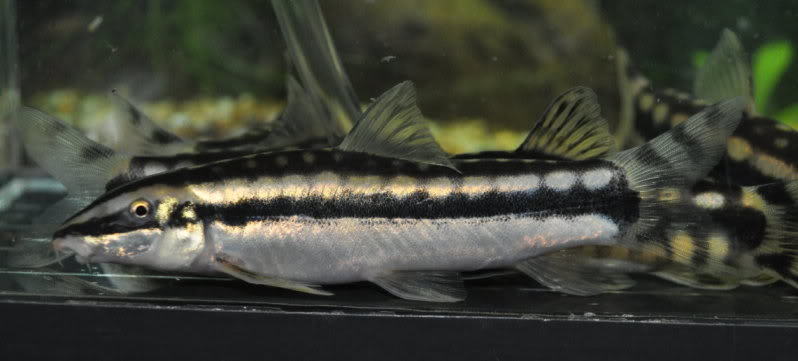
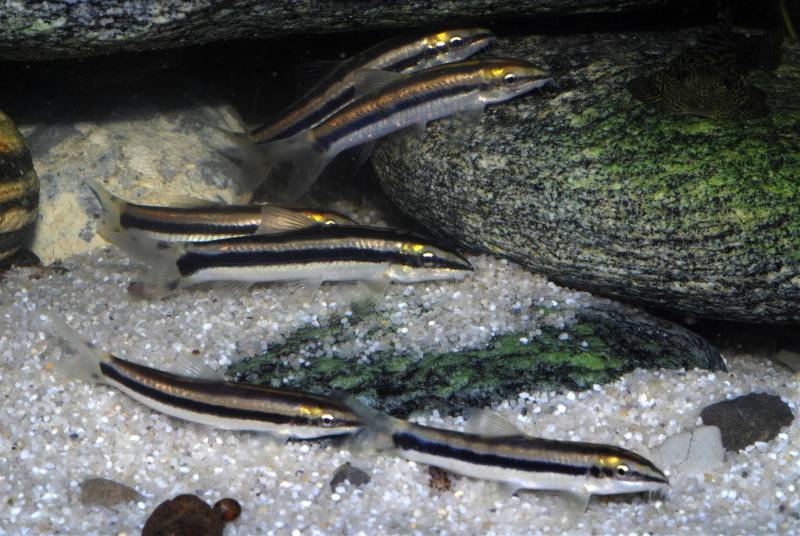
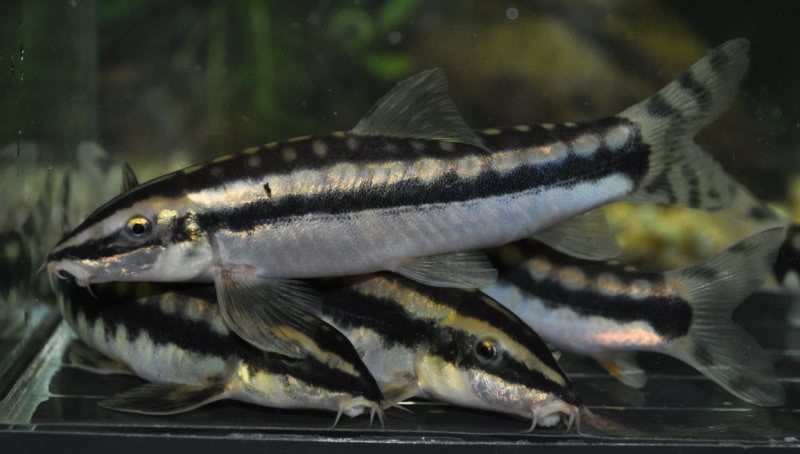
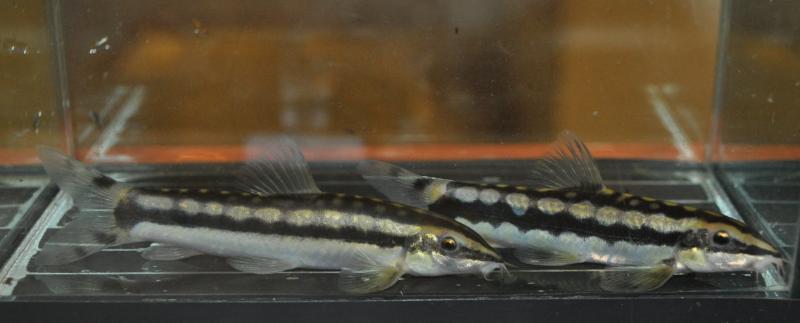
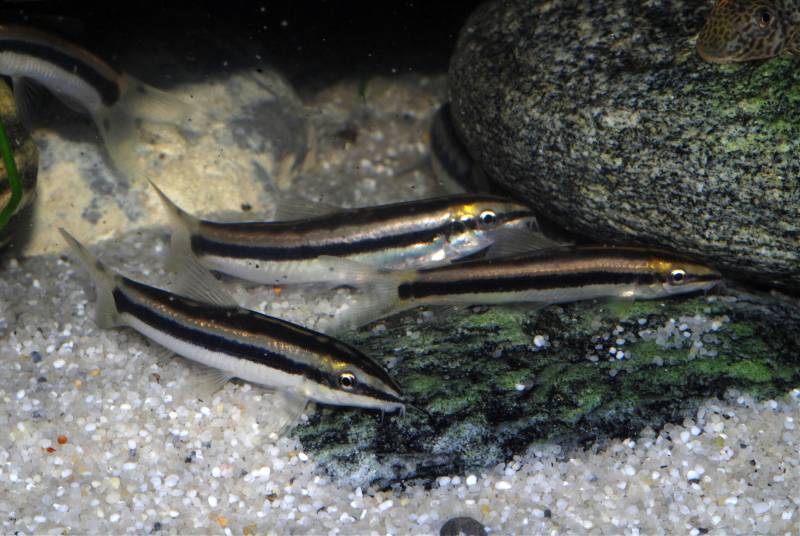
黑线沙鳅(Ambastaia nigrolineata)体侧和背部中央各有连续暗纹,性情相对温和,但需要足够同伴和复杂的躲藏环境。它在贸易中较少见,不能把它当作单独放入缸内的“除螺工具鱼”。
分布与栖息地
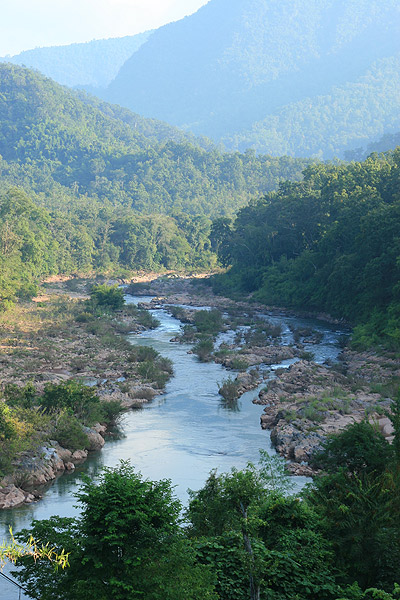
最初描述于中国云南西双版纳勐罕附近的澜沧江水系,此后也记录于老挝部分湄公河流域和泰国北部南河。泰国曾将它列入本国受威胁物种红皮书。
模式产地为沙底、适度水流的小溪,其他记录包括清水浅滩和溪流环境。它是否像某些近缘沙鳅一样季节性进入主河道迁移,尚未明确。
饲养环境
长期饲养宜有至少约 90 × 30 cm 的底面积。沙或细砾、圆滑石块、沉木根和枝条可形成丰富层次,耐阴植物附着在木石上也能提供阴影。缸内要有多处可探索的洞隙,但应去掉锐边,封堵可能卡住身体的孔洞;缸盖也需严密。
水应清洁、含氧充分,并有适度流动,不必制造猛烈湍流。只在生物过滤成熟、水质稳定的缸中饲养,避免有机废物累积。每周更换约 30%~50% 缸水可作为常规维护的一部分。
食性与喂食
同属鱼看来以动物性食物为主,也会摄入植物物质,甚至柔软水草。缸内应提供多样食谱:优质干粮、摇蚊幼虫、水蚯蚓、丰年虾等活饵或冷冻饵,搭配黄瓜、瓜果、烫软菠菜等植物性食物;混合凝胶饲料也可用。切碎蚯蚓只宜少量添加。
沙鳅类常会吃水螺,但并非专食软体动物,不能以“清螺”为由忽略其长期饲养需求。适应后摄食较大胆,有时会在喂食时游到中层。
习性与混养
本种相对温和,宜选活跃、体型相容的中上层鱼,避开行动慢或长鳍同伴,也不宜与攻击性较强的沙鳅混养。
这类沙鳅有复杂等级关系,至少养 5~6 条,最好 10 条以上。单养可能使鱼退缩或攻击相似外形鱼;只养两三条时,优势鱼可能持续压迫其他个体,甚至使它们停食。充足同伴和遮蔽都很重要。
雌雄区分
成熟雌鱼身体更丰满、通常略大;雄鱼吻部稍延长,嘴唇明显厚实。
补充说明
与小沙鳅(Ambastaia sidthimunki)相比,本种纵纹更完整,连接背纹与侧纹的横带较弱,多在后半身才贯通。单看某一条纹仍可能误判,应组合观察。
同属鱼争夺等级时可暂时褪色,幼鱼也会贴着大鱼并排模仿游动,还可发出咔哒声。群体有时围缸连续游动,触发因素和这些行为的功能仍不清楚。侧卧或卡在装饰间的休息姿态可能正常,但持续消瘦仍需留意,尤其新进口个体;不能只凭消瘦就认定某一种病原。眼下棘可在受惊时竖起,转移时注意缠网和刺伤。
图片
图片来自 SeriouslyFish,版权归各摄影者所有。
English
Overview
Ambastaia nigrolineata, the black-lined loach, has continuous dark stripes along the flank and dorsal midline. It is relatively mild-mannered but needs a substantial group and a structured aquarium with many retreats. Its rarity in trade and full care needs make it unsuitable as a solitary “snail-control” purchase.
Distribution & habitat
It was described from the Lancang drainage near Menghan in Xishuangbanna, Yunnan, China. Other records concern parts of the Lao Mekong basin and the Nan in northern Thailand. Thailand has included it in its national threatened-species Red Book.
The original site was a sandy creek with moderate current; other collections include clear-water riffles and stream habitats. Seasonal movement into main river channels has not been established for this species.
Aquarium setup
Allow a footprint of at least about 90 × 30 cm for long-term care. Sand or fine gravel, smooth rocks, and woody roots and branches provide structure. Low-light plants attached to wood or stones add shade. Include numerous places to explore, but eliminate sharp edges and block openings in which a fish could become trapped. Fit the cover securely.
Maintain clean, well-oxygenated water with some flow rather than extreme turbulence. Use a mature aquarium with stable biological filtration and prevent organic waste accumulation. Weekly changes of about 30–50% can form part of routine maintenance.
Diet & feeding
Members of Ambastaia appear to favor animal foods but also consume plant material, sometimes including soft aquatic leaves. Provide quality prepared foods, live or frozen bloodworms, Tubifex, Artemia, and similar items, alongside cucumber, melon, blanched spinach, or other suitable vegetables. Mixed gel foods are another option. Chopped earthworms should be used sparingly.
Botiid loaches often eat snails, but they are not specialized mollusk feeders and should not be acquired merely to clear an infestation. Settled fish feed boldly and may rise into midwater during meals.
Behaviour & compatibility
This species is relatively peaceful. Active fishes of compatible size using the upper water are generally better candidates than slow or long-finned companions. Avoid aggressive botiid species.
These loaches maintain complex social rankings. Keep at least five or six, preferably ten or more. Solitary fish may withdraw or direct aggression at similarly shaped companions, while a dominant individual in a pair or trio can suppress the others until they stop feeding. Both adequate group size and shelter matter.
Sexual dimorphism
Mature females are fuller-bodied and usually slightly larger. Males develop somewhat longer snouts and noticeably fleshy lips.
Notes
Compared with Ambastaia sidthimunki, the longitudinal stripes are more continuous and the connecting bars are weaker, often bridging the stripes only toward the rear. Combine markings rather than relying on a single stripe.
Related social routines include temporary fading during rank disputes, juveniles swimming closely beside larger fish, audible clicking, and bouts of continuous group swimming around the aquarium. Their functions are not fully understood. Resting sideways or wedged among decoration can be normal, whereas persistent weight loss deserves attention, especially in recent imports. Weight loss alone does not establish a particular pathogen. Sharp spines below the eyes can catch in nets or puncture skin during handling.
来源
- https://www.seriouslyfish.com/species/ambastaia-nigrolineata(抓取于 2026-10-10)
ambastaia-nigrolineata · 文件: data/species/ambastaia-nigrolineata.md · 状态: 草稿