九间始丽鱼 · Convict Cichlid
概要
| 字段 | 值 |
|---|---|
| 类别 | 鱼 |
| 学名 | Amatitlania nigrofasciata |
| 别名 | 九间丽体鱼、九間始麗魚、九間麗體魚、Zebrabuntbarsch、Heros nigrofasciatus |
| 分类 | 慈鲷目 Cichliformes › 慈鲷科 Cichlidae › Amatitlania |
| 水体 | 淡水 |
| 原产地 | 哥斯达黎加、萨尔瓦多、危地马拉、洪都拉斯、尼加拉瓜及巴拿马 |
| 成体体长 | 15 cm |
| 饲养难度 | 中等 |
| 群居方式 | 成对 |
| 领地性 | 是 |
| 外部数据 | seriouslyfish amatitlania-nigrofasciata;fishbase 3615 |
| 性情 | 攻击性 |
| 特征 | 翻底砂: 是 |
| 繁殖方式 | 附着产卵 |
水质参数
| 参数 | 耐受范围 | 最适范围 | 单位 |
|---|---|---|---|
| 水温 | 24–28 | — | °C |
| pH | 6–8 | — | — |
| 总硬度 | 5–25 | — | dGH |
概述
九间始丽鱼(Amatitlania nigrofasciata)体健、容易繁殖,却不是适合普通混养缸的温和小鱼。它领地性强,繁殖期可猛烈攻击比自己大得多的鱼,更适合专缸观察配对和护幼行为。
分布与栖息地
原生于危地马拉至巴拿马的中美洲多国,也被引入美国、澳大利亚等地。野外环境从流动河流到池塘、湖泊都有,但它通常依附有遮蔽物的区域,很少出现在完全开阔的水中。
饲养环境
单对至少可用底面积约 90 × 30 厘米的缸,多对或混养其他慈鲷则需要大得多的空间。以岩石、沉木、树根和侧放花盆提供躲避处及产卵洞。它喜欢挖掘,种植在底床中的水草可能被掀起。
食性与喂食
通常愿意接受多数合口食物。不要因容易开口便长期只喂一种饵料,保持食谱多样有助维持体况和繁殖状态。
习性与混养
它具有明显攻击性和领地性,繁殖时尤其强烈。常规社区缸并不合适;只有非常大的缸,才可考虑与强健的中美洲慈鲷混养。形成配对后,其他鱼可能被逼在角落,必须及时移走多余个体,而不能依靠体型差阻止冲突。
雌雄区分
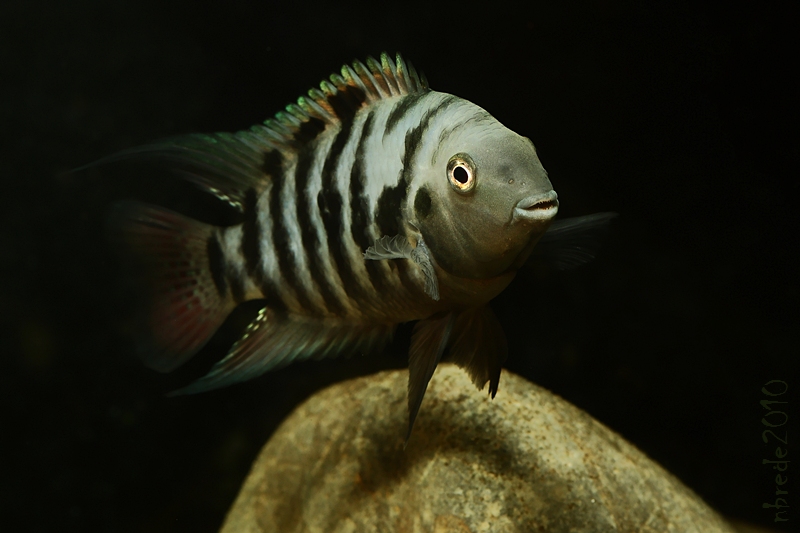
雄鱼通常更大,成熟后背鳍和臀鳍末端较尖,部分个体有额隆。雌鱼背鳍有特征性暗斑,繁殖时颜色更鲜明。
繁殖
配对往往容易,可将幼鱼共同养大后保留自然形成的一对。准备洞穴或花盆,用多样食物养壮,配合每周较大换水,换水量可达约 50%。雌鱼清理选定产卵面后,一次可产约 300 枚卵;雌鱼照料卵,雄鱼防守领地,维护缸内时也可能遭到攻击。
卵约 3~4 天孵化,亲鱼把仔鱼移入事先挖好的坑,之后数日可能再次搬迁。约再过 4~7 天自由游动,可喂丰年虾无节幼体,随成长改用压碎薄片和慈鲷颗粒;幼鱼也会啃食缸内藻类和碎屑。双亲可持续照顾数周。由于繁殖容易且数量多,应在繁殖前安排好幼鱼的成长空间和去向。
补充说明
人工品系包括粉红、长鳍和大理石斑纹等。耐养与容易繁殖不代表混养安全,它的价值更多在于展示鲜明的亲鱼照顾行为。
图片
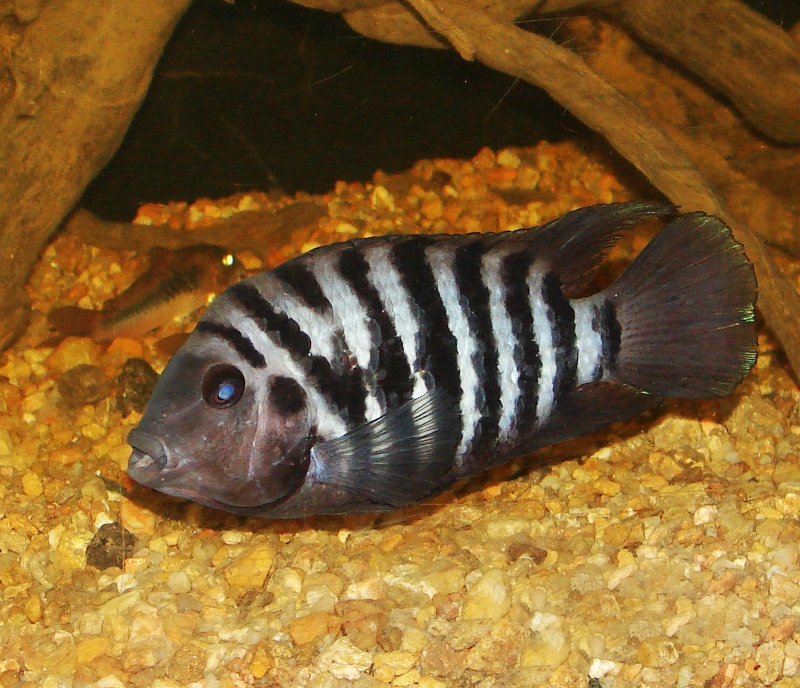
图片来自 SeriouslyFish,版权归各摄影者所有。
English
Overview
Amatitlania nigrofasciata is hardy and exceptionally easy to breed, but it is an aggressive territorial cichlid rather than a peaceful community fish. A species aquarium is a better setting for observing its pairing and parental behavior, especially because breeding fish can attack opponents much larger than themselves.
Distribution & habitat
Native populations occur across Central America from Guatemala to Panama. Introduced populations also exist elsewhere, including the United States and Australia. Rivers, ponds and lakes are all used, but the fish typically remains close to cover rather than occupying open water.
Aquarium setup
A single pair can use a footprint of roughly 90 × 30 cm; multiple pairs or other cichlid companions require substantially more space. Rocks, wood, roots and sideways clay pots provide retreats and spawning sites. Persistent digging can uproot planted vegetation.
Diet & feeding
Most appropriately sized foods are accepted readily. Maintain variety rather than relying on a single item simply because the fish is easy to feed; varied meals support condition and breeding readiness.
Behaviour & compatibility
Strong territorial aggression becomes particularly intense during reproduction. A normal community aquarium is unsuitable. Robust Central American cichlids are potential companions only in a very large system. Once a pair forms, remove surplus fish promptly if they are confined to a corner; a larger body size does not reliably protect a tankmate.
Sexual dimorphism
Males usually grow larger and develop pointed dorsal and anal fins, sometimes with a forehead hump. Females have a characteristic dark dorsal-fin mark and become more brightly colored in breeding condition.
Breeding
Pairs often form readily. Raising juveniles together and retaining a naturally formed pair is a practical approach. Supply caves or pots, condition the fish with varied foods and carry out substantial weekly water changes, potentially up to about 50%. The female cleans a chosen surface before laying as many as roughly 300 eggs. She tends the clutch while the male patrols; both may attack a hand entering their territory.
Hatching takes about three to four days. The parents move the fry into prepared pits and may relocate them again over the following days. Free swimming follows after another approximately four to seven days. Begin with brine-shrimp nauplii, later adding crushed flakes and suitable pellets; the young also graze algae and detritus. Care continues for several weeks. Because reproduction is so productive, arrange adequate growing space and destinations for juveniles before breeding.
Notes
Artificial forms include pink, long-finned and marbled varieties. Hardiness and easy reproduction do not establish community suitability; the species is especially rewarding for observing active parental care.
来源
- https://www.seriouslyfish.com/species/amatitlania-nigrofasciata(抓取于 2026-10-10)
amatitlania-nigrofasciata · 文件: data/species/amatitlania-nigrofasciata.md · 状态: 草稿