珍珠亮丽鲷 · Calvus Cichlid
概要
| 字段 | 值 |
|---|---|
| 类别 | 鱼 |
| 学名 | Altolamprologus calvus |
| 别名 | 珍珠亮麗鯛、Pearly Lamprologus、Perlhuhnbarsch、Lamprologus calvus |
| 分类 | 慈鲷目 Cichliformes › 慈鲷科 Cichlidae › Altolamprologus |
| 水体 | 淡水 |
| 成体体长 | 13.8 cm |
| 饲养难度 | 中等 |
| 外部数据 | seriouslyfish altolamprologus-calvus;fishbase 8134 |
| 原产地 | 坦噶尼喀湖 |
| 食性 | 肉食 |
| 特征 | 吃小鱼: 是 |
| 领地性 | 是 |
| 繁殖方式 | 附着产卵 |
水质参数
| 参数 | 耐受范围 | 最适范围 | 单位 |
|---|---|---|---|
| 水温 | 24–27 | — | °C |
| pH | 7.5–9 | — | — |
| 总硬度 | 8–20 | — | dGH |
概述
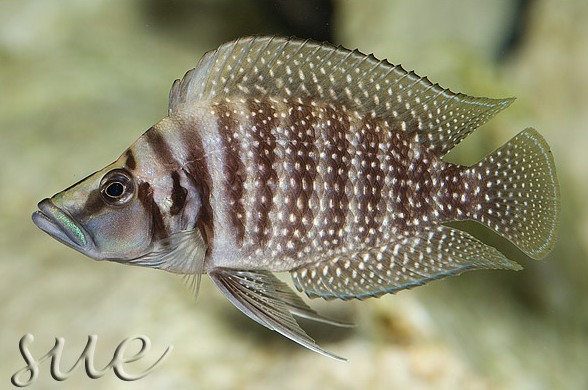
珍珠亮丽鲷(Altolamprologus calvus)是身体高度侧扁的岩缝捕食者。它通常较羞怯,对吞不下的同伴相对平和,却会捕食卵、仔鱼和小鱼。稳定的硬碱性水、充分岩洞及合适同伴,是饲养它的关键。
分布与栖息地
本种为坦噶尼喀湖特有鱼,仅生活在湖岸和岛屿周边的岩石环境。窄而扁的身体便于进入裂隙,也让它从正面看不容易被猎物或捕食者察觉。
饲养环境
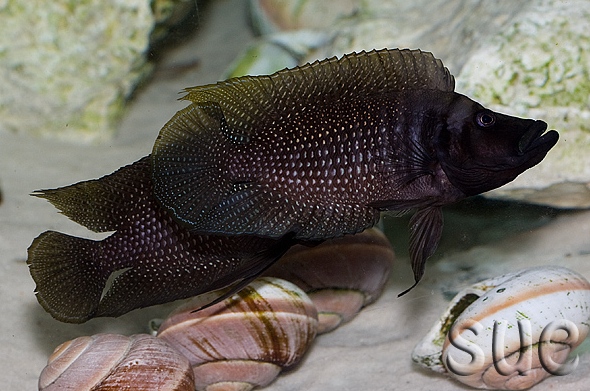
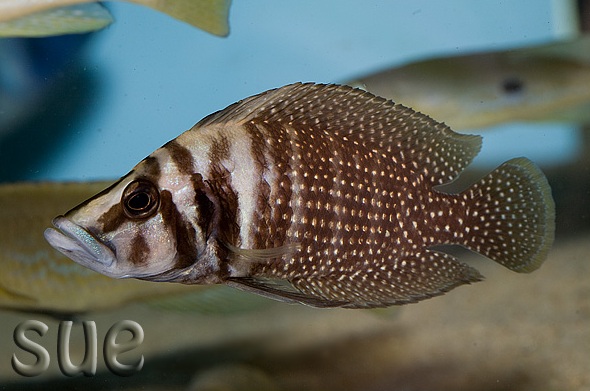
用大量稳固岩石形成洞穴与缝隙,营造坦湖岩岸环境。暗一些的光线可增加它外出活动的机会,深色底床尤其利于黑色色型展示。刚进口的野生鱼对水质变化更敏感,人工繁殖鱼通常较强健,但也应避免水温、化学条件骤变。
食性与喂食
它天然捕食鱼卵、仔鱼和小鱼,饲养时通常乐于接受肉类活饵及冻饵,却往往不吃干粮。应确认个体实际开口情况,不能因投下颗粒就认为已经摄食。
习性与混养
具有领地性,但对大到无法吞下的鱼一般较和平。避免凶猛或过度活跃的同伴,可考虑需求相合的坦湖小型慈鲷及适当的湖产倒游鲶类。可成对饲养,足够大的缸也能维持群体;不同产地色型应分开,防止杂交。
雌雄区分
雄鱼更大,鳍也比雌鱼长。
繁殖
在洞穴内的基质上产卵。可让一群幼鱼自行配对,但可能要等到约两年;也可采用一雄配三四雌的方式。繁殖缸需要岩缝、花盆或贝壳,水保持硬碱性,参考 pH 约 8.0~8.5、25~26.5 °C,以多样活饵及冻饵养壮亲鱼。
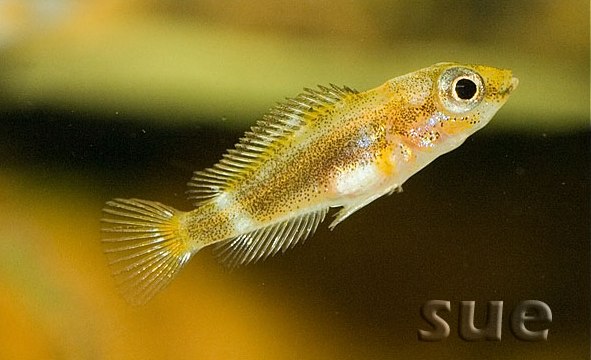
雌鱼选择只有自己能进去的洞产卵,雄鱼在洞口排精,双方扇动鳍使精子进入洞内。每次可达约 200 枚,雌鱼照料卵,雄鱼守外侧。卵约两天孵化,再过约 8~10 天自由游动。孵化后应移走雄鱼,它可能吞食游出的仔鱼;雌鱼通常不伤幼鱼。仔鱼可从开口起吃丰年虾无节幼体和微虫,生长缓慢,应随大小差异分养,防止大鱼吃小鱼。
补充说明
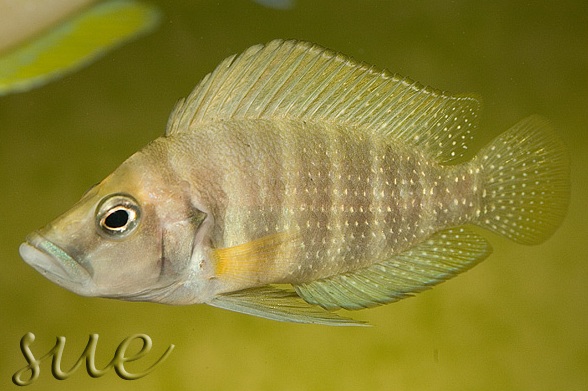
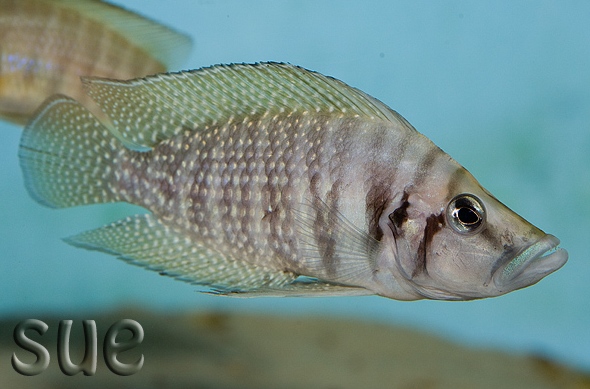
厚鳞带锯齿边缘,可侧向对敌形成防护。名称中的“秃”指双眼之间局部无鳞,并不代表全身无鳞。与近缘的 Altolamprologus compressiceps 相比,本种吻部及整体外形更修长,仍应结合其他特征辨认。
图片
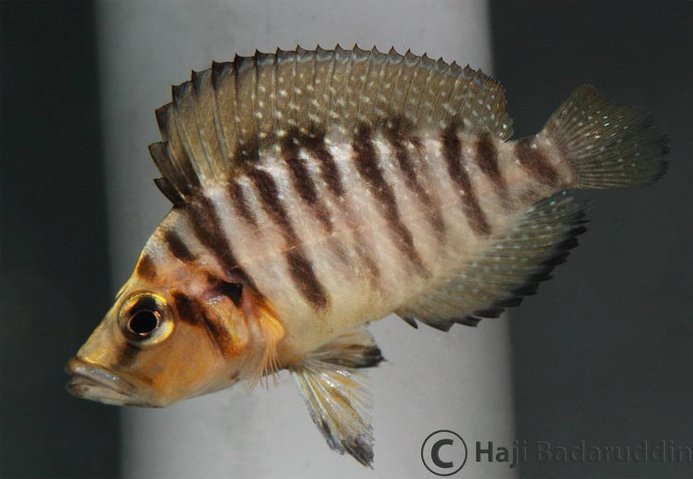
图片来自 SeriouslyFish,版权归各摄影者所有。
English
Overview
Altolamprologus calvus is a strongly compressed predator adapted to exploring rock crevices. Usually shy and relatively tolerant of fish too large to swallow, it nevertheless hunts eggs, fry and small fishes. Stable hard, alkaline water, plentiful caves and appropriate companions are essential considerations.
Distribution & habitat
Endemic to Lake Tanganyika, it occupies rocky areas around the shores and islands. Its narrow shape allows access to cracks and also makes it difficult to see head-on, helping it evade predators and approach prey.
Aquarium setup
Arrange extensive secure rockwork to provide caves and narrow retreats. Subdued lighting encourages more visible activity, and dark substrate particularly enhances black forms. Newly imported wild fish are sensitive to changes in water chemistry. Captive-bred individuals are generally hardier, but sudden chemical or temperature changes should still be avoided.
Diet & feeding
Natural prey includes eggs, fry and small fish. Meaty live and frozen foods are usually accepted readily, whereas dry foods are often refused. Confirm that each individual actually eats rather than assuming that added pellets have supplied a meal.
Behaviour & compatibility
The species is territorial but generally peaceful toward fish it cannot swallow. Avoid aggressive or excessively active companions. Suitable Tanganyikan cichlids and appropriate lake-native catfishes are possible choices. Pairs can be maintained, and colonies are possible with adequate room. Keep different locality forms apart to prevent hybridization.
Sexual dimorphism
Males become larger and develop longer fins than females.
Breeding
Eggs are laid on a surface inside a narrow cave. Juveniles can be raised together to obtain a natural pair, although this may take about two years; one male with three or four females is another breeding arrangement. Provide rock cavities, pots or shells, hard alkaline water around pH 8.0–8.5 and 25–26.5 °C, and varied live and frozen foods for conditioning.
The female chooses a cavity only she can enter. After she lays, the male releases sperm outside and both fan it toward the eggs. A brood may contain around 200 eggs. The female tends them while the male guards outside. Hatching takes about two days, followed by another eight to ten before free swimming. Remove the male after hatching because he may eat swimming fry; the female usually does not. Fry can start on brine-shrimp nauplii and microworms. Growth is slow, and size grading is needed as larger youngsters may eat smaller ones.
Notes
Thick, serrated scales provide defensive armor when turned toward an attacker. The bare patch between the eyes explains the species name; it does not make the fish generally scaleless. Its snout and overall form are more elongated than those of Altolamprologus compressiceps, although identification should consider the full set of features.
来源
- https://www.seriouslyfish.com/species/altolamprologus-calvus(抓取于 2026-10-10)
altolamprologus-calvus · 文件: data/species/altolamprologus-calvus.md · 状态: 草稿