斯氏非洲鲑鲤 · Blue Diamond Tetra
概要
| 字段 | 值 |
|---|---|
| 类别 | 鱼 |
| 学名 | Alestopetersius smykalai |
| 别名 | 斯氏纹鲑脂鲤、斯氏非洲鮭鯉、斯氏紋鮭脂鯉、Blauer Diamantsalmler |
| 分类 | 脂鲤目 Characiformes › 非洲脂鲤科 Alestidae › Alestopetersius |
| 水体 | 淡水 |
| 原产地 | 尼日利亚 |
| 成体体长 | 6 cm |
| 饲养难度 | 入门 |
| 最小水体 | 108 L |
| 最小缸长 | 120 cm |
| 群居方式 | 群游 |
| 性情 | 温和 |
| 外部数据 | seriouslyfish alestopetersius-smykalai;fishbase 5244 |
| 繁殖方式 | 散卵 |
水质参数
| 参数 | 耐受范围 | 最适范围 | 单位 |
|---|---|---|---|
| 水温 | 20–28 | — | °C |
| pH | 5–7 | — | — |
| 总硬度 | 1–10 | — | dGH |
概述
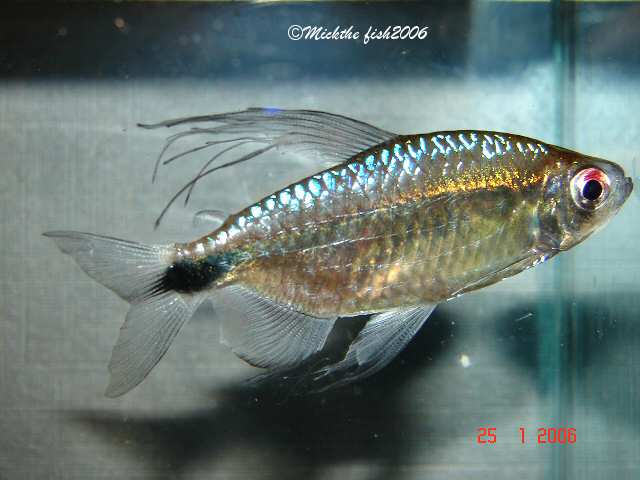
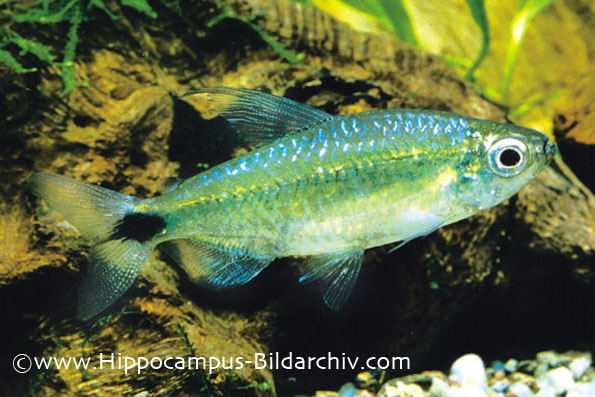
斯氏非洲鲑鲤(Alestopetersius smykalai)是尼日利亚的群居非洲脂鲤,在爱好者饲养中较少见。尾柄上醒目的深色菱形斑有助辨认,成年雄鱼虽多鳍延长,却没有延长的尾鳍中央鳍条。
分布与栖息地
似乎限于尼日利亚伊莫河及尼日尔河水系,但完整范围仍不明确。模式产地阿巴位于伊莫河支流阿巴河一带。森林损失、水坝与尼日尔三角洲栖地退化构成生存压力。
饲养环境
底面积至少约 120 × 30 cm,可用沙、细砾、圆石和沉木组合,也能在水草缸中饲养。必须留下足够开阔空间供群体游动。
它对有机废物波动敏感,应使用成熟的过滤系统,避免新开缸,每周换水约 20%–30%。
食性与喂食
自然食物可能包括小昆虫、甲壳动物与落果,具体组成尚未确认。缸内可用优质薄片及颗粒,定期搭配红虫、水蚤、丰年虾等活饵或冷冻饵,部分干粮应含植物或藻类材料。
习性与混养
活泼而略易受惊,通常温和。至少八至十尾并包含两性,配合适当的其他群游鱼,有助于展现自然行为。雄鱼在争雌和群体等级互动中体色最鲜明,缸友应体形相近并有相容需求。
雌雄区分
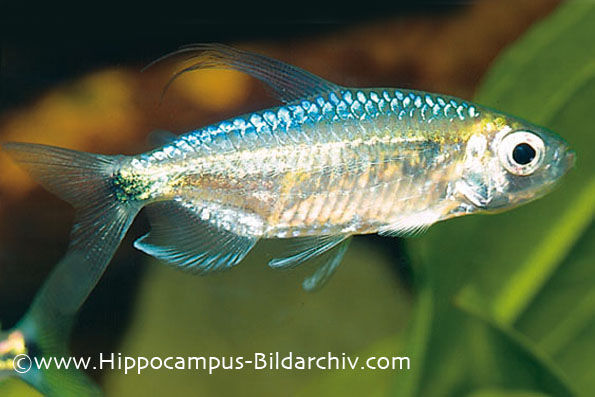
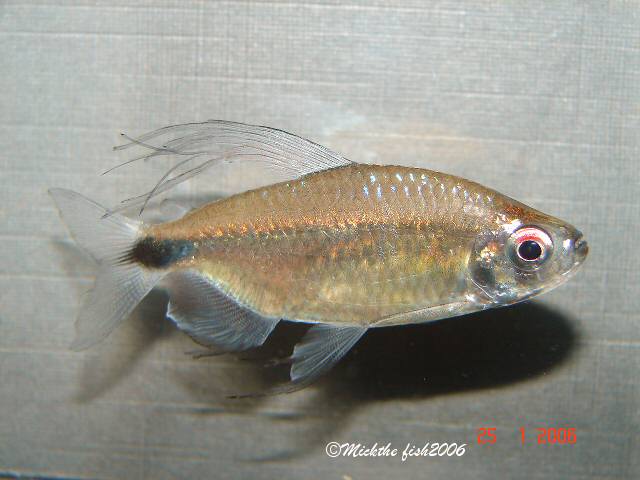
成年雄鱼通常更大且更鲜艳,背鳍、腹鳍、臀鳍及尾鳍明显延长;雌鱼主要只有前部少数背鳍条略延长。
繁殖
本种散卵,不照顾卵或鱼苗。家庭繁殖细节有限,一种有报道的方法是群体繁殖并用集卵装置回收鱼卵,再转移到小容器孵化。孵化约需五天,鱼苗平游后可接受丰年虾无节幼体等小型食物。
补充说明
辨认可结合尾柄深色菱形斑、不明显的肩斑、尾鳍上下叶无显著深色带,以及成年雄鱼尾中央鳍条不延长。不能只凭“蓝钻”一类商品标签判断。
图片
图片来自 SeriouslyFish,版权归各摄影者所有。
English
Overview
Alestopetersius smykalai is an uncommon Nigerian schooling tetra. A conspicuous dark diamond-like mark on the caudal peduncle helps distinguish it. Adult males develop long fins but lack the extended central tail rays found in some relatives.
Distribution & habitat
It appears restricted to Nigeria's Imo and Niger drainages, with the full range still unclear. The Aba type locality lies along an Imo tributary. Forest clearance, dams, and habitat deterioration in the Niger delta represent pressures on its habitats.
Aquarium setup
Provide a footprint of at least about 120 × 30 cm. Sand, gravel, rounded rocks, and wood can form a river-style layout; a planted aquarium also works. Preserve generous open swimming space.
Mature filtration is essential because changing organic-waste levels are poorly tolerated. Avoid new systems and change roughly 20–30% of the water weekly.
Diet & feeding
A wild diet of small insects, crustaceans, and fallen fruits is probable but unconfirmed. Offer quality flakes and granules with regular live or frozen bloodworms, water fleas, and brine shrimp. Some prepared foods should contain plant or algal material.
Behaviour & compatibility
Active, slightly skittish, and generally peaceful, it benefits from a mixed-sex group of at least eight to ten. Compatible schooling companions can add security. Males show their strongest colors while competing for females or social rank. Select similarly sized fishes with matching needs.
Sexual dimorphism
Adult males tend to be larger and brighter, developing long dorsal, pelvic, anal, and caudal fins. Females show only slight extension of the front dorsal rays.
Breeding
It scatters eggs without parental care. Aquarium details remain limited. One reported method uses a breeding group and an egg trap, moving collected eggs to small hatching containers. Incubation lasts around five days; free-swimming fry can take brine-shrimp nauplii and comparable foods.
Notes
The peduncle's dark diamond, weak shoulder spot, absence of strong tail-lobe bands, and lack of elongated central male tail rays provide a useful combination. A blue-diamond sales name alone is insufficient.
来源
- https://www.seriouslyfish.com/species/alestopetersius-smykalai(抓取于 2026-10-10)
alestopetersius-smykalai · 文件: data/species/alestopetersius-smykalai.md · 状态: 草稿