短尾非洲鲑鲤 · Yellow-Tailed Congo Tetra
概要
| 字段 | 值 |
|---|---|
| 类别 | 鱼 |
| 学名 | Alestopetersius caudalis |
| 别名 | 短尾非洲鮭鯉、Yellow Congo Tetra、Gelber Kongosalmler、Petersius caudalis、Petersius brumpti、Petersius xenurus、Micralestes grandi |
| 分类 | 脂鲤目 Characiformes › 非洲脂鲤科 Alestidae › Alestopetersius |
| 水体 | 淡水 |
| 原产地 | 刚果民主共和国、刚果共和国 |
| 成体体长 | 6 cm |
| 饲养难度 | 入门 |
| 最小水体 | 108 L |
| 最小缸长 | 120 cm |
| 群居方式 | 群游 |
| 性情 | 温和 |
| 外部数据 | seriouslyfish alestopetersius-caudalis;fishbase 11107 |
| 繁殖方式 | 散卵 |
水质参数
| 参数 | 耐受范围 | 最适范围 | 单位 |
|---|---|---|---|
| 水温 | 22–26 | — | °C |
| pH | 5–7.5 | — | — |
| 总硬度 | 2–15 | — | dGH |
概述
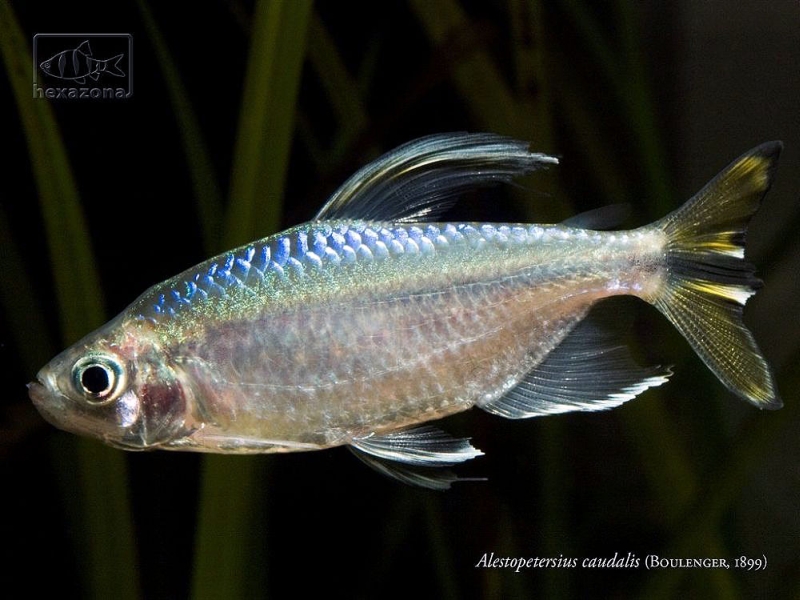
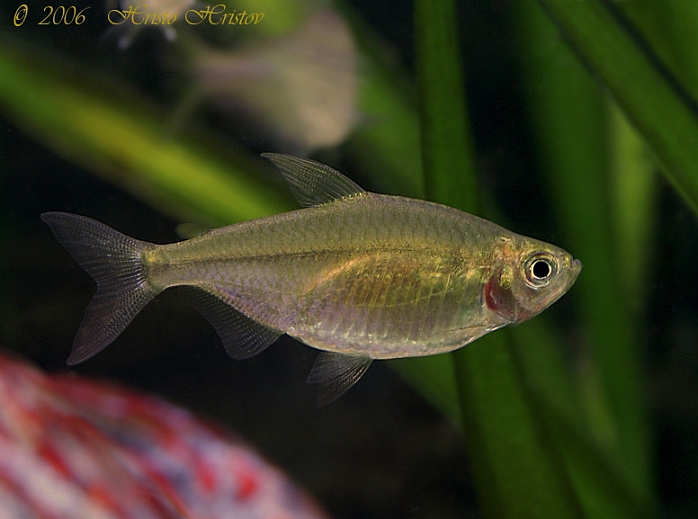
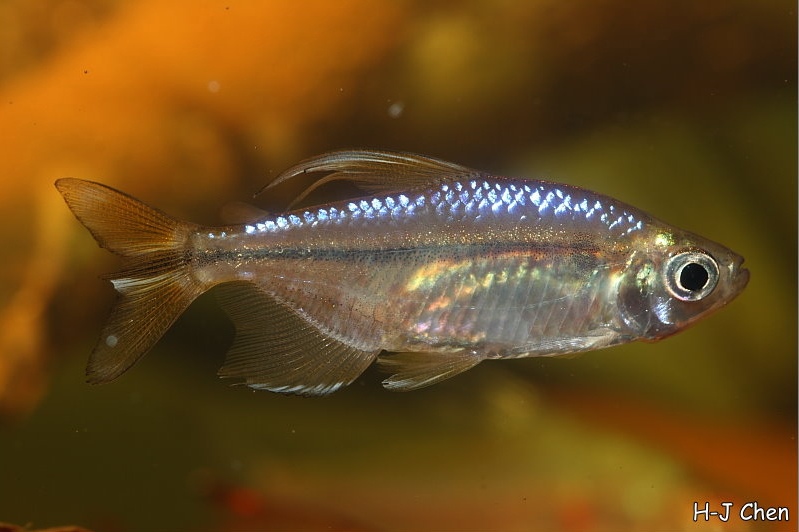
短尾非洲鲑鲤(Alestopetersius caudalis)是活泼、略易受惊的群居非洲脂鲤,整体温和。雄鱼尾鳍中央鳍条延长,细窄侧带在尾鳍上明显变宽。群体展示很有观赏性,但空间不足时雄鱼会彼此伤害。
分布与栖息地
模式产地为刚果民主共和国刚果河下游博马。记录遍及下游,并向上超过马莱博湖区,至少到达通巴湖主要出水通道伊雷布河道;具体自然微生境资料有限。
饲养环境
底面积至少约 120 × 30 cm。水草布局可以使用,也可用大小不一的圆石、沙与细砾营造河流式环境,沉木和枝根增加结构,但需留出充足游动空间。
食性与喂食
野外可能摄食小昆虫、甲壳动物和落果,这仍是推测。缸内以优质薄片或颗粒配合红虫、水蚤、丰年虾等小型活饵和冷冻饵,部分干粮应含植物或藻类成分。
习性与混养
至少八至十尾并包含两性,有助于自然群体行为。体形相近、需求相容的群游鱼可提供安全感,合适的温和鲶鱼、慈鲷或鳅类也可评估。
雄鱼争雌或争夺群体地位时可同时展开激烈展示。空间不足会增加互相撞伤、掉鳞的风险,伤口还可能继发感染,因此群养不能只增加数量而不扩大空间。
雌雄区分
成年雄鱼通常更大、颜色更鲜艳,背鳍、腹鳍、臀鳍和尾鳍延长,鳍端带白色。雌鱼没有同样明显的鳍条延伸。
繁殖
本种散卵,不护卵。家庭繁殖细节不多,一种有报道的方法是将成鱼群放入单独繁殖缸,用可收集鱼卵的装置定期捞取卵,再转移到小容器孵化。鱼苗先用微型食物开口,长大后再转丰年虾无节幼体。
补充说明
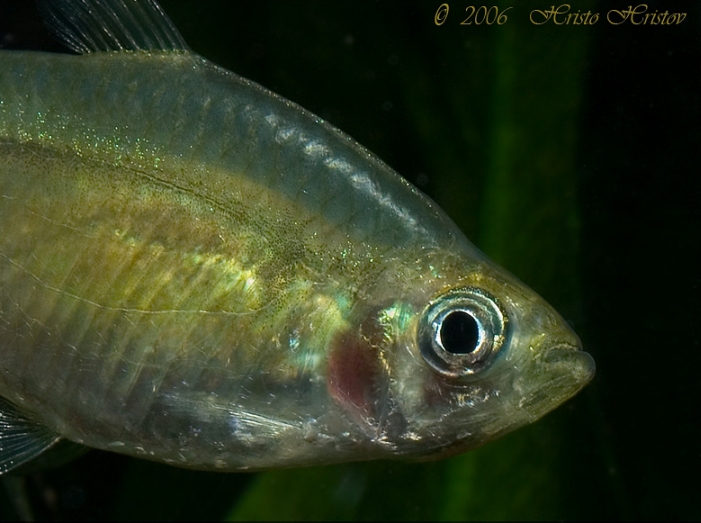
黄色、黄尾及蓝色一类商品标签并不唯一。辨认时应结合竖向肩斑、雄鱼尾中央延长、尾叶缺少显著深色带,以及在尾鳍上加宽的深色侧带。商业繁殖虽有进行,但规模有限。
图片
图片来自 SeriouslyFish,版权归各摄影者所有。
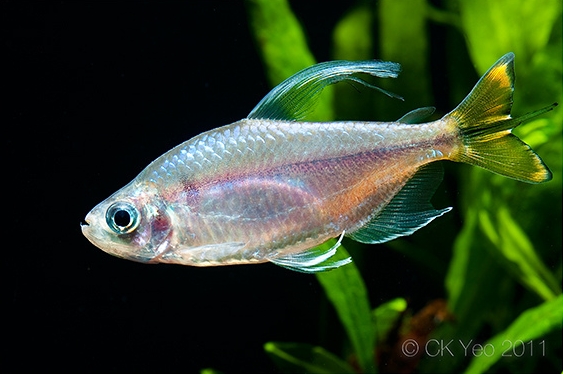
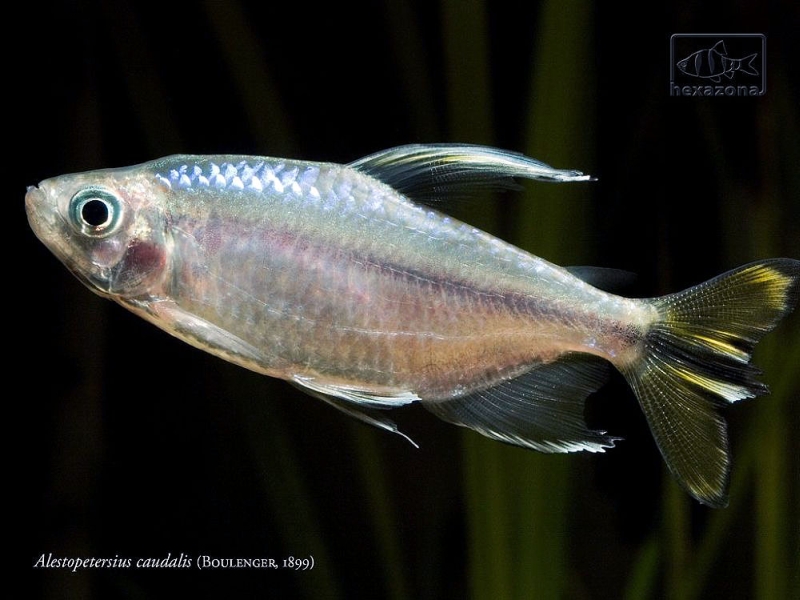
English
Overview
Alestopetersius caudalis is an active, somewhat nervous schooling African tetra with a generally peaceful disposition. Adult males develop extended central tail rays, and the narrow flank stripe broadens on the tail. Displays are attractive, but cramped males can injure one another.
Distribution & habitat
Described from Boma on the lower Congo in the Democratic Republic of the Congo, it occurs through much of the lower system and upstream beyond Pool Malebo to at least the Irebu outlet of Lake Tumba. Detailed natural microhabitat information is scarce.
Aquarium setup
Use at least about 120 × 30 cm of base area. Planting is acceptable, while a river-style arrangement of sand, gravel, rounded rocks, and wood is another option. Preserve generous open swimming space.
Diet & feeding
Wild foods probably include small insects, crustaceans, and fallen fruits, but this remains tentative. Offer quality flakes or granules with small live and frozen foods such as bloodworms, water fleas, and brine shrimp. Include plant or algal material in part of the dry-food selection.
Behaviour & compatibility
A mixed-sex group of at least eight to ten supports natural behavior. Appropriately sized schooling companions can improve confidence; suitable peaceful catfishes, cichlids, or loaches may also work when requirements match.
Several males can display simultaneously over females or rank. Restricted space increases injuries and scale loss, followed by possible wound infection. Group numbers must be matched by sufficient room.
Sexual dimorphism
Adult males are usually larger and brighter, with extended white-tipped dorsal, pelvic, anal, and caudal fins. Females lack the same degree of fin development.
Breeding
This egg scatterer provides no parental care. Detailed hobby procedures are limited. One reported approach keeps adults together with an egg-collection device, transferring collected eggs to smaller hatching containers. Fry initially need microscopic foods before progressing to brine-shrimp nauplii.
Notes
Yellow, yellowtail, and blue trade labels are not definitive identifiers. A vertically elongated shoulder mark, extended central male tail rays, unbanded tail lobes, and the stripe widening across the tail provide a more useful combination. Some commercial breeding occurs on a limited scale.
来源
- https://www.seriouslyfish.com/species/alestopetersius-caudalis(抓取于 2026-10-10)
alestopetersius-caudalis · 文件: data/species/alestopetersius-caudalis.md · 状态: 草稿