Akysis vespa · Orange-Banded Stream Catfish
概要
| 字段 | 值 |
|---|---|
| 类别 | 鱼 |
| 学名 | Akysis vespa |
| 别名 | Wasp Stream Catfish、Wespenwels |
| 分类 | 鲶形目 Siluriformes › 粒鲶科 Akysidae › Akysis |
| 水体 | 淡水 |
| 原产地 | 缅甸与泰国边境萨尔温江源头支流水系 |
| 成体体长 | 3.1 cm |
| 饲养难度 | 中等 |
| 最小水体 | 41 L |
| 最小缸长 | 45 cm |
| 群居方式 | 群游 |
| 水流偏好 | 高 |
| 外部数据 | seriouslyfish akysis-vespa;fishbase 62235 |
| 特征 | 翻底砂: 是 |
| 繁殖方式 | 产卵 |
水质参数
| 参数 | 耐受范围 | 最适范围 | 单位 |
|---|---|---|---|
| 水温 | 16.5–23.5 | — | °C |
| pH | 6–7.5 | — | — |
| 总硬度 | 2–12 | — | dGH |
概述
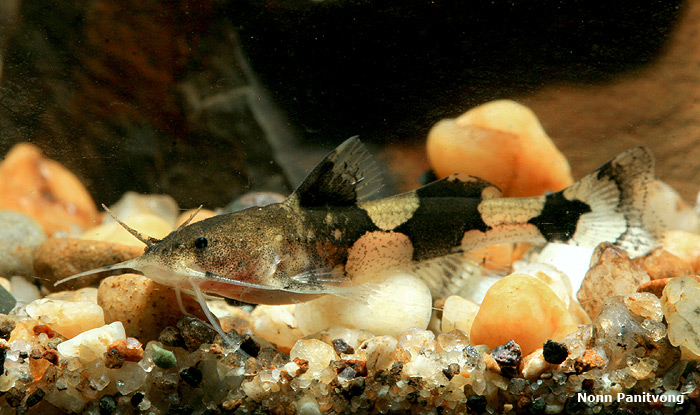
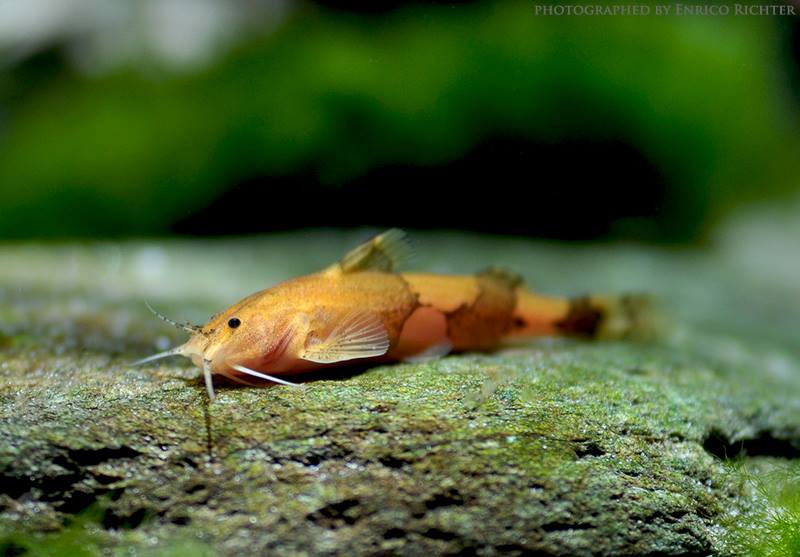
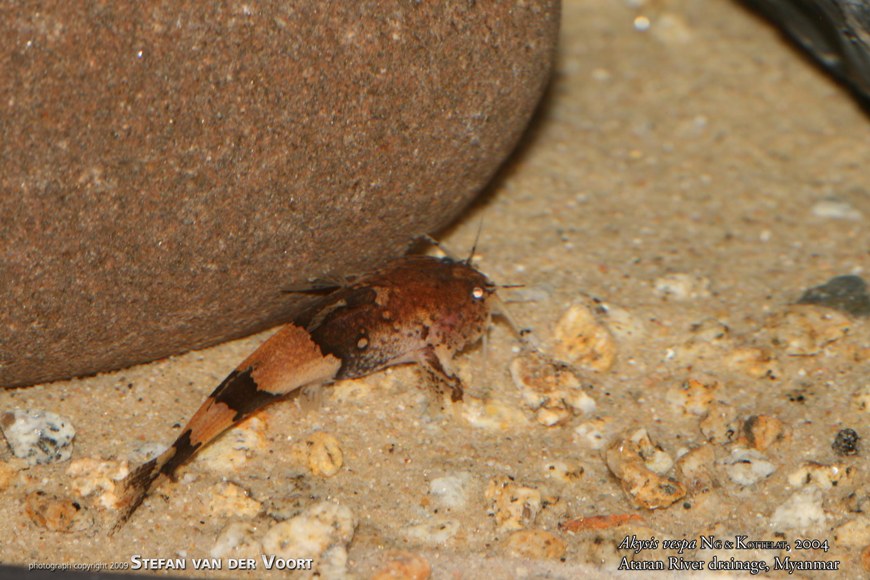
Akysis vespa 是带宽黄橙色横带的小型溪流鲶鱼,吻端黄色延伸至鼻须基部。它需要能钻入的细砂和石木缝隙,体型虽小,仍不能忽视流动水体的溶氧和洁净度。
分布与栖息地
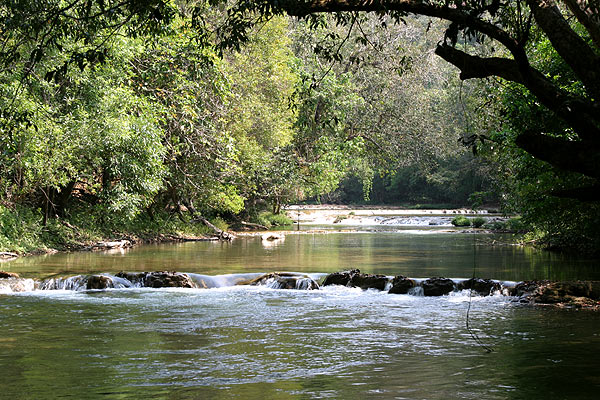
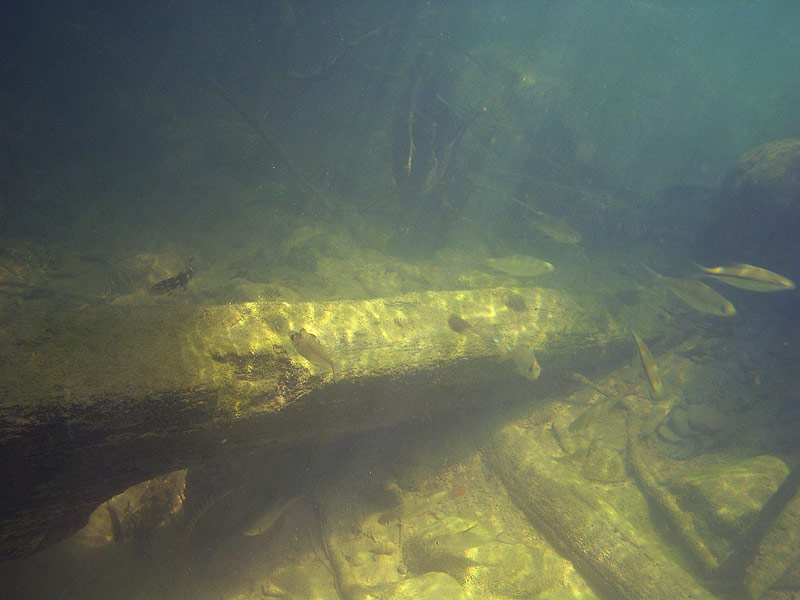
似乎限于缅泰边境的萨尔温江源头支流,涉及缅甸克伦邦阿塔兰河上游支流及泰国达府汉他尧河。河流通常流速较快,底部有砂砾和石块,局部有落叶、树根;有采集河段也生长水草。
饲养环境
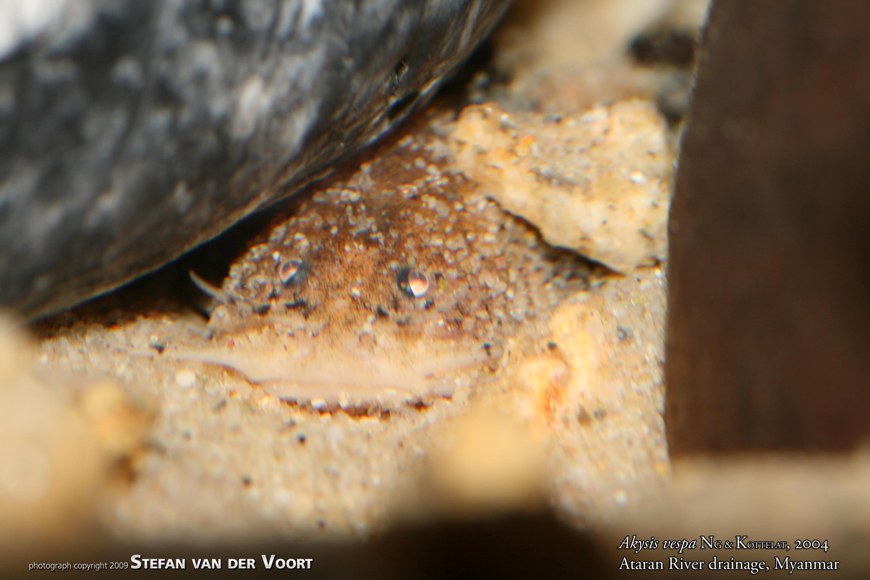
柔软细砂很重要,鱼有时全身埋入或只露眼睛。布置水磨石、沉木枝根和狭缝,可加附生水草、莫丝及落叶,避免钻砂时扰动植株。
水必须保持清洁、流动充分、溶氧较高,每周换水 30–50%,不能任有机污染积累。
食性与喂食
本属为主要夜间活动的微型捕食鱼,人工可喂小型丰年虾、水蚤、红虫等活饵或冷冻饵,必要时切小。新鱼可在暗后投食,适应后通常会在喂食时出躲避处;干粮不一定接受。
习性与混养
不宜与大鱼或强势鱼同养,微型温和群居鲤科鱼及习性相容的小型溪流鲶鱼、吸鳅较合适。同种不互相攻击,可单尾或成组饲养,也有与淡水虾和平共处的经验。
繁殖
已有本种带照片的成功产卵记录,似乎与明显降温有关。数条雄鱼追逐抱卵雌鱼,最终一雄缠绕雌鱼身体,双方释放卵和精液。卵在产后约四天孵化,至第十天卵黄完全吸收,第 23 天已形成成鱼式斑纹。
补充说明
贸易中有多种“蜂猫”类称呼,不能凭名字确定物种。背鳍和胸鳍棘可以造成疼痛刺伤,维护和转移时谨慎,避免徒手抓握。
图片
图片来自 SeriouslyFish,版权归各摄影者所有。
English
Overview
Broad yellow-orange bands and yellow extending to the nasal-barbel bases help identify Akysis vespa. This tiny stream catfish needs burrowable sand and sheltered rockwork, alongside clean, well-oxygenated moving water.
Distribution & habitat
It appears confined to Salween headwaters around the Myanmar–Thailand border, including upper Ataran tributaries in Kayin State and the Hanthayaw in Tak Province. Streams commonly flow over sand, gravel, and stones, with roots and leaves. Aquatic plants occur in at least some occupied reaches.
Aquarium setup
Provide soft sand for complete burial or resting with the eyes exposed. Worn rocks and wood create narrow retreats; attached plants, mosses, and optional leaves suit the layout without being uprooted by burrowing.
Keep water clean, well circulated, and rich in oxygen, changing 30–50% weekly to prevent organic waste accumulation.
Diet & feeding
The genus consists of mainly nocturnal micropredators. Offer small live or frozen Artemia, Daphnia, and bloodworms, cutting food as needed. Start feeding after dark; acclimated fish often emerge when meals arrive, but dry preparations may be refused.
Behaviour & compatibility
Avoid large or aggressive competitors. Peaceful miniature cyprinids and suitable small stream catfish or hillstream loaches are possible companions. It is nonaggressive toward its own kind, allowing single or group care, and has coexisted peacefully with freshwater shrimp.
Breeding
A photographed spawning account exists for this species and was apparently associated with substantial cooling. Several males pursued a gravid female; one wrapped around her as eggs and sperm were released. Eggs hatched about four days after spawning, yolk was fully absorbed by day ten, and adult-type markings developed by day 23.
Notes
Various bee- or wasp-themed trade names are used, so labels alone do not establish identity. Dorsal and pectoral spines can sting painfully; handle cautiously and avoid gripping the fish by hand.
来源
- https://www.seriouslyfish.com/species/akysis-vespa(抓取于 2026-10-10)
akysis-vespa · 文件: data/species/akysis-vespa.md · 状态: 草稿