花斑无须鲶 · Bottlenose Catfish
概要
| 字段 | 值 |
|---|---|
| 类别 | 鱼 |
| 学名 | Ageneiosus marmoratus |
| 别名 | 花斑無鬚鯰 |
| 分类 | 鲶形目 Siluriformes › 项鳍鲶科 Auchenipteridae › Ageneiosus |
| 水体 | 淡水 |
| 原产地 | 巴西、厄瓜多尔、圭亚那、秘鲁、苏里南、委内瑞拉 |
| 成体体长 | 18.5 cm |
| 饲养难度 | 困难 |
| 最小水体 | 540 L |
| 最小缸长 | 150 cm |
| 特征 | 吃小鱼: 是 |
| 外部数据 | seriouslyfish ageneiosus-marmoratus;fishbase 12146 |
| 性情 | 温和 |
水质参数
| 参数 | 耐受范围 | 最适范围 | 单位 |
|---|---|---|---|
| 水温 | 22.5–26 | — | °C |
| pH | 6–7 | — | — |
| 总硬度 | 3–10 | — | dGH |
概述
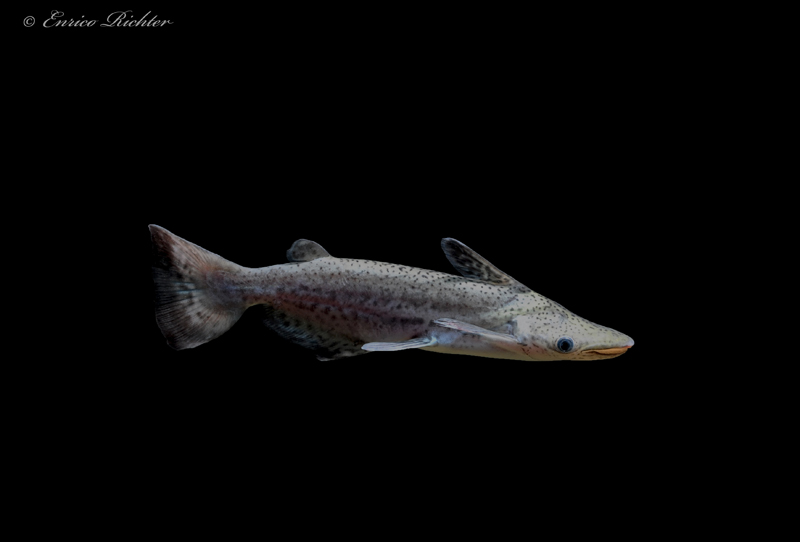
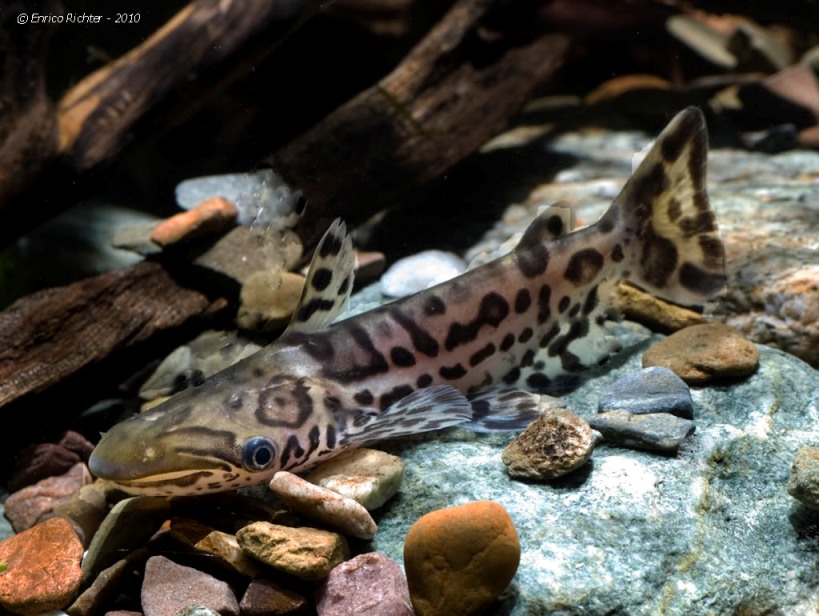
花斑无须鲶(Ageneiosus marmoratus)是活跃的捕食性鲶鱼,幼鱼醒目的黑斑会随成长明显淡化。对吞不下的伙伴通常温和,但受惊时可能撞缸,宽敞空间和成熟过滤十分重要。
分布与栖息地
已知记录包括圭亚那、苏里南及秘鲁、厄瓜多尔的上亚马孙地区。阿根廷巴拉那水系的记录仍有疑问。多数栖地记录来自河道下段和较大支流,可能具有较宽的栖地适应能力。
饲养环境
长期饲养底面积至少约 150 × 60 cm。细软砂底较理想但非必需,可用沉木、树根及少量圆滑石块提供结构,照明偏暗,同时保留大量开放游动空间;适应后它会花不少时间在开阔水中活动。
采用有效的外滤或底滤,并使回水带动水面及适度水流。它对有机污染敏感,不能放入未成熟的系统,每周应部分换水约 30%–50%。
食性与喂食
具有明确捕食性。大型同属的饲养经验是新到个体可能只吃活鱼,之后逐渐接受解冻小鱼、贝类,部分个体可训练吃肉食鱼颗粒;转食需确认它真的进食。
不宜常喂牛心、鸡肉等陆生动物肉,也不应长期依赖未经妥善调养的饵料鱼,以免带入疾病、寄生虫或造成营养不当。
习性与混养
只适合与吞不下的鱼混养,应避开强烈占地、抢食凶猛的伙伴,选择较温和、体形适当的鱼。对同种并不凶,缸内可形成松散群体,空间和维护能力足够时可养四条或更多。
雌雄区分
同属成熟雄鱼在繁殖季头后轮廓变陡,上颌须变长、骨化并出现齿状突起,背鳍前部延长。臀鳍前端鳍条增粗、融合并支撑交接结构。雌鱼前部臀鳍条也较长,但不具备雄鱼完整的季节变化。
繁殖
有疑似求偶观察,但缸内成功繁殖尚无确认记录。采用体内受精,雄鱼通过改造的生殖结构完成交接,须和背鳍也参与求偶接触。
自然繁殖很可能随雨季启动;先较暖、再以偏凉换水模拟季节,只是待验证的思路,不能作为稳定繁殖配方。
补充说明
宽头、宽口和幼鱼不规则黑斑是外形线索,不能期待成年鱼一直保持幼时花纹。英文商品名多样,购买时宜核对学名和实际体形。
图片
图片来自 SeriouslyFish,版权归各摄影者所有。
English
Overview
The conspicuous juvenile blotches of Ageneiosus marmoratus fade substantially as it grows. This active predator is usually peaceful toward fish it cannot swallow, but can injure itself against the glass when startled. Space and a mature filtration system are priorities.
Distribution & habitat
Records include Guyana, Suriname, and the upper Amazon region of Peru and Ecuador. A report from the Paraná basin in Argentina is questionable. Most habitat records concern lower river channels and substantial tributaries; broader habitat tolerance is possible.
Aquarium setup
Allow at least a 150 × 60 cm footprint for long-term care. Fine sand is preferable but optional. Subdued light, wood, roots, and a few smooth rocks provide structure while leaving extensive swimming room. Settled individuals spend appreciable time in open water.
Use effective canister or sump filtration, arranging returns to move the surface and create moderate circulation. Sensitivity to organic pollution makes a biologically mature aquarium essential. Change around 30–50% of the water weekly.
Diet & feeding
This is a predatory fish. Feeding experience with larger members of the genus indicates that newcomers may accept only live fish initially, then learn to take thawed fish, shellfish, and sometimes carnivore pellets. Confirm actual consumption during any transition.
Do not use beef heart, chicken, or similar terrestrial meat as routine fare. Poorly conditioned feeder fish can introduce parasites or disease and may be nutritionally unsuitable as a long-term staple.
Behaviour & compatibility
Tankmates must be too large to swallow. Avoid strongly territorial fishes and aggressive food competitors, favoring placid companions of suitable size. It is not hostile toward conspecifics and may form a loose group; four or more can be considered if the aquarium and maintenance capacity permit.
Sexual dimorphism
Males in this genus develop seasonal changes to the profile behind the head, upper-jaw barbels, and dorsal fin. The barbels elongate and ossify, bearing toothlike projections. Anterior anal-fin rays thicken and fuse to support a copulatory structure. Females also have longer front anal-fin rays, without the full suite of male breeding modifications.
Breeding
Apparent courtship has been observed, but successful aquarium reproduction remains unconfirmed. Fertilization is internal, with modified male reproductive structures and physical courtship involving the barbels and dorsal fin.
A rainy-season spawning pattern is considered highly likely. Warmer conditions followed by cooler water changes have been proposed as a stimulus, not established as a reliable breeding method.
Notes
A broad head and mouth, together with the irregular juvenile black blotches, offer identification clues. Multiple trade names are used, and the juvenile pattern should not be expected to remain unchanged in adulthood.
来源
- https://www.seriouslyfish.com/species/ageneiosus-marmoratus(抓取于 2026-10-10)
ageneiosus-marmoratus · 文件: data/species/ageneiosus-marmoratus.md · 状态: 草稿