梳额蜴鲶 · Spotted Talking Catfish
概要
| 字段 | 值 |
|---|---|
| 类别 | 鱼 |
| 学名 | Agamyxis pectinifrons |
| 别名 | 梳額蜴鯰、Kammdornwels、Doras pectinifrons、Doras (Agamyxis) flavopictus |
| 分类 | 鲶形目 Siluriformes › 棘甲鲶科 Doradidae › Agamyxis |
| 水体 | 淡水 |
| 原产地 | 玻利维亚、巴西、哥伦比亚、秘鲁 |
| 成体体长 | 15 cm |
| 饲养难度 | 中等 |
| 最小水体 | 108 L |
| 最小缸长 | 120 cm |
| 群居方式 | 群游 |
| 外部数据 | seriouslyfish agamyxis-pectinifrons;fishbase 12104 |
| 食性 | 杂食 |
| 特征 | 夜行性: 是 |
水质参数
| 参数 | 耐受范围 | 最适范围 | 单位 |
|---|---|---|---|
| 水温 | 22–26 | — | °C |
| pH | 5.5–7.5 | — | — |
| 总硬度 | 1–20 | — | dGH |
概述
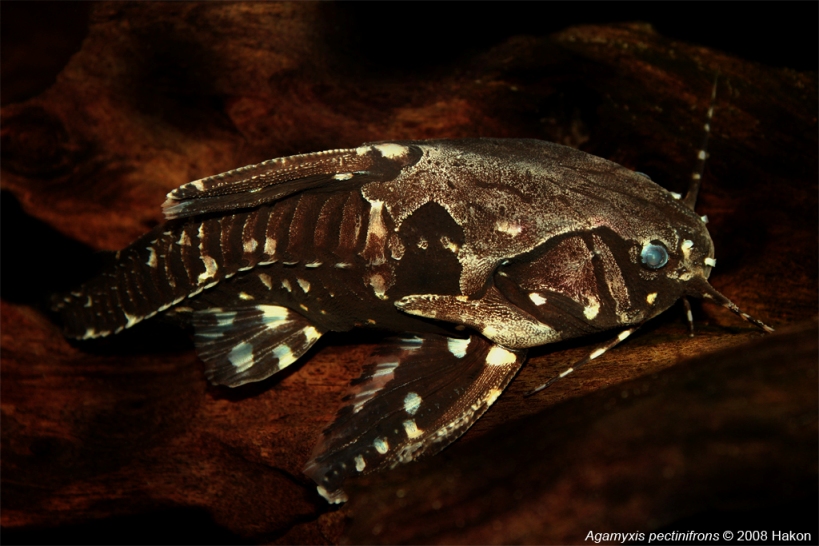
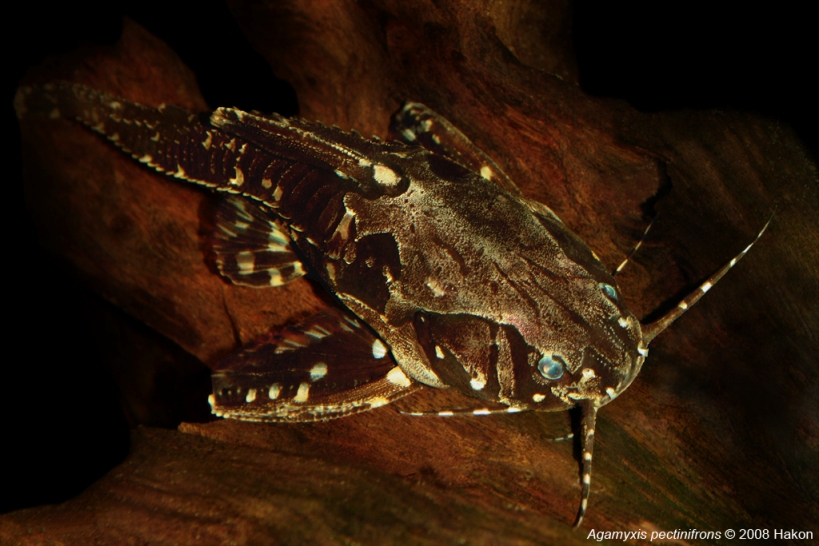
梳额蜴鲶(Agamyxis pectinifrons)是亚马孙流域的群居甲鲶,偏夜间活动,浅色斑纹的位置和颜色变化很大,不能仅凭斑点认定产地或身份。它较健壮,但成鱼仍需要充分空间和隐蔽处。
分布与栖息地
分布范围尚未完全明确,已知涉及玻利维亚、巴西、哥伦比亚和秘鲁的亚马孙河盆地。早期模式产地写作厄瓜多尔 Pebas,实际上很可能是现今秘鲁伊基托斯以东的佩瓦斯。
偏爱缓流或静水以及大量水下、漂浮遮蔽物,白天躲藏其中。典型白水环境有悬浮泥沙、季节性淹没森林和沿岸漂浮植物群落;涨水期腐败有机物还会使水色加深。
饲养环境
底面积至少约 120 × 30 cm,铺柔软细沙,配偏暗照明。水草、交错沉木和人工洞穴可形成多处隐蔽空间,强光与缺少遮蔽的布局不合适。
食性与喂食
本种为广食性的杂食鱼,能接受多种人工及冷冻食物。优质下沉颗粒或片状底栖饲料可搭配红虫、水蚯蚓、蚊幼虫等活饵或冷冻饵,偶尔加入整条或切碎蚯蚓。
习性与混养
通常不主动攻击缸友,但成鱼可能吞食很小的鱼。中大型南美群落中,可评估与体形合适的温和脂鲤、慈鲷和鲶鱼混养。至少四尾能表现较自然的群体行为,也会与外形相近的甲鲶聚集。
雌雄区分
成熟雌鱼通常更丰满。
繁殖
已有的人工繁殖报道涉及激素诱导,缺少可直接照用的普通鱼缸自然繁殖方法。
补充说明
本种与近缘的 Agamyxis albomaculatus 外形十分相似,后者已知来自委内瑞拉奥里诺科河流域,采集地点比共用商品名更有辨认价值。
胸鳍棘摩擦及鳔相关结构能够发声。转移时注意坚硬棘条和骨板容易挂网,胸鳍棘也可能刺伤皮肤。
图片
图片来自 SeriouslyFish,版权归各摄影者所有。
English
Overview
Agamyxis pectinifrons is a social, largely nocturnal thorny catfish of the Amazon basin. Its pale markings vary in position and color, so the spotted pattern alone does not reliably establish identity or origin. This robust fish still requires adequate adult accommodation and ample cover.
Distribution & habitat
The precise range remains imperfectly resolved, with records spanning Amazonian Bolivia, Brazil, Colombia, and Peru. The historical locality called Pebas in Ecuador probably refers to present-day Pebas east of Iquitos in Peru.
It favors slow or standing water rich in submerged and floating shelter. Typical whitewater settings include suspended sediment, seasonally flooded forest, and floating plant rafts along margins. Decomposing organic matter can darken the water during floods.
Aquarium setup
Provide a footprint of at least about 120 × 30 cm. Soft sand, subdued lighting, aquatic plants, tangled wood, and artificial caves create suitable retreats. Bright, exposed surroundings discourage its natural activity.
Diet & feeding
This generalist omnivore accepts many prepared and frozen foods. Combine quality sinking pellets or tablets with live or frozen bloodworms, tubificid worms, mosquito larvae, and occasional whole or chopped earthworms.
Behaviour & compatibility
Normally nonaggressive, adults may nevertheless consume very small companions. Appropriately sized placid tetras, cichlids, and catfishes are potential members of a medium to large Amazonian community. A group of at least four encourages natural social behavior; associations with similar thorny catfishes also occur.
Sexual dimorphism
Mature females are generally noticeably fuller-bodied than males.
Breeding
Reported captive production involves hormonal induction. A dependable method for ordinary, unassisted aquarium spawning is not established.
Notes
The similar Agamyxis albomaculatus is known from Venezuela's Orinoco drainage. Collection locality is more useful than shared commercial names for separating these fishes.
Pectoral-spine movement and swim-bladder mechanisms allow audible sound production. Handle transfers carefully because spines and body plates snag net mesh and can puncture skin.
来源
- https://www.seriouslyfish.com/species/agamyxis-pectinifrons(抓取于 2026-10-10)
agamyxis-pectinifrons · 文件: data/species/agamyxis-pectinifrons.md · 状态: 草稿