鞍斑宝丽鱼 · Saddle Cichlid
概要
| 字段 | 值 |
|---|---|
| 类别 | 鱼 |
| 学名 | Aequidens tetramerus |
| 别名 | 鞍斑寶麗魚、Grünglanzbuntbarsch、Acara tetramerus、Acaronia trimaculata、Aequidens stollei、Chromys uniocellata |
| 分类 | 慈鲷目 Cichliformes › 慈鲷科 Cichlidae › Aequidens |
| 水体 | 淡水 |
| 原产地 | 玻利维亚、巴西、哥伦比亚、厄瓜多尔、法属圭亚那、圭亚那、秘鲁、苏里南及委内瑞拉 |
| 成体体长 | 16.2 cm |
| 饲养难度 | 中等 |
| 领地性 | 是 |
| 外部数据 | seriouslyfish aequidens-tetramerus;fishbase 12278 |
| 食性 | 杂食 |
| 繁殖方式 | 附着产卵 |
水质参数
| 参数 | 耐受范围 | 最适范围 | 单位 |
|---|---|---|---|
| 水温 | 24–27 | — | °C |
| pH | 4.5–7.5 | — | — |
| 总硬度 | 1–20 | — | dGH |
概述
鞍斑宝丽鱼(Aequidens tetramerus)是分布广、产地色型多样的慈鲷。雄鱼有领地性,繁殖时尤其明显;其水质需求不能只看一个覆盖全种群的宽范围,野生黑水产地个体可能必须使用酸性水。
分布与栖息地
分布涵盖南美洲北部大片地区,包括秘鲁、哥伦比亚、厄瓜多尔、巴西和玻利维亚的亚马孙水系,圭亚那地区多条河流,以及委内瑞拉和哥伦比亚的奥里诺科河流域。多利用带根枝、落叶等复杂遮蔽的缓流或静水,见于安静支流、洪泛湖和牛轭湖,涨水时进入淹水区。黑水、清水和白水中都有记录,但似乎更偏好前两者。
饲养环境
单对也应以底面积至少 120 × 45 厘米的缸为起点,多对需要明显更大的空间。柔软沙底、弱光及沉木根枝较适合,可放一两块平坦石头作为潜在产卵面。
只使用成熟、稳定的系统,配备有余量的外滤或底滤,每周至少换水约 50%~70%。让机械过滤截留翻起的细颗粒,避免沙进入设备;出水不要造成过强水流。维护或饮食欠佳可能带来头部及侧线侵蚀、成长受阻等问题。选水质时应考虑采集产地,不能假定所有野生个体都能适应接近中性的水。
食性与喂食
本种为杂食性,野生个体的食物似乎以无脊椎动物占多。优质沉底干粮可作基础,定期搭配摇蚊幼虫、丰年虾等活饵或冻饵。
习性与混养
雄鱼会维护领地,产卵期更强。极小同伴可能被捕食;与其他慈鲷同养的前提是空间足够,不能仅因平时没有冲突就忽略配对后的变化。
雌雄区分
雄鱼较大,成熟后背鳍、臀鳍等不成对鳍通常有延长,繁殖状态时颜色也明显更鲜艳。
繁殖
属于双亲照顾后代的基质产卵鱼,通常较容易繁殖。较有经验支持的配对方式是从至少 6 条幼鱼开始共同养大,形成配对后移走多余个体,减少领地冲突。
补充说明
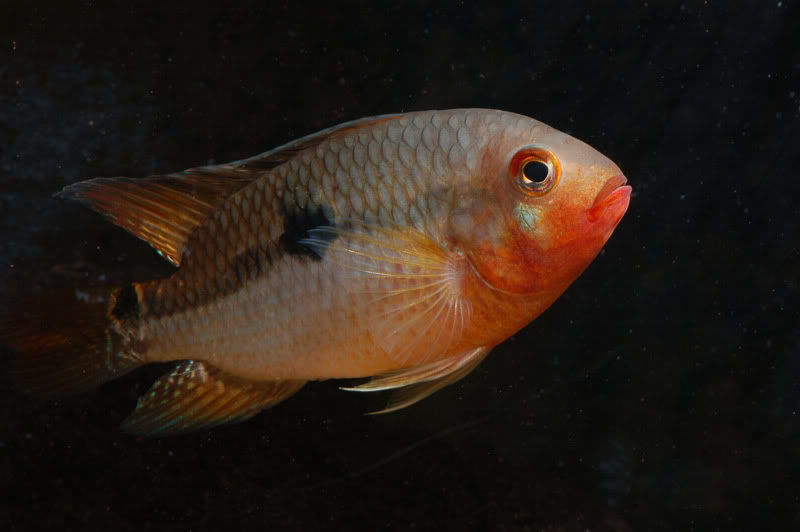
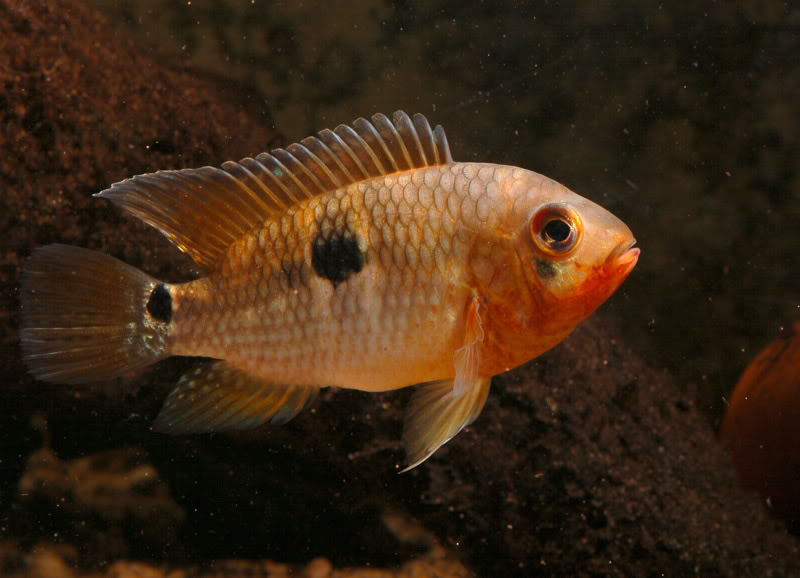
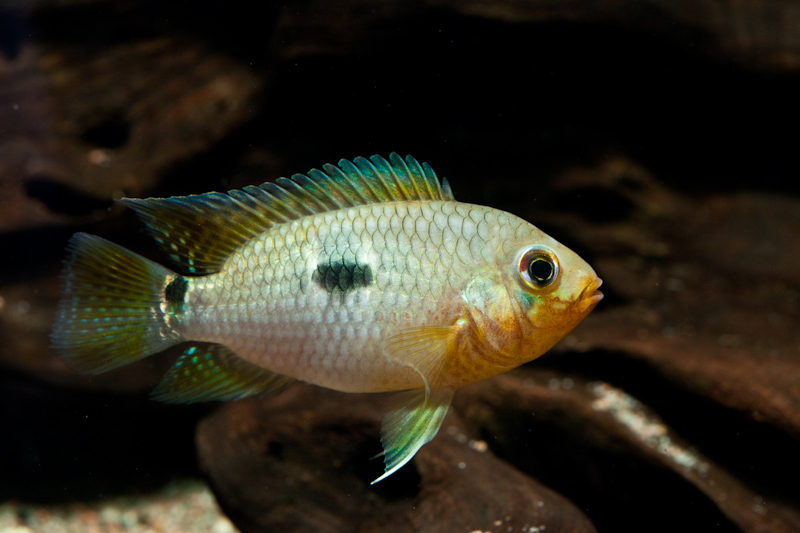
厄瓜多尔部分个体下颌、头部和前腹偏红,秘鲁色型常偏橙,巴西个体则多呈灰蓝绿色。现有名称可能涵盖一组近缘鱼,产地差异尚不能自动等同于已确认的新种;其属内分类也仍有待进一步厘清。
图片
图片来自 SeriouslyFish,版权归各摄影者所有。
English
Overview
Aequidens tetramerus is a widespread cichlid with numerous locality-dependent colors. Males defend territories, especially during breeding. Its broad overall water range should not obscure population differences: wild blackwater fish may require acidic conditions.
Distribution & habitat
The range includes Amazonian waters in Peru, Colombia, Ecuador, Brazil and Bolivia, several Guianan drainages and the Orinoco basin in Venezuela and Colombia. Quiet tributaries, floodplain lakes and oxbows with roots, branches and leaf litter are commonly used, and fish enter inundated areas during high water. Black, clear and white waters are all occupied, although the first two appear preferred.
Aquarium setup
A pair needs a tank with a footprint of at least 120 × 45 cm as a starting point, and additional pairs require much more space. Soft sand, subdued light and branching wood are useful, with one or two flat stones offering possible spawning surfaces.
Use a mature, stable system with ample canister or sump filtration and replace at least approximately 50–70% of the water weekly. Mechanical filtration should catch disturbed particles while preventing sand from wearing or clogging equipment. Avoid excessive current. Poor upkeep or nutrition may accompany head and lateral-line erosion and impaired growth. Choose water chemistry with collection locality in mind rather than assuming all wild fish tolerate near-neutral conditions equally well.
Diet & feeding
This is an omnivore, though wild feeding apparently emphasizes invertebrates. Quality sinking dry foods can form the staple, supplemented regularly with live or frozen bloodworm, brine shrimp and similar foods.
Behaviour & compatibility
Males are territorial, with stronger defense around spawning. Very small companions may be eaten. Other cichlids can be maintained alongside it where space is sufficient, but peaceful interactions before pairing do not establish permanent compatibility.
Sexual dimorphism
Males grow larger and generally develop extended unpaired fins as they mature. They also become markedly more colorful in breeding condition.
Breeding
Both parents care for the offspring following spawning on a substrate. Breeding is generally relatively straightforward. A well-established pairing method is to raise at least six juveniles together, then remove surplus fish when pairs form to limit territorial conflict.
Notes
Some Ecuadorian fish develop red lower heads and front bellies, while Peruvian forms may show orange and Brazilian fish commonly have gray, blue and green tones. The current name may encompass several related forms, but locality differences do not automatically establish separate species. Relationships within the genus also remain unresolved.
来源
- https://www.seriouslyfish.com/species/aequidens-tetramerus(抓取于 2026-10-10)
aequidens-tetramerus · 文件: data/species/aequidens-tetramerus.md · 状态: 草稿