黑腹庞鲶 · Asian Banjo Catfish
概要
| 字段 | 值 |
|---|---|
| 类别 | 鱼 |
| 学名 | Acrochordonichthys rugosus |
| 别名 | 平头庞鲶、胸点庞鲶、皱纹庞鲶、黑腹龐鯰、平頭龐鯰、胸點龐鯰、皺紋龐鯰、Asiatischer Bratpfannenwels、Pimelodus rugosus、Acrochordonichthys obscurus、Acrochordonichthys platycephalus、Acrochordonichthys varius、Pimelodus melanogaster、Pimelodus pleurostigma、Pimelodus zonatus、Sosia chamaeleon var. pallida、Acrochordonichthys buettikoferi |
| 分类 | 鲶形目 Siluriformes › 粒鲶科 Akysidae › Acrochordonichthys |
| 水体 | 淡水 |
| 原产地 | 印度尼西亚、马来西亚、泰国 |
| 成体体长 | 11 cm |
| 饲养难度 | 中等 |
| 最小水体 | 81 L |
| 最小缸长 | 90 cm |
| 水流偏好 | 高 |
| 特征 | 吃小鱼: 是 |
| 外部数据 | seriouslyfish acrochordonichthys-rugosus;fishbase 23304 |
水质参数
| 参数 | 耐受范围 | 最适范围 | 单位 |
|---|---|---|---|
| 水温 | 17.5–24 | — | °C |
| pH | 5–7 | — | — |
| 总硬度 | 0–10 | — | dGH |
概述
黑腹庞鲶(Acrochordonichthys rugosus)是不太活跃、善于伏击猎物的溪流鲶鱼。除了吞食小鱼的风险,它在受压时还可能分泌会伤害甚至杀死同缸鱼的乳白色物质,因此并非普通混养缸的稳妥选择。
分布与栖息地
分布记录涉及爪哇、苏门答腊、婆罗洲、马来半岛及泰国南部多个河流。栖息于水清、流急的林间溪流,底床有砂、石块和局部落叶,常躲在水下沉木或岩石下。野外及缸内观察都显示它似乎主要在夜间活动。
饲养环境
底面积至少约 90 × 30 cm。虽然游动不多,仍需要足够水量维持稳定,不适合波动明显的小缸或未成熟系统。清洁、高溶氧是首要条件,可用容量充足的过滤、水面扰动及增氧实现,不必执着于某一种设备。
砂或细砾上搭配圆滑石块、老沉木和树根,可少量加入落叶。耐流、可附生的水草也能使用。每周部分换水约 30%–50%,持续控制有机污染。
食性与喂食
同属属于伏击型捕食鱼,体形小的伙伴不安全。缸内通常不需要喂活鱼,活或冷冻的红虫、水蚯蚓、小蚯蚓等常能接受。
它不擅长争抢,可能要把饵投到面前才会响应;混养时尤其需要定点喂,避免活跃缸友抢走全部食物。
习性与混养
分泌物和吞食风险共同限制混养。若考虑同养,应是足够大的系统,伙伴需体形大到不易被吞、温和,且适应稍凉的流动水。其他底栖鱼还需没有明显地盘攻击。
本种并非真正群居,但对吞不下的同种一般不攻击,因此合适空间内可以养多条;体形差距仍须控制。
雌雄区分
雄鱼肛门紧邻生殖突前方,生殖突在腹鳍基部后,末端开口有皮瓣覆盖。雌鱼肛门更靠后,生殖突较短、呈管状,末端开口没有同样的肉质瓣。
繁殖
尚无缸内繁殖记录,自然繁殖行为也未明确,不能用同科鱼的方式作为确定方案。
补充说明
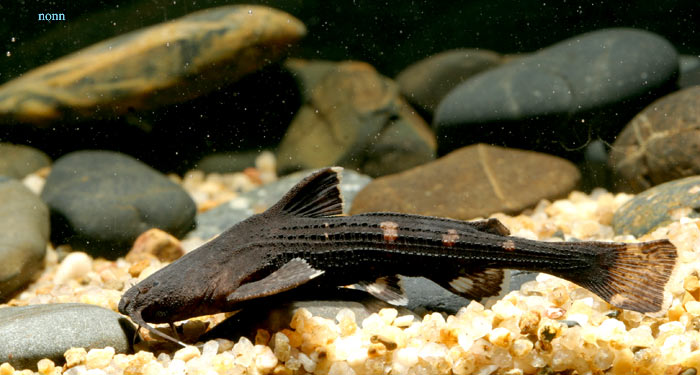
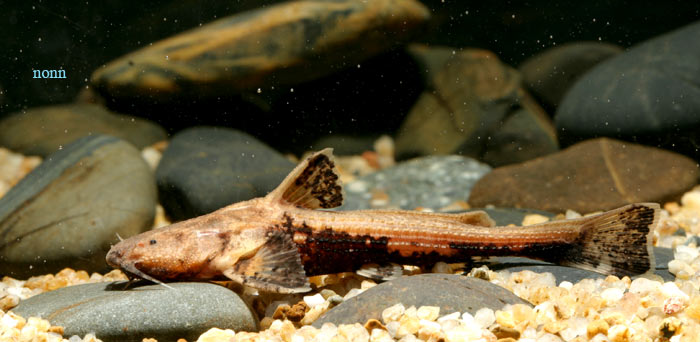
同一产地个体也可能花纹差别很大,属内有周期性蜕皮、蜕后偏浅的现象,可能与部分色差有关,不能只凭颜色鉴别。
受压时的乳白分泌物来自胸鳍基部上方的腋孔,可能具有防御作用;在鱼缸这种有限水体中能迅速伤害其他鱼。应减少不必要惊扰,不能把它安静不动的外表当作完全无害。
图片
图片来自 SeriouslyFish,版权归各摄影者所有。
English
Overview
The relatively sedentary Acrochordonichthys rugosus combines ambush predation with an unusual compatibility hazard. When stressed it can release a milky secretion capable of harming or killing other fishes in a confined aquarium. It is consequently a poor default choice for a conventional community.
Distribution & habitat
Records span Java, Sumatra, Borneo, Peninsular Malaysia, and southern Thailand. It inhabits clear, fast forest streams over sand and stone with patches of leaf litter, sheltering beneath submerged wood or rocks. Field and aquarium observations suggest predominantly nocturnal activity.
Aquarium setup
Use a footprint of at least 90 × 30 cm. Low activity does not make a small, unstable aquarium suitable. A mature system, stable chemistry, clean water, and abundant dissolved oxygen are essential. Oversized filtration, surface movement, and aeration can achieve these conditions through various equipment arrangements.
Combine sand or fine gravel with rounded stones, aged wood, and roots. Some leaf litter and hardy attached plants may be included. Change roughly 30–50% of the water weekly while controlling organic waste.
Diet & feeding
Members of its genus are ambush predators, and small companions are unsafe. Live feeder fish are not normally necessary: live or frozen bloodworms, tubificid worms, and small earthworms are generally accepted.
A feeding response may require placing food immediately in front of the fish. Its poor competitive ability makes targeted delivery especially important in shared accommodation.
Behaviour & compatibility
Both secretion and predation risks restrict companion choices. Any combination requires substantial space and placid fish too large to swallow that also appreciate relatively cool, moving water. Other bottom dwellers should lack strong territorial aggression.
It is not truly gregarious but generally tolerates conspecifics it cannot swallow. Several can therefore be maintained together under suitable conditions, with size differences still considered.
Sexual dimorphism
In males, the anus lies immediately ahead of a genital papilla behind the pelvic-fin base, and a skin flap covers the papilla's terminal opening. Females have a more posterior anus and a short tubular papilla without the equivalent fleshy flap.
Breeding
Captive reproduction is unrecorded and natural spawning behavior remains poorly understood. Reproductive methods used by relatives are not established protocols for this species.
Notes
Color varies even within a single locality. Periodic skin shedding in the genus, followed by a paler appearance, may explain some variation; color alone is unreliable for identification.
The stress-associated secretion comes from an axillary pore above the pectoral-fin base and may serve a defensive function. In confined water it can rapidly affect other fish. Avoid unnecessary disturbance rather than assuming an immobile animal presents no hazard.
来源
- https://www.seriouslyfish.com/species/acrochordonichthys-rugosus(抓取于 2026-10-10)
acrochordonichthys-rugosus · 文件: data/species/acrochordonichthys-rugosus.md · 状态: 草稿