圭亚那狼牙脂鲤 · Pike Tetra
概要
| 字段 | 值 |
|---|---|
| 类别 | 鱼 |
| 学名 | Acestrorhynchus microlepis |
| 别名 | 小鳞狼牙脂鲤、委内瑞拉狼牙脂鲤、圭亞那狼牙脂鯉、小鱗狼牙脂鯉、委內瑞拉狼牙脂鯉、Hechtkopfsalmler、Hydrocyon microlepis、Acestrorhynchus cachorro、Acestrorhynchus guianensis、Acestrorhynchus apurensis |
| 分类 | 脂鲤目 Characiformes › 狼牙脂鲤科 Acestrorhynchidae › Acestrorhynchus |
| 水体 | 淡水 |
| 原产地 | 巴西、厄瓜多尔、法属圭亚那、圭亚那、秘鲁、苏里南、委内瑞拉 |
| 成体体长 | 26 cm |
| 饲养难度 | 中等 |
| 最小水体 | 2025 L |
| 最小缸长 | 250 cm |
| 群居方式 | 群游 |
| 特征 | 吃小鱼: 是;会跳缸: 是 |
| 外部数据 | seriouslyfish acestrorhynchus-microlepis;fishbase 12336 |
| 食性 | 肉食 |
水质参数
| 参数 | 耐受范围 | 最适范围 | 单位 |
|---|---|---|---|
| 水温 | 22–28 | — | °C |
| pH | 6–7.5 | — | — |
| 总硬度 | 1–12 | — | dGH |
概述
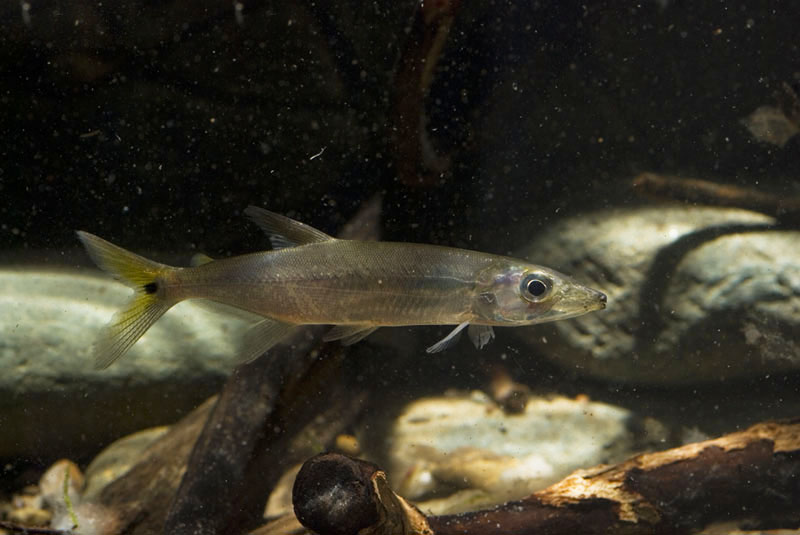
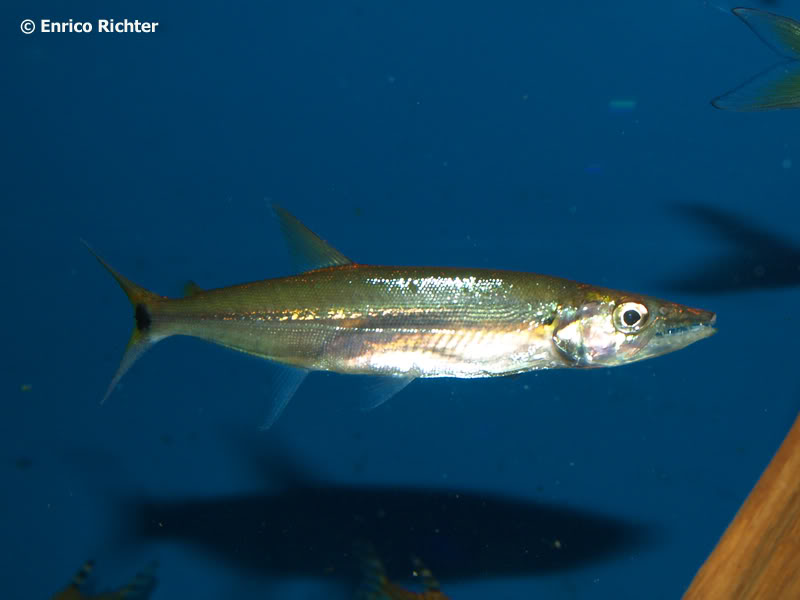
圭亚那狼牙脂鲤(Acestrorhynchus microlepis)是以鱼为食的开阔水域游泳者,常捕食较小脂鲤。鳃盖后有小型黑斑,但与某些近亲十分相似,准确识别可能需要数鳞和比较比例,不能仅凭商品照片下结论。
分布与栖息地
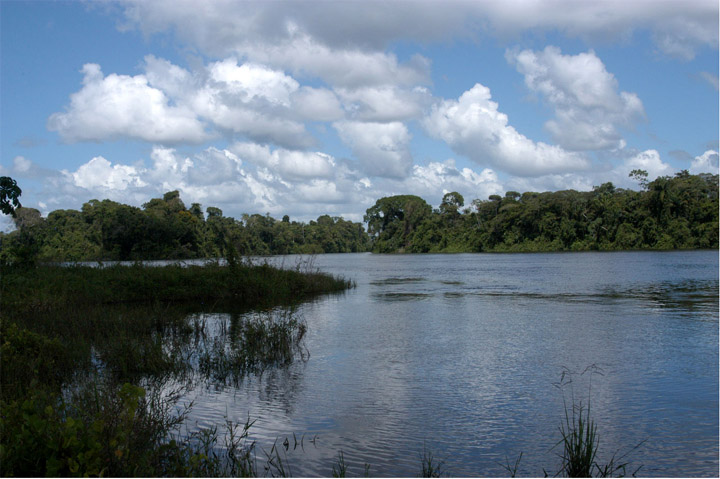
分布于秘鲁、厄瓜多尔、巴西的亚马孙北部水系、委内瑞拉奥里诺科河,以及圭亚那、苏里南、法属圭亚那沿海河流。主要利用大河主槽和支流,雨季通常进入淹水区域。
饲养环境
长期饲养至少参考 250 × 90 厘米底面,连幼鱼也不宜挤养,受惊时可能快速撞上玻璃。它需要开放水域,过多遮蔽会造成压力;细砂、少量落叶和枝根可点缀环境,水草也要避开主要游动空间。
缸盖贴合防跳,安装成熟的高效外滤或底滤,出水让水面适当波动。每周换水 30%–50%,避免有机污染累积和水质大幅变化,不可用尚未成熟的缸试养。
食性与喂食
专性食鱼,虽能吞下较大的猎物,却偏向小型脂鲤等小鱼。新到个体可能拒绝非活饵,多数经过适应能学会接受死饵,一部分还可接受干饲料。不要因此放小型灯鱼作伙伴,也不应长期依赖有疾病和寄生虫风险的活饵鱼;牛心、禽肉不适合作替代食物。
习性与混养
对无法吞食的温和大鱼通常较平和,不宜配强领地、抢食猛烈的伙伴。同种幼鱼结群明显,长大后较独立但仍会聚集,建议至少四尾且大小一致。狼牙脂鲤会同类相食,新补群也必须注意体型匹配。
雌雄区分
成熟雌鱼通常较大,体高较深,雄鱼相对修长。
繁殖
可供参考的是同属近亲的中层散卵观察:雄鱼在静止雌鱼周围游八字,大量散卵,没有护卵行为。该过程不能直接认定为本种已证实的水族箱繁殖方法。
图片
图片来自 SeriouslyFish,版权归各摄影者所有。
English
Overview
An open-water piscivore, Acestrorhynchus microlepis often targets small characins. It has a small dark mark behind the gill cover, but very similar relatives may require scale counts and proportional measurements for identification. A trade photograph alone may not resolve the species.
Distribution & habitat
The range extends through northern Amazon drainages of Peru, Ecuador, and Brazil, the Venezuelan Orinoco, and coastal rivers in Guyana, Suriname, and French Guiana. Main channels and tributaries are typical habitat, with seasonal movement into flooded areas.
Aquarium setup
Suggested long-term housing starts with a footprint around 250 by 90 cm. Young fish also need space, since sudden escape movements can cause glass collisions. Preserve open swimming water; sand and restrained use of leaves, roots, and plants are preferable to dense obstruction.
Use a close-fitting cover and mature, efficient canister or sump filtration, with surface movement. Weekly 30–50% water changes limit organic buildup. Stable chemistry and an established biological system are essential.
Diet & feeding
It is an obligate fish-eater that tends to concentrate on smaller prey, despite being capable of taking larger items. New imports may refuse nonliving food, but many can be weaned to dead alternatives and some to dry products. Small community fish remain unsuitable companions. Avoid routine feeder fish and mammalian or avian meat.
Behaviour & compatibility
It generally coexists with peaceful fish beyond swallowing size, while territorial or highly competitive companions should be avoided. Juveniles school more closely than adults, though older fish still gather. Four or more similarly sized fish are suggested. Size matching remains important when adding new members because of cannibalism risk.
Sexual dimorphism
Mature females tend to be larger and deeper-bodied than males.
Breeding
A related species provides the behavioral comparison: the male loops around a stationary female in midwater, with numerous scattered eggs and no parental care. This does not establish the same captive method for this species.
来源
- https://www.seriouslyfish.com/species/acestrorhynchus-microlepis(抓取于 2026-10-10)
acestrorhynchus-microlepis · 文件: data/species/acestrorhynchus-microlepis.md · 状态: 草稿