镰吻狼牙脂鲤 · Big-Eyed Cachorro
概要
| 字段 | 值 |
|---|---|
| 类别 | 鱼 |
| 学名 | Acestrorhynchus falcirostris |
| 别名 | 鐮吻狼牙脂鯉、Hydrocyon falcirostris |
| 分类 | 脂鲤目 Characiformes › 狼牙脂鲤科 Acestrorhynchidae › Acestrorhynchus |
| 水体 | 淡水 |
| 原产地 | 巴西、厄瓜多尔、法属圭亚那、圭亚那、秘鲁、苏里南、委内瑞拉 |
| 成体体长 | 35 cm |
| 饲养难度 | 中等 |
| 最小水体 | 2025 L |
| 最小缸长 | 250 cm |
| 群居方式 | 群游 |
| 特征 | 吃小鱼: 是;会跳缸: 是 |
| 外部数据 | seriouslyfish acestrorhynchus-falcirostris;fishbase 13123 |
| 食性 | 肉食 |
水质参数
| 参数 | 耐受范围 | 最适范围 | 单位 |
|---|---|---|---|
| 水温 | 22–28 | — | °C |
| pH | 6–7.5 | — | — |
| 总硬度 | 1–12 | — | dGH |
概述
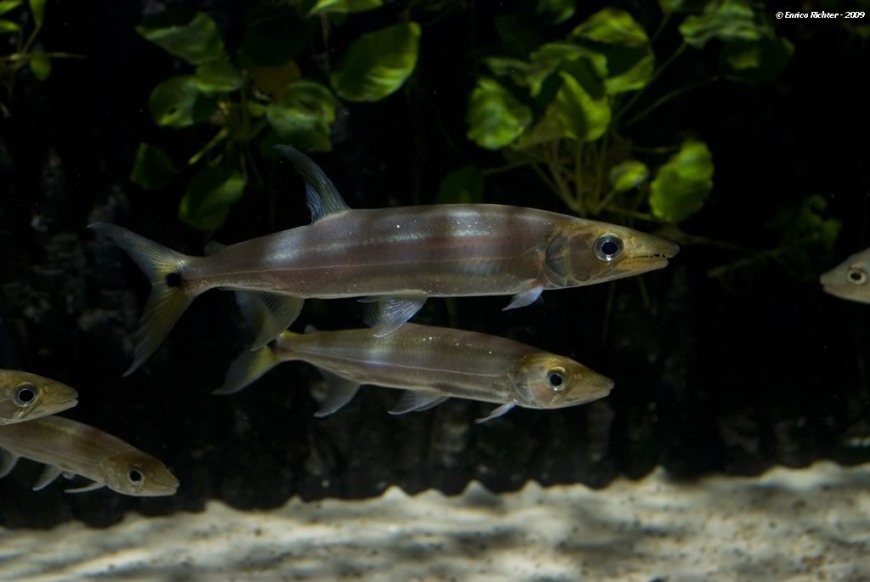
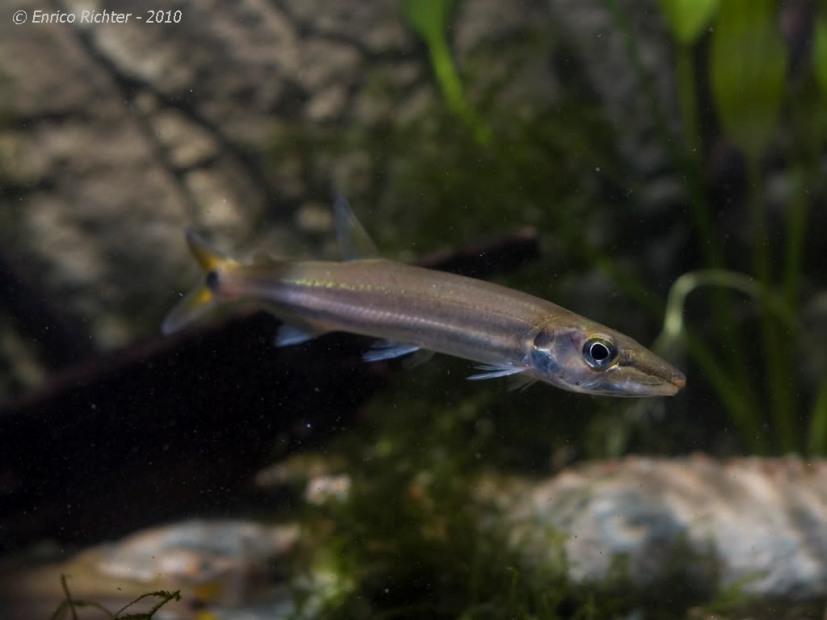
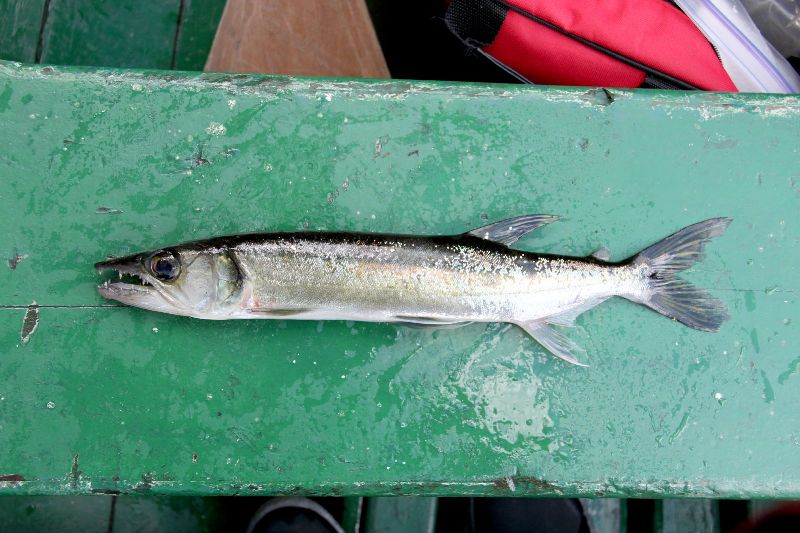
镰吻狼牙脂鲤(Acestrorhynchus falcirostris)是体型较大的食鱼性脂鲤,成年空间不能按带纵纹的小型幼鱼来估计。幼鱼身上两条深色纵纹会随成长消失,鳃盖后缘的黑色边带则形成类似领圈的外观。
分布与栖息地
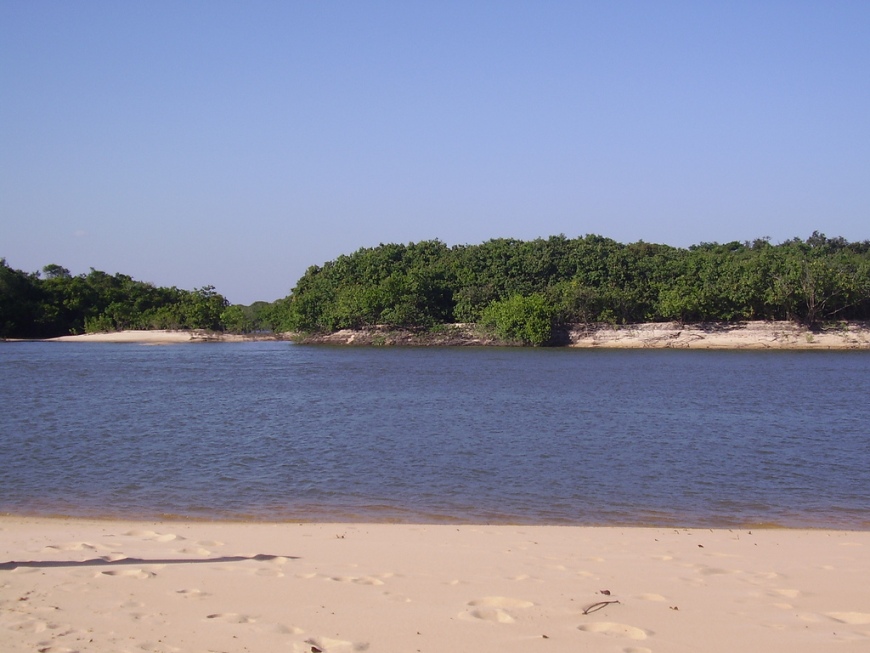
来自秘鲁、厄瓜多尔、巴西的亚马孙北部水系,委内瑞拉奥里诺科河,以及圭亚那、苏里南、法属圭亚那的沿海河流。生活在大河和支流,雨季常进入洪泛区。似乎偏好清水和黑水,但浑浊白水也有记录。
饲养环境
至少参考 250 × 90 厘米底面,幼鱼同样需要充足直线游动空间,狭小环境会使它受惊撞缸。大部分空间应少设障碍,细砂、少量落叶与沉木即可营造自然感,植物不要堵住游路。
它会强力跳跃,须严密加盖。外滤或底滤要成熟高效,回水带动水面,每周换水 30%–50%。对有机污染与水质波动敏感,不能直接投入新建立、尚未成熟的过滤系统。
食性与喂食
以鱼为专门食物,猎物可以相对自身很大。新到鱼可能只追活鱼,可在适应后逐步引导到非活饵,有些个体还会接受干饲料。常规饵鱼可能带来疾病、寄生虫和营养问题;牛心与禽肉中的脂肪也不适合本种,不宜投喂。
习性与混养
对体型大到不能被吞食的鱼相对平和,伙伴应温和且不强势抢食。同种幼鱼群游明显,成鱼较独立却仍会不时结群,建议至少四尾。群体大小要相近,补入远小于原群的小鱼可能发生同类相食。
雌雄区分
成熟雌鱼一般略大,体形更高厚。
繁殖
有水族箱内求偶及产卵的报告,但没有成功养大仔鱼的记录。描述为雌鱼停在中层水域,雄鱼绕其游八字,之后大量散卵,没有亲鱼照顾。应把这些当作有限行为记录,不当作完整繁殖方法。
图片
图片来自 SeriouslyFish,版权归各摄影者所有。
English
Overview
A large fish-eating characin, Acestrorhynchus falcirostris should not be housed on the assumption that its striped juvenile appearance indicates a small adult. The two dark lengthwise stripes are juvenile features. A dark rear margin of the gill cover gives a collared appearance.
Distribution & habitat
Its range includes northern Amazon drainages in Peru, Ecuador, and Brazil, the Venezuelan Orinoco, and coastal systems of the Guianas. It occupies large rivers and tributaries, entering flooded habitat in the wet season. Clear and black waters appear favored, although white-water records also exist.
Aquarium setup
Use a footprint around 250 by 90 cm or larger, giving juveniles substantial swimming room as well. Confined fish may become skittish and hit the glass. Keep most of the water unobstructed; sand, modest leaves, wood, and limited planting can create a natural setting.
A secure lid prevents powerful jumps. Mature, efficient canister or sump filtration should move the surface, supported by weekly 30–50% changes. Avoid accumulated organic waste, abrupt chemistry shifts, and newly established biological systems.
Diet & feeding
An obligate piscivore, it can consume substantial prey. Fresh imports may only respond to live fish initially, but transition to dead foods is often possible, and some individuals accept dry foods. Routine feeder fish create pathogen and nutritional concerns, while fats in mammalian or avian meats are unsuitable.
Behaviour & compatibility
It is relatively placid toward fish too large to swallow. Avoid aggressive territorial or highly competitive companions. Juveniles school strongly and adults still gather intermittently, so four or more are suggested. Match body sizes closely, including later additions, because smaller fish can be eaten.
Sexual dimorphism
Sexually mature females tend to be slightly larger and more deep-bodied.
Breeding
Accounts describe aquarium courtship and spawning without successful fry rearing. A female reportedly remains in midwater while the male loops around her, after which many eggs are released without parental care. Treat this as limited behavioral observation rather than a complete breeding method.
来源
ID:acestrorhynchus-falcirostris · 文件: data/species/acestrorhynchus-falcirostris.md · 状态: 草稿