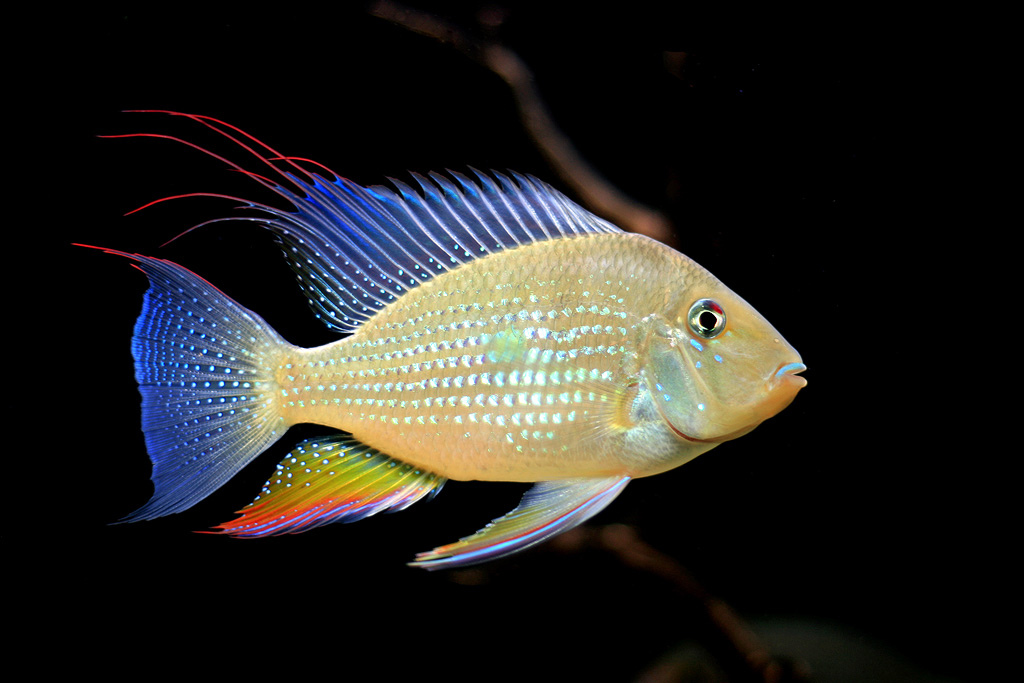
黄臀珠母丽鱼 · Threadfin Acara
概要
| 字段 | 值 |
|---|---|
| 类别 | 鱼 |
| 学名 | Acarichthys heckelii |
| 别名 | 黃臀珠母麗魚、Heckels Buntbarsch、Acara heckelii、Acara subocularis、Geophagus thayeri |
| 分类 | 慈鲷目 Cichliformes › 慈鲷科 Cichlidae › Acarichthys |
| 水体 | 淡水 |
| 原产地 | 巴西、哥伦比亚、圭亚那及秘鲁 |
| 成体体长 | 20 cm |
| 饲养难度 | 中等 |
| 外部数据 | seriouslyfish acarichthys-heckelii;fishbase 12258 |
| 游动层 | 中层 |
| 特征 | 翻底砂: 是 |
| 繁殖方式 | 附着产卵 |
| 领地性 | 是 |
水质参数
| 参数 | 耐受范围 | 最适范围 | 单位 |
|---|---|---|---|
| 水温 | 24–30 | — | °C |
| pH | 6–8 | — | — |
| 总硬度 | 1–12 | — | dGH |
概述
黄臀珠母丽鱼(Acarichthys heckelii)是一种常挖掘底床、成鱼约 20 厘米的慈鲷。它对其他合适鱼类往往较温和,但成年同类之间可能突然爆发严重攻击,甚至杀死弱势个体;长期稳定的水质与足够空间同样重要。
分布与栖息地
原生于哥伦比亚、秘鲁及巴西亚马孙流域北部,以及圭亚那埃塞奎博河流域。主要利用低地河流水域,雨季常进入淹水草原或森林。新加坡的种群来自引入,不属于原生范围。
饲养环境
一对鱼使用 150 × 45 厘米底面积的缸也只是勉强可行,群养需要大得多的空间。建议用沙底,搭配暗光、沉木和根枝;它会持续翻挖,砾石造景也容易被重新排列。
必须使用成熟系统,外滤或底滤应有充足处理能力,出水避免形成强流。每周至少换水约 50%~70%,机械过滤要能拦住翻起的细颗粒,防止沙粒持续进入设备造成磨损或堵塞。维护和营养不当可能伴随头部及侧线侵蚀、发育受阻等问题。
食性与喂食
它并不像某些近缘鱼那样靠筛沙取食,而是花较多时间在中层活动。多数常见饵料都能接受,应轮换活饵、冻饵和干粮,并加入烫过的菠菜或含螺旋藻的食物,保证饮食多样。
习性与混养
可考虑环境需求相合、体型超过几厘米的温和同伴,极小鱼仍有被吞食风险。避免特别凶悍、领地性强或会咬长鳍的鱼。与淡水魟同养有成功例子,也有夜间被魟捕食的情况,不能当作稳定安全的组合。
同种攻击可能突然出现,较大的缸和群体似乎有助降低问题,但不能完全消除风险,应持续观察弱势鱼及配对后的变化。
雌雄区分
性成熟雌鱼通常比雄鱼体形更厚实。
繁殖
约需 2~3 年达到性成熟。野外雌鱼争夺地点并挖出带多入口、隧道和产卵室的洞穴,再吸引雄鱼。产卵后雌鱼承担主要护幼,雄鱼防守领地;仔鱼受惊会退入洞中,约长至 10 毫米时亲鱼通常停止照顾。
水族箱很难复现完整洞穴,可用大型倒扣花盆,在底部开入口作为替代。单对也需要大缸、严密观察,并尽量减少其他鱼竞争。模拟天气变化的温度起伏和较大换水曾用于促使求偶,但配偶间严重攻击仍是主要难点。成功产卵后,仔鱼据报道较容易养大。
补充说明
本属目前仅包含这一种。长鳍和中层活动不应让人忽略它的掘沙能力,也不能把“对异种较温和”直接套用到成年同类关系。
图片
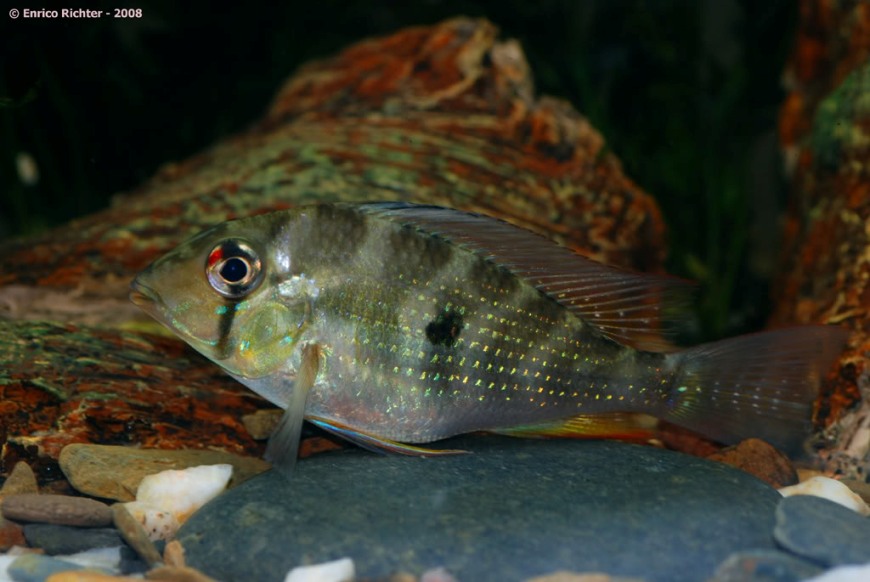
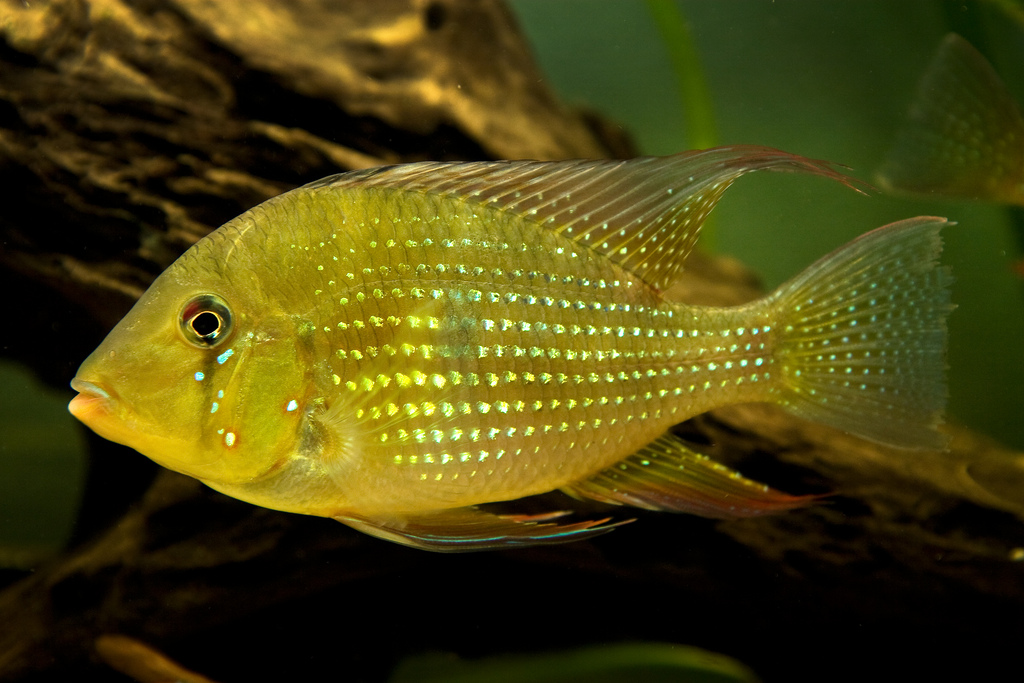
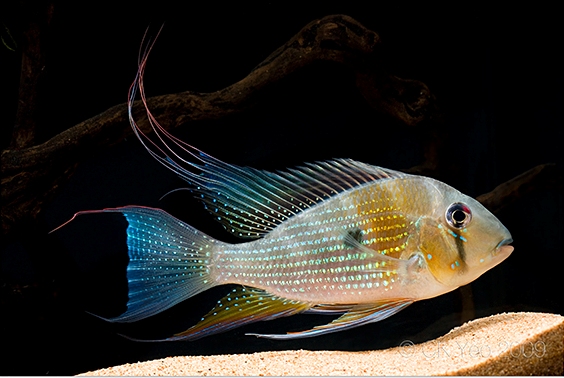
图片来自 SeriouslyFish,版权归各摄影者所有。
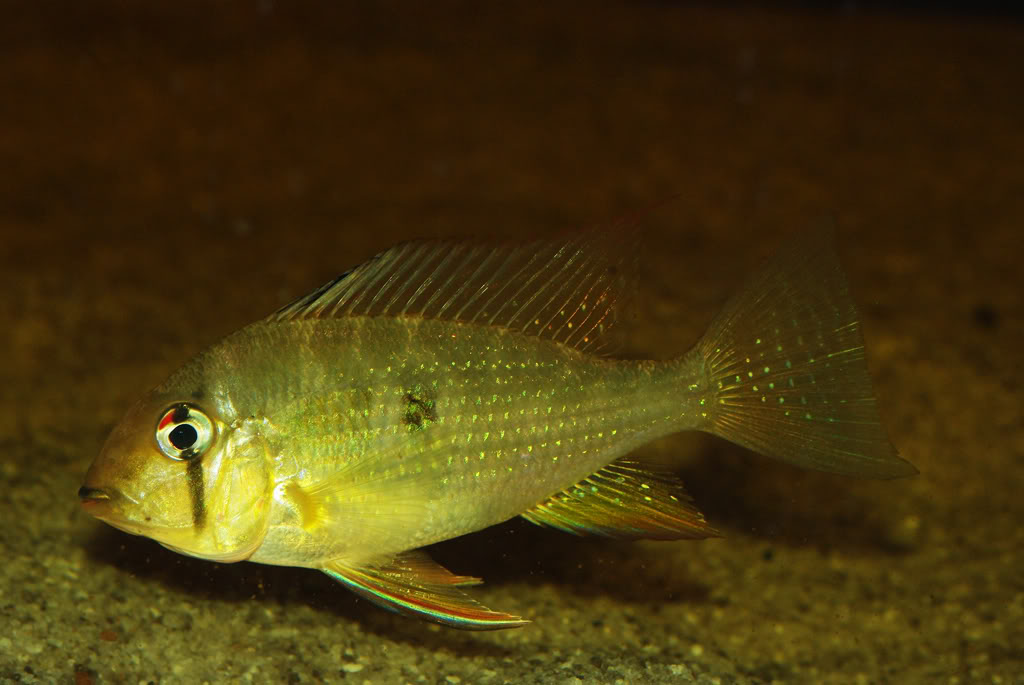
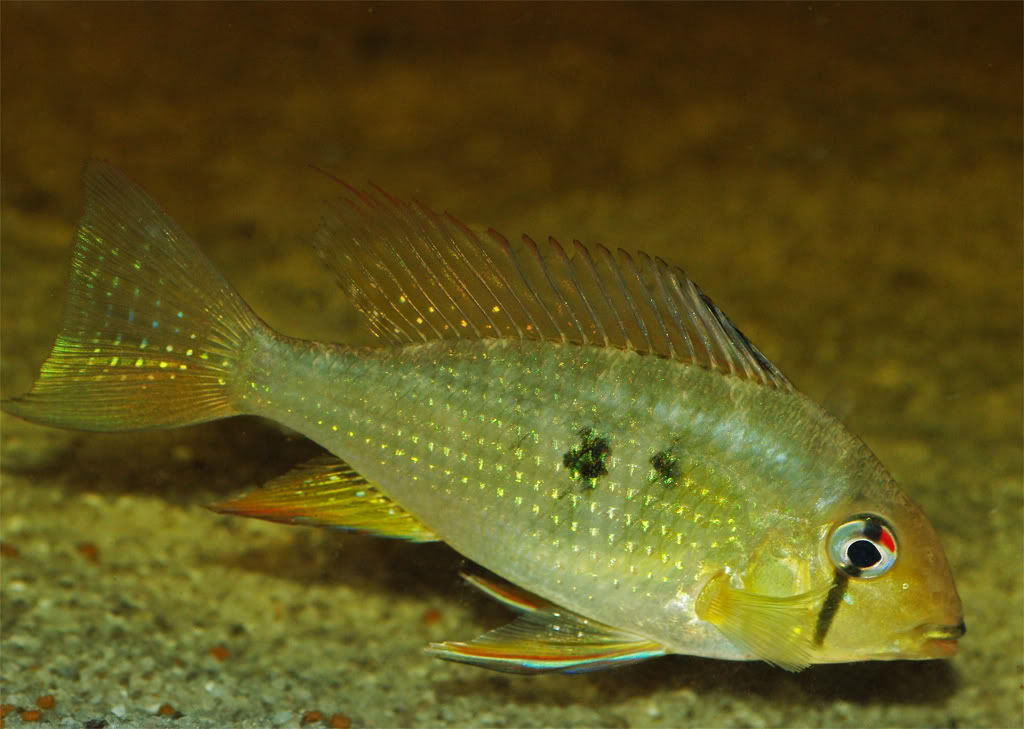
English
Overview
Acarichthys heckelii reaches about 20 cm and continually rearranges the bottom. Although often relatively tolerant of suitable tankmates, adults can suddenly attack conspecifics severely enough to kill weaker fish. Generous space and consistently clean water are both central to long-term care.
Distribution & habitat
Its native range covers the northern Amazon basin in Colombia, Peru and Brazil, together with Guyana's Essequibo drainage. It occupies lowland river environments and enters flooded forest or savanna during the wet season. The Singapore population is introduced rather than native.
Aquarium setup
A footprint of 150 × 45 cm is only just acceptable for a pair; a group needs substantially more room. Sand, subdued lighting and branching wood make a useful arrangement. Persistent digging means that gravel-based layouts are also likely to be rearranged.
Use an established aquarium with ample canister or sump filtration, while arranging outlets to avoid strong current. Replace at least roughly 50–70% of the water weekly. Mechanical filtration should intercept suspended particles without allowing sand to pass continually through equipment, where it can cause wear or blockages. Poor maintenance or nutrition can accompany impaired growth and erosion around the head and lateral line.
Diet & feeding
Unlike some related cichlids, this fish does not feed by sifting sand and spends substantial time in midwater. Offer a varied rotation of live, frozen and dried foods, including vegetable material such as blanched spinach or a spirulina-containing preparation.
Behaviour & compatibility
Peaceful companions with matching requirements and bodies larger than a few centimeters may work; very small fish remain vulnerable. Avoid strongly territorial or aggressive species and fin nippers. Keeping it with freshwater stingrays has produced both successes and losses to nighttime predation, so that combination is not reliably safe.
Sudden aggression within the species requires particular attention. Larger aquariums and groups appear to reduce problems, but do not remove the need to watch subordinate fish and developing pairs.
Sexual dimorphism
Sexually mature females are generally thicker-bodied than males.
Breeding
Maturity takes approximately two to three years. Wild females compete for sites and excavate burrows with entrances, tunnels and an enlarged egg chamber before attracting a male. The female performs most brood care while the male defends the area. Threatened fry retreat into the burrow; parental care usually ends near 10 mm in length.
An aquarium cannot readily reproduce that entire structure. A large inverted flowerpot with an entrance cut into its base has worked as a substitute. Even a single pair needs ample space, close observation and preferably little competition. Temperature variation and substantial water changes simulating weather shifts have encouraged courtship, but severe aggression between partners remains the principal obstacle. Once spawning succeeds, fry are reportedly relatively straightforward to raise.
Notes
This is the sole member of its genus. Neither its trailing fins nor its midwater activity should obscure its digging behavior, and tolerance of other species should not be assumed to apply to adult conspecifics.
来源
- https://www.seriouslyfish.com/species/acarichthys-heckelii(抓取于 2026-10-10)
acarichthys-heckelii · 文件: data/species/acarichthys-heckelii.md · 状态: 草稿