马头小刺眼鳅 · Horseface Loach
概要
| 字段 | 值 |
|---|---|
| 类别 | 鱼 |
| 学名 | Acantopsis dialuzona |
| 别名 | 苍带小刺眼鳅、馬頭小刺眼鰍、蒼帶小刺眼鰍、Pferdekopfschmerle、Cobitis choirorhynchos、Cobitis macrorhynchos、Acanthopsis choerorhynchus |
| 分类 | 鲤形目 Cypriniformes › 鳅科 Cobitidae › Acantopsis |
| 水体 | 淡水 |
| 原产地 | 印度尼西亚、马来西亚、泰国 |
| 成体体长 | 20 cm |
| 饲养难度 | 中等 |
| 最小水体 | 243 L |
| 最小缸长 | 120 cm |
| 群居方式 | 群游 |
| 水流偏好 | 高 |
| 外部数据 | seriouslyfish acantopsis-choirorhynchos;fishbase 23015 |
| 特征 | 翻底砂: 是 |
水质参数
| 参数 | 耐受范围 | 最适范围 | 单位 |
|---|---|---|---|
| 水温 | 16–24 | — | °C |
| pH | 6–8 | — | — |
| 总硬度 | 1–12 | — | dGH |
概述
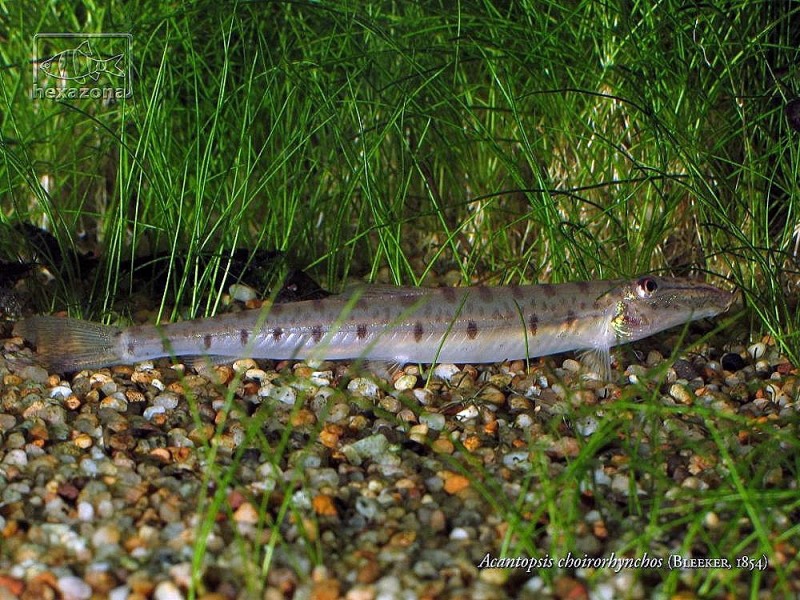
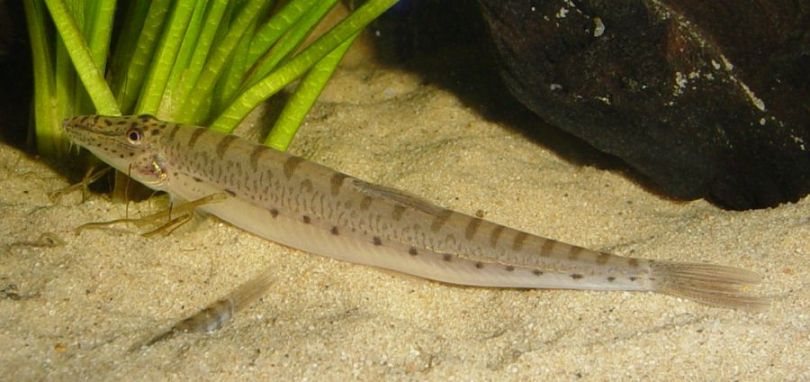
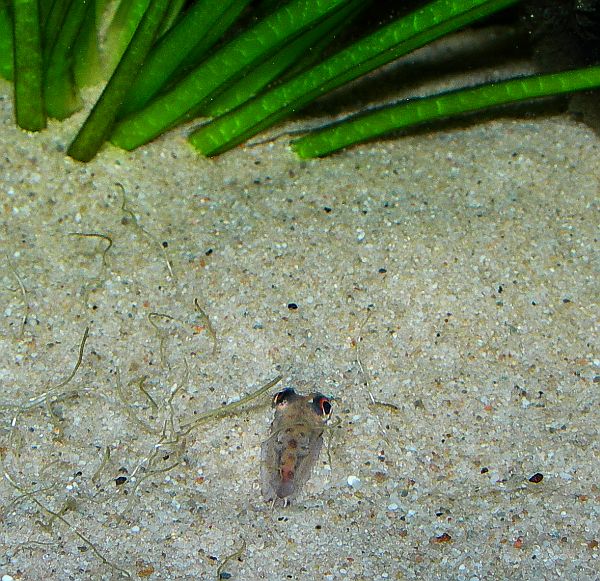
马头小刺眼鳅(Acantopsis dialuzona)会埋入底砂,仅露眼睛或完全隐藏。幼鱼常见而成年鱼较少见,长期饲养必须落实足够空间和细软沙底;同名贸易鱼身份也可能涉及尚未厘清的近似种。
分布与栖息地
目前理解的范围包括苏门答腊、婆罗洲、爪哇与马来半岛,泰国分布仍带可能性。市场个体未必来自爪哇模式产地附近,因此不能把所有马头鳅视为已确认本种。通常利用沙、细砾或泥底河道,雨季可进入淹水区。
饲养环境
底面积至少参考 120 × 45 厘米,软沙必不可少,粗砾会妨碍钻沙取食并可能磨伤。石块和沉木先稳固放置,再铺沙,避免被挖倒;留下遮阴及躲藏处。高溶氧、一定水流和每周约 30%~50% 换水有助保持洁净,无需制造猛烈激流。
食性与喂食
通过口含底砂、从鳃部排出并筛取其中小动物。缸内喂优质下沉干粮,搭配丰年虾、水蚤、红虫和水蚯蚓等活冷冻饵。
习性与混养
自然为松散聚集,理想至少六尾。偶尔争执似与短暂地盘有关,通常少见伤害。可配适应相同环境的中上层鱼;其他钻沙鳅需逐种核对性格,避免过强领地者。
雌雄区分
雌鱼通常长得更大,雄鱼胸鳍前几条分枝鳍条延长。
补充说明
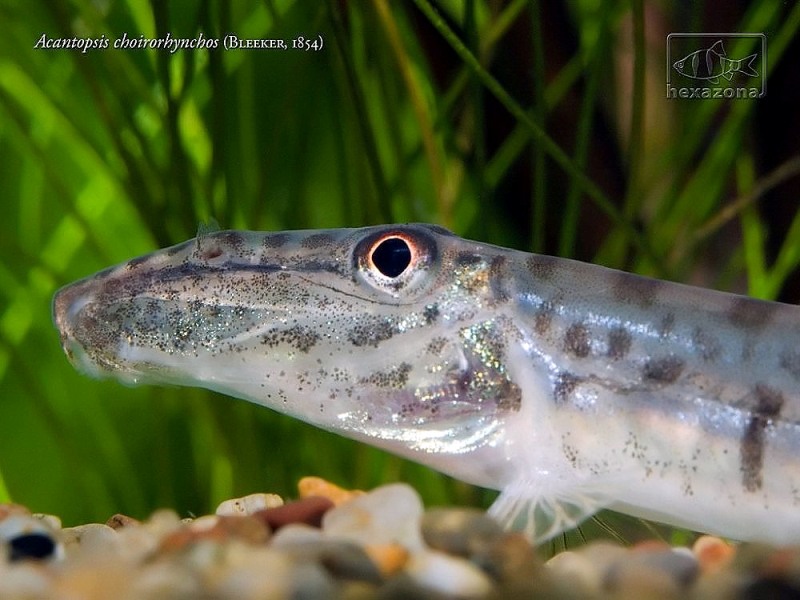
眼前附近活动棘受惊时可能竖起,容易挂网或刺伤,搬动需谨慎。
图片
图片来自 SeriouslyFish,版权归各摄影者所有。
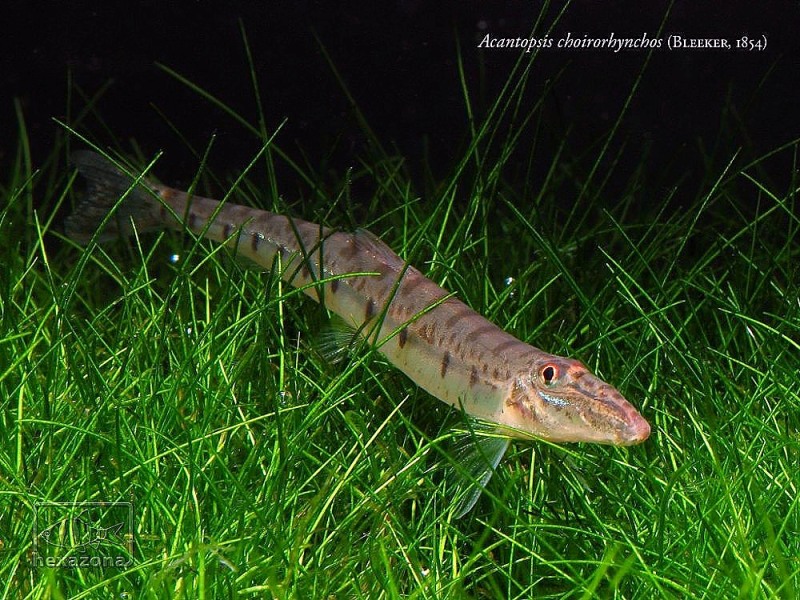
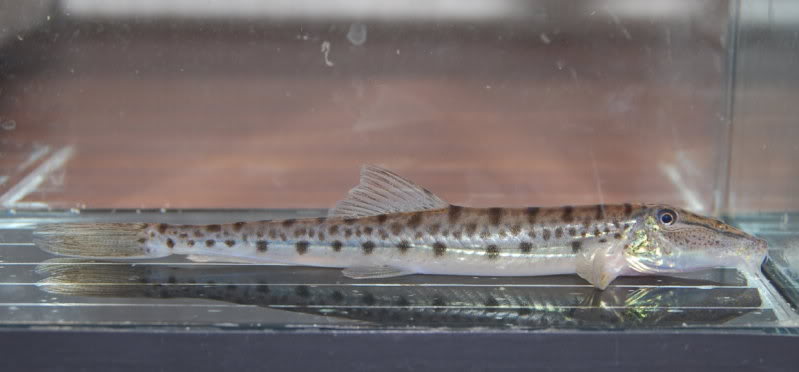
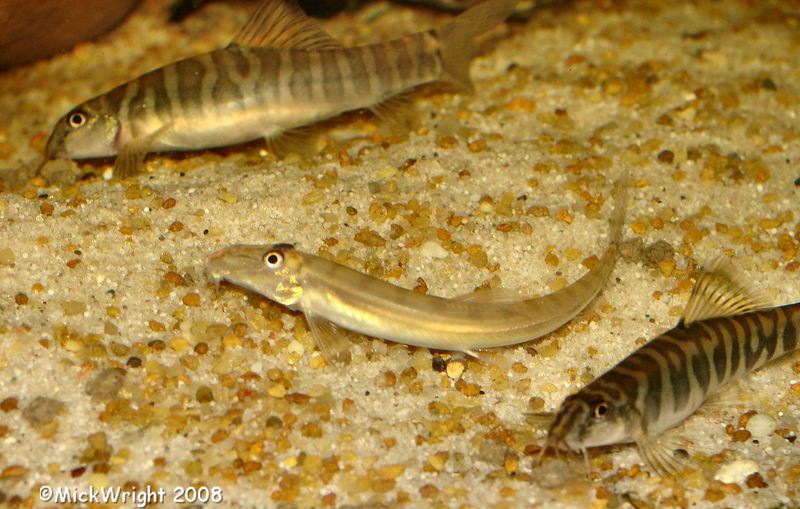
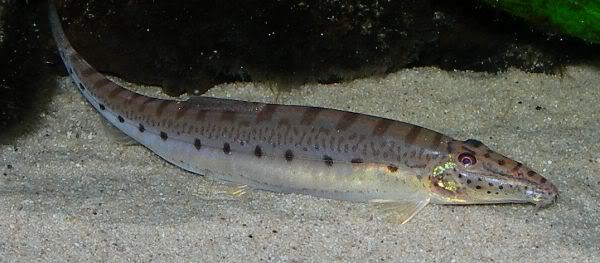
English
Overview
Burial is central to the behavior of Acantopsis dialuzona, which may disappear entirely beneath sand or leave only its eyes exposed. Common juvenile availability does not guarantee successful adult care. Adequate space, soft substrate, and awareness of uncertain trade identification are important.
Distribution & habitat
The currently understood range covers Sumatra, Borneo, Java, and Peninsular Malaysia, possibly extending to Thailand. Trade fish may originate far from the Javan type locality and could include unidentified relatives. River channels with sand, fine gravel, or mud are typical, with movement into flooded areas during wet periods.
Aquarium setup
Provide at least a 120 by 45 cm footprint with soft sand. Coarse gravel can interfere with feeding and damage fish trying to burrow. Secure rocks and wood before adding substrate so digging cannot destabilize them. Include shaded retreats, maintain oxygen and circulation, and replace around 30–50% weekly without needing extreme current.
Diet & feeding
Feeding involves taking substrate into the mouth and passing it through the gills while retaining small prey. Offer varied sinking prepared foods and suitable live or frozen invertebrates, rather than expecting substrate browsing alone to suffice.
Behaviour & compatibility
Loose natural aggregations support keeping at least six. Occasional disputes, apparently over temporary space, rarely cause injury. Compatible open-water fishes can share the setup; other sand-dwelling loaches need individual assessment for aggression and territoriality.
Sexual dimorphism
Females generally grow larger, while males have elongated anterior branched pectoral rays.
Notes
Movable spines near the eyes may erect under stress and can snag nets or puncture skin, requiring careful handling.
来源
- https://www.seriouslyfish.com/species/acantopsis-choirorhynchos(抓取于 2026-10-10)
acantopsis-dialuzona · 文件: data/species/acantopsis-dialuzona.md · 状态: 草稿