Aborichthys sp. 'AR02'
概要
| 字段 | 值 |
|---|---|
| 类别 | 鱼 |
| 学名 | Aborichthys sp. 'AR02' |
| 分类 | 鲤形目 Cypriniformes › 条鳅科 Nemacheilidae › Aborichthys |
| 水体 | 淡水 |
| 原产地 | 印度西孟加拉邦赖达克一号河流域,完整分布尚未明确 |
| 成体体长 | 3.5 cm |
| 饲养难度 | 中等 |
| 最小水体 | 41 L |
| 最小缸长 | 45 cm |
| 群居方式 | 群游 |
| 水流偏好 | 高 |
| 外部数据 | seriouslyfish aborichthys-sp-ar02 |
水质参数
| 参数 | 耐受范围 | 最适范围 | 单位 |
|---|---|---|---|
| 水温 | 21–26 | — | °C |
| pH | 6–7.5 | — | — |
| 总硬度 | 2–12 | — | dGH |
概述
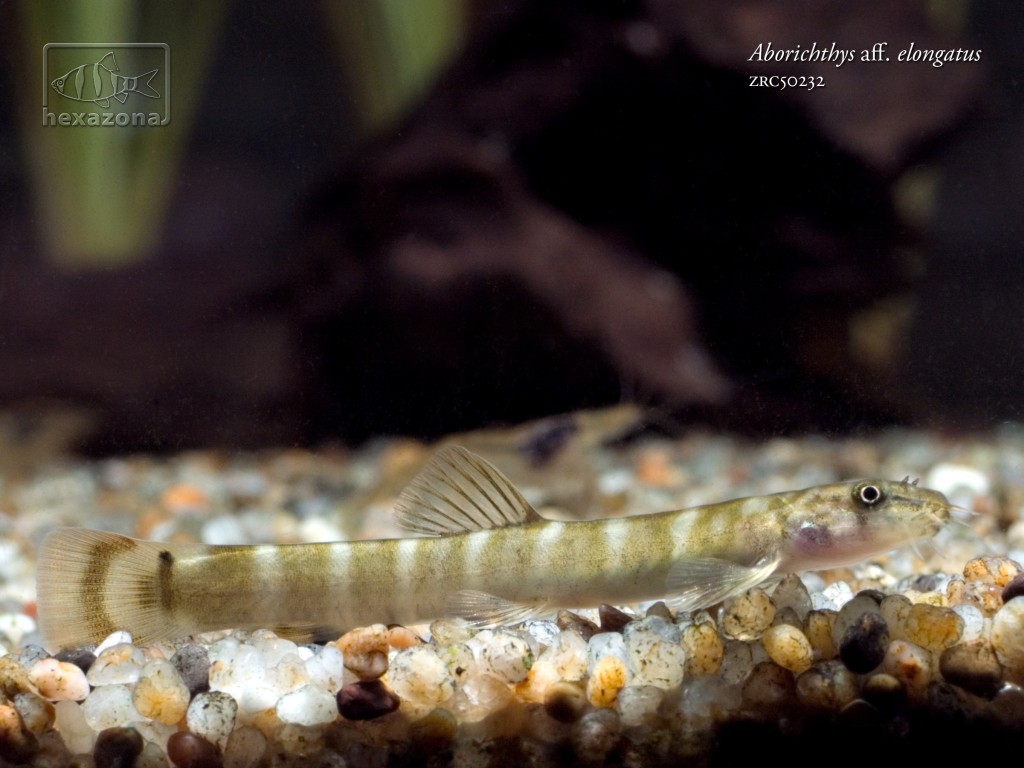
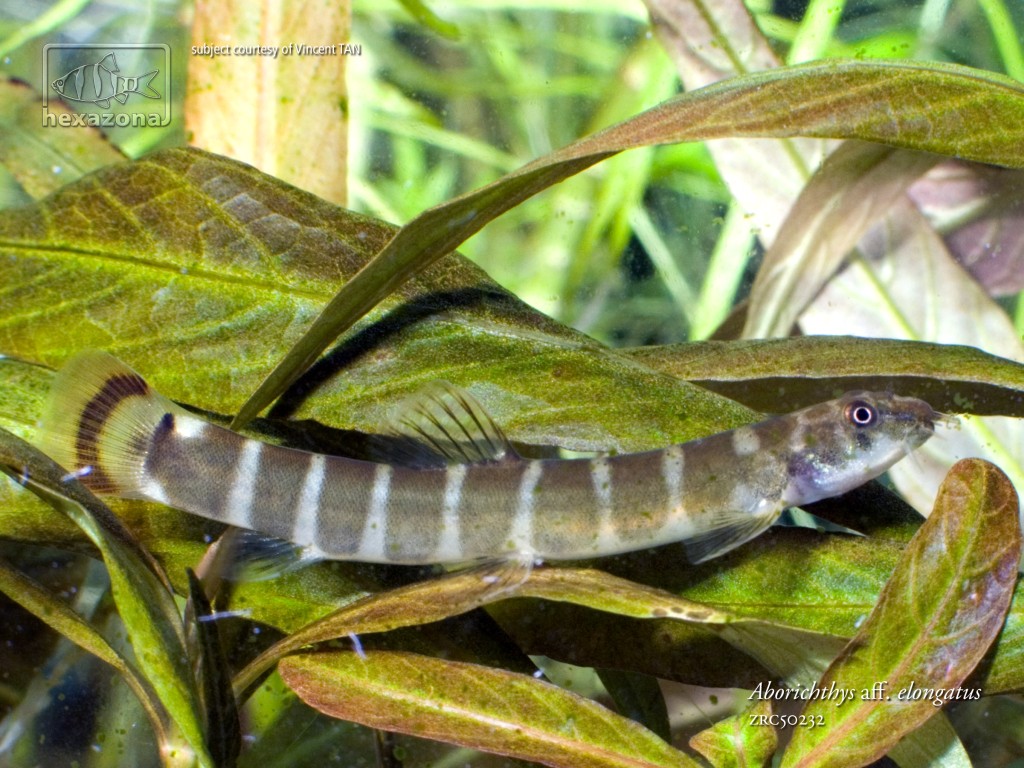
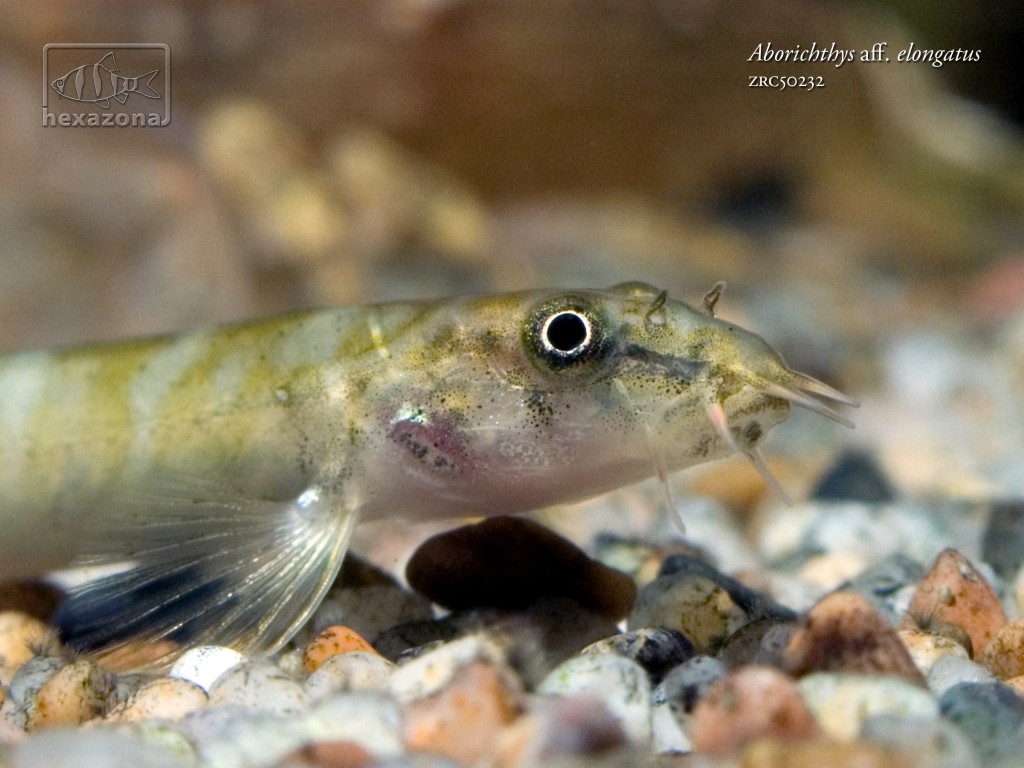
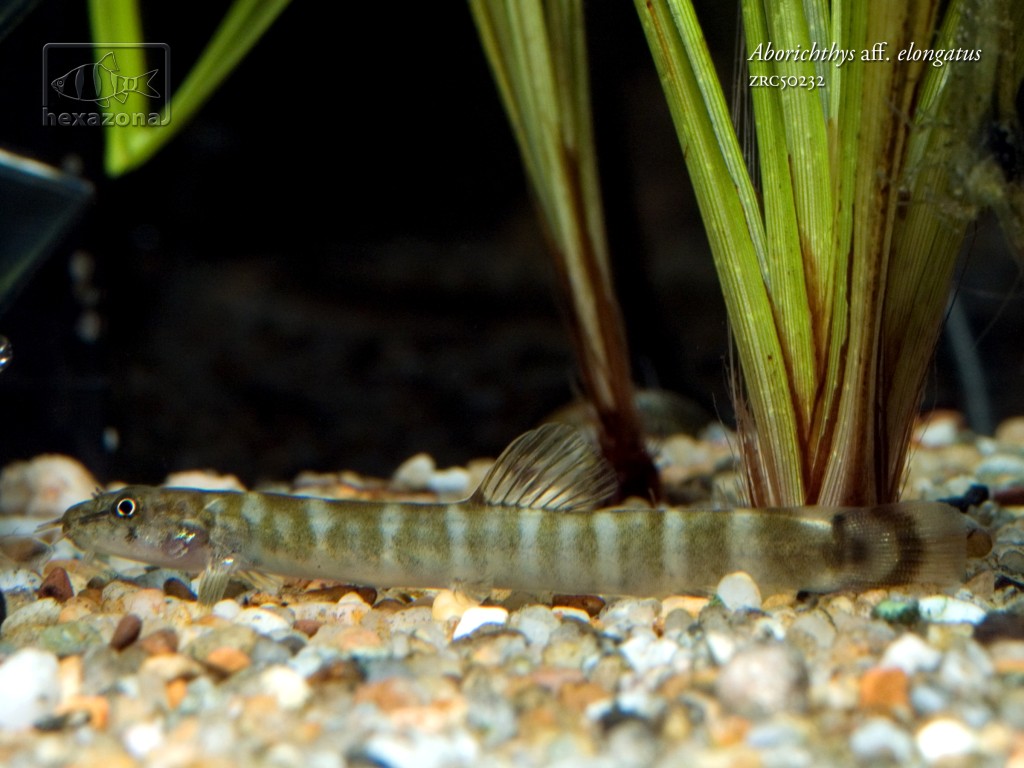
Aborichthys sp. ‘AR02’ 是体型小、尚未正式定名的条鳅,身体宽暗横带和尾鳍单道红带是识别线索。它偶尔混在另一暂定类型中到货,不能因为同批进口就当作同种幼鱼。
分布与栖息地
已知地点位于印度西孟加拉邦赖达克一号河流域。河流虽然连接不丹和孟加拉国,目前这里涉及的鱼类记录只确认印度部分。它似乎生活在浅水急流、砾石与小石块底部,石面生物膜丰富,沉水草并不常见。
饲养环境
布置砂、细砾、不同大小圆石和水磨大石,再以沉木枝条制造通道、缝隙和阴影。重物先落在缸底而不是松砂上,因为同属鱼可能挖动底砂,掏空石基会使布景不稳定。
用有效外滤和适当造流维持高溶氧与水流,避免有机污染积累。可选择固定在石木上的强健附生植物,不必强求一般水草在强流环境中生长。
食性与喂食
天然可能以昆虫幼体、蠕虫和小型甲壳动物等为食。会接受干粮,但仍要配小型活饵和冷冻饵。感知食物后常出现猛烈抢食活动,因此投喂时应留意慢鱼能否正常获得食物。
习性与混养
以至少六尾组成松散群体更好,争执可能发生,但结构充分时通常不至严重。混养选耐流、敏捷且不强势的鱼,避开长鳍、动作慢和安静底栖伙伴,它们既可能受水流影响,也可能被咬鳍或抢食。其他条鳅仍需逐种考虑冲突风险。
雌雄区分
成年雌鱼预计略大、体形更饱满,不能据此给幼鱼做确定分性。
繁殖
尚无水族箱繁殖记录。
图片
图片来自 SeriouslyFish,版权归各摄影者所有。
English
Overview
Small and apparently undescribed, Aborichthys sp. ‘AR02’ has broad dark body bars and a single reddish band on the tail. It sometimes arrives mixed with another provisional form, so a shared shipment does not make it merely that fish’s juvenile stage.
Distribution & habitat
Known fish localities are in the West Bengal portion of the Raidak I basin. Although the river also passes through Bhutan and Bangladesh, those countries are not confirmed parts of this form’s range. Apparent habitat is shallow, rapid water over gravel and small rocks with biofilm-covered surfaces and little submerged vegetation.
Aquarium setup
Combine sand, fine gravel, mixed rounded stones, and larger worn rocks, adding branches for passageways and shaded crevices. Put heavy objects on the aquarium base rather than loose sand because related loaches can undermine them by digging.
Effective filtration and circulation should maintain high oxygen and prevent organic waste buildup. Tough plants attached to rocks or wood are more appropriate than expecting delicate vegetation to thrive in strong flow.
Diet & feeding
Insect larvae, worms, crustaceans, and other small animals are probable natural foods. Offer dry products together with small live and frozen meals. Feeding triggers vigorous activity, so check that slower companions receive enough food.
Behaviour & compatibility
Keep a loose group of at least six. Disputes occur but are usually manageable with adequate structure. Choose active current-tolerant companions, avoiding slow, long-finned, or placid bottom dwellers that may struggle with flow, nipping, or food competition. Compatibility with other loaches still requires individual assessment.
Sexual dimorphism
Adult females are expected to be slightly larger and fuller-bodied, which does not provide certain sexing of juveniles.
Breeding
Aquarium breeding is unreported.
来源
- https://www.seriouslyfish.com/species/aborichthys-sp-ar02(抓取于 2026-10-10)
aborichthys-sp-ar02 · 文件: data/species/aborichthys-sp-ar02.md · 状态: 草稿